
 gregorianka.belynichi@gmail.com
Glossary: Gregorian Masses, Mass intentions, offerings and other terms
Short definitions of terms connected with Masses for the dead and Mass intentions – from the application of the Mass and purgatory to the Easter Triduum and remembrance of the dead. Each entry is based on the teaching of the Church and points to a fuller discussion on our website.
Below we explain, one by one and in alphabetical order, the terms that come up when you request a Mass for someone who has died or for another intention. Each entry can be read on its own; where we discuss a subject more fully, we give a link.
All Souls' Day
All Souls' Day is the Commemoration of All the Faithful Departed, kept on 2 November. Unlike the Solemnity of All Saints (1 November), which celebrates the saved in heaven, All Souls' Day is a day of prayer for the dead who need purification. The annual commemoration was introduced in the monasteries of his congregation by St Odilo of Cluny (11th century). See All Souls' Day – prayer and Masses for the dead.
Anniversary Mass
An anniversary Mass is a Mass for the deceased requested on (or near) the anniversary of their death. The custom goes back to antiquity – around 200 Tertullian writes of offerings made for the dead on the anniversary. The liturgical norms give particular distinction to the first anniversary (GIRM 381). See anniversary Mass for the dead.
Application of the Mass
Application (Latin applicatio) is the priest's offering of a particular Mass for a specific intention – for a given person or a given need. A priest may apply Mass for anyone, living or dead (can. 901). A separate Mass is applied for each offering accepted (can. 948). Application distinguishes a Mass “for an intention” from the mere mention of a name in the Prayer of the Faithful. See Mass intention.
Collective Mass
A collective Mass is a single Mass celebrated for the intentions of many donors who have made separate offerings. The Church permits it as an exception: only when each donor has been clearly informed beforehand and has freely consented; consent may not be presumed (decree Mos iugiter, 1991; decree of 2025). Gregorian Masses, as a series for one deceased person, cannot be a collective Mass. See collective Mass and a Mass for one intention.
Communion of saints
The communion of saints is the unity of all the faithful of Christ: those who are pilgrims on earth, the dead who are being purified and the saints in heaven, all together forming one Church (CCC 962). From this truth comes the meaning of prayer for the dead: it can help them, and it makes their intercession for us effective (CCC 958). See prayer for the dead in the Bible and tradition.
Easter Triduum
The Easter Triduum is the three most important days of the liturgical year: from the evening Mass of the Lord's Supper on Holy Thursday, through Good Friday and the Easter Vigil, to Evening Prayer on Easter Sunday (Universal Norms on the Liturgical Year, no. 19). No Mass is celebrated on Good Friday or during the day on Holy Saturday, so a break in Gregorian Masses at this time is permitted. See can Gregorian Masses be interrupted?
Funeral Mass
The funeral Mass is a Mass for the deceased celebrated as part of the funeral rites; among Masses for the dead it holds first place (General Instruction of the Roman Missal, no. 380). It is arranged with the parish where the funeral takes place, usually through the parish office. The funeral Mass is not requested through gregorianka.com, but Gregorian Masses can begin even before the funeral. See Masses after a funeral.
Gregorian Masses
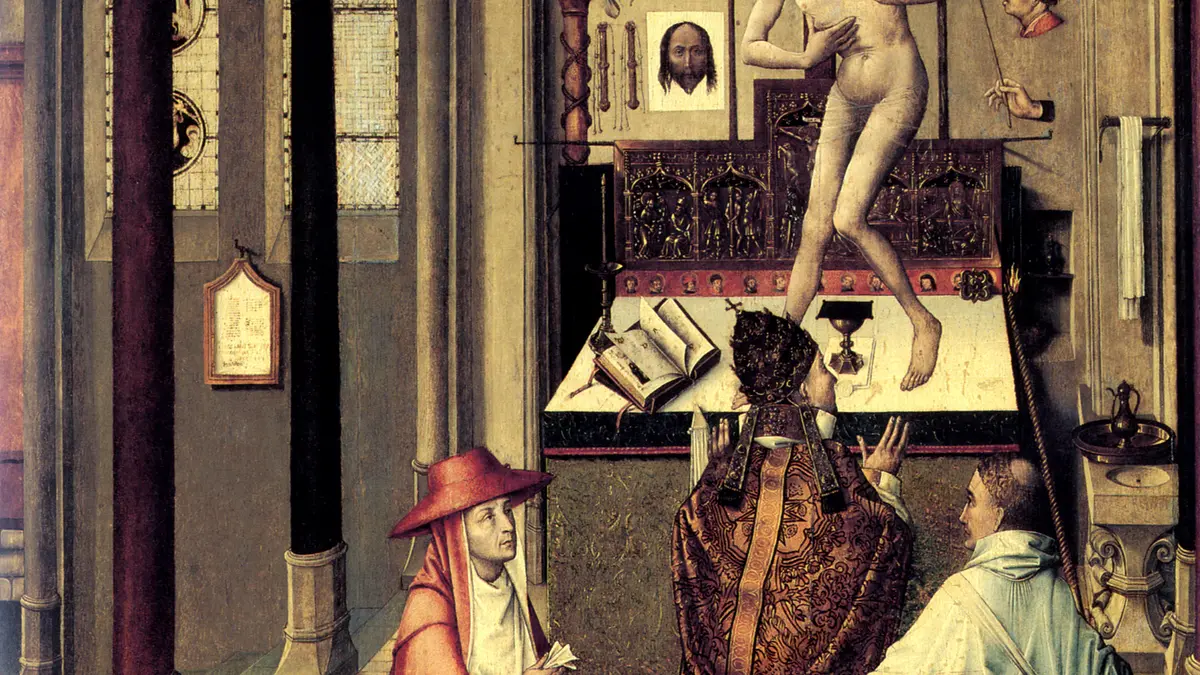
Gregorian Masses are a series of thirty Holy Masses celebrated on thirty consecutive days for the intention of one deceased person; in Polish they are popularly called gregorianka. The name comes from St Gregory the Great. The Masses may be celebrated by different priests and in different churches; a series interrupted through no fault of the priest retains its fruits, but must be completed as soon as possible. Gregorian Masses are a pious practice recognised by the Church, not a dogma. See what are Gregorian Masses.
Gregorian trental
The Gregorian trental (Latin tricenarium Gregorianum) is the traditional name for the thirty Masses that make up the series. It refers to the “Dialogues” of St Gregory the Great (Book IV): the pope ordered Mass to be offered for thirty days for the deceased monk Justus, who after the last Mass appeared to a fellow monk and said that he had been set free. In 1884 the Congregation of Indulgences recognised the confidence of the faithful in these Masses as pious and reasonable. See the history of Gregorian Masses.
Heavenly Court, Masses to the
The “Heavenly Court” is an old name for heaven – the Holy Trinity surrounded by Mary, the angels and the saints. Masses to the Heavenly Court are a pious custom known in Poland and Belarus: a series of Masses for one intention for a living person, asking for the intercession of those in heaven. In Białynicze we accept it as thirty Masses. It is sometimes called “Gregorian Masses for the living”, although it is a separate practice. See To the Heavenly Court.
Indulgence
An indulgence is a remission before God of the temporal punishment due to sins whose guilt has already been forgiven; it is gained by a suitably disposed member of the faithful under certain conditions, through the ministry of the Church (CCC 1471). An indulgence may be partial or plenary; it can be applied to oneself or to the dead. An indulgence is not a Mass, nor is it Gregorian Masses – it is a separate way of helping the dead. See the indulgence for the dead, 1–8 November.
Mass intention
A Mass intention is a request that Mass be offered for a particular person – living or dead – or for a particular need: for health, in thanksgiving, on an anniversary. It is expressed in a short formula, which is often read out at the start of Mass. The person requesting it usually makes a Mass offering. Anyone can request an intention, including for themselves. See Mass intentions and how to word an intention.
Mass offering (stipend)
A Mass offering, traditionally called a “stipend”, is a voluntary gift made to a priest so that he applies the Mass for a specific intention (can. 945). Through it the faithful contribute to the good of the Church and the support of its ministers (can. 946). It is not the price of a Mass: even the appearance of trade must be excluded (can. 947). The customary amount of the offering is set by the bishops of the province (can. 952). See the Mass offering.
Novena
A novena (Latin novem – nine) is a prayer lasting nine days. A novena of Masses is nine Masses celebrated day after day for the same intention: for the dead (one or several persons, e.g. parents) or for the living in a particular need. It is a pious custom, not a separate rite. See novena of Masses for the dead, novena of Masses for the living.
Purgatory
According to the Catechism, purgatory is “the final purification of the elect” who died in God's grace and friendship but are still imperfectly purified; it is “entirely different from the punishment of the damned” (CCC 1030–1031). It is not a “second chance”, nor a place in the geographical sense, but a state. The living can help the dead by prayer, above all by the Eucharistic sacrifice (CCC 1032). More: purgatory in the teaching of the Church.
Register of Mass intentions
The register of intentions is a book which, under canon law, must be kept by the parish priest or rector of a church that accepts intentions. It records the number of Masses to be celebrated, the intention, the offering given and the fact of celebration (can. 958 § 1); the Ordinary inspects it every year (§ 2). The register protects the will of the donors – thanks to it, every intention accepted leaves a trace. See cann. 945–958.
Remembrance of the dead
Remembrance of the dead (in Polish, wypominki) is prayer for the dead in which their names are read out and the community prays for them – a custom going back to the ancient diptychs. It may be one-off, octave (1–8 November) or annual. Remembrance of the dead is not a Mass for the intention of the deceased, but a shared prayer of the parish; in Białynicze the names are read out before Sunday Mass throughout the year. See annual remembrance of the dead.
Shrine of Our Lady of Białynicze
The Shrine of Our Lady of Białynicze in Białynicze (Archdiocese of Minsk–Mohilev, eastern Belarus) is a place of devotion to the miraculous image of Mary with the Child. From 1624 it was in the care of the Carmelites; the image was crowned in 1761, and Białynicze was called the “Jasna Góra of Lithuania”. The parish accepts Mass intentions, and the offerings support the priests and the restoration of the shrine. See Shrine of Our Lady of Białynicze.
“The late” and RIP
In English an intention for someone who has died is usually written “For the late…” or “For the repose of the soul of…”, especially for a deceased Christian. The abbreviation RIP (requiescat in pace, “may he/she rest in peace”) belongs to death notices and gravestones and is not needed in a Mass intention. Polish uses the abbreviation śp. (“of holy memory”) in the same way. See how to word a Mass intention.
Thirtieth-day Mass
The thirtieth-day Mass (in Polish, trzydziestka) is a single Mass for the deceased celebrated on the thirtieth day after the death or the funeral. The custom recalls Israel's thirty days of mourning for Aaron and Moses (Num 20:29; Deut 34:8). It should not be confused with Gregorian Masses: it is one Mass, not thirty; both can take place at the same time. See Masses after a funeral.
Tricenario Gregoriano
Tricenario Gregoriano is the declaration of the Sacred Congregation of the Council of 24 February 1967 (AAS 59 (1967), pp. 229–230), issued by order of Paul VI. It states that a series of thirty Gregorian Masses interrupted by an unforeseen impediment or another reasonable cause retains its fruits, and that the priest is obliged to complete it as soon as possible. See Tricenario Gregoriano – full text.
Sources
- Catechism of the Catholic Church, nos. 958, 962, 1030–1032, 1471 – vatican.va
- Code of Canon Law, cann. 901, 945–958 – vatican.va
- Congregation for the Clergy, decree Mos iugiter (1991) – vatican.va (in Italian); Dicastery for the Clergy, decree of 13.04.2025 – vatican.va (PDF, in Italian)
- Declaration Tricenario Gregoriano, 24.02.1967, AAS 59 (1967), pp. 229–230 – liturgista.pl (in Polish)
- Jesuits, St Stephen's Parish, “Intencje mszalne” (in Polish) – szczepan.jezuici.pl
Updated:
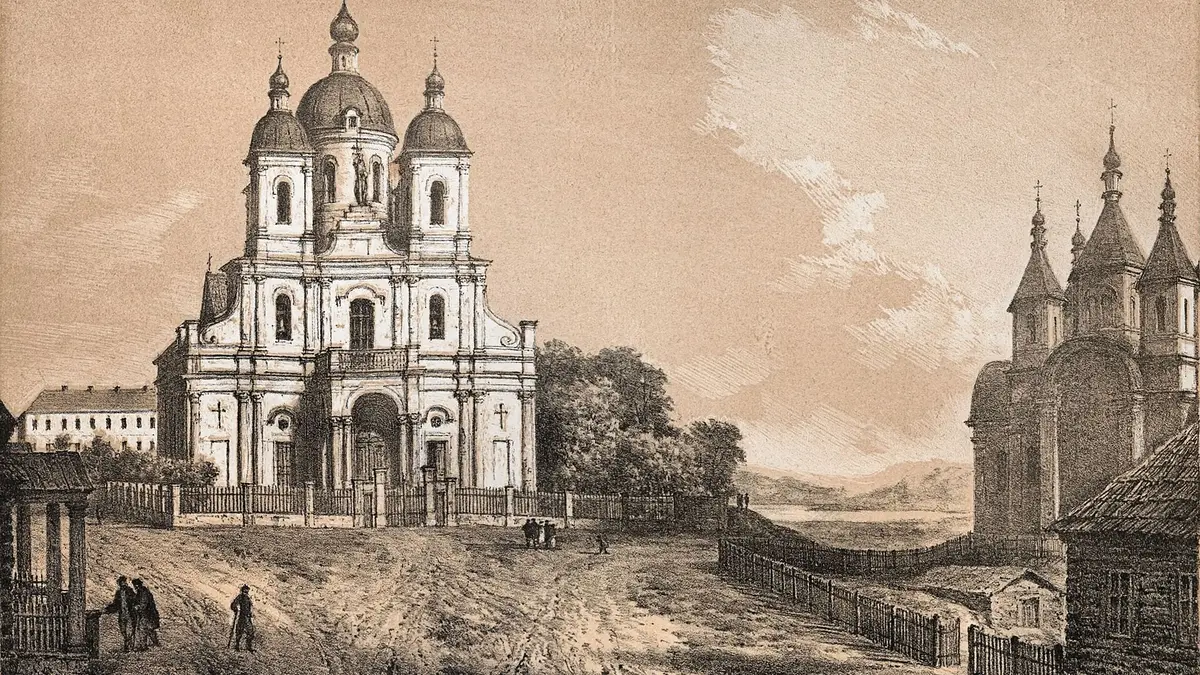
The Shrine of Our Lady of Białynicze
For centuries Białynicze on the River Drut was one of the most important Marian shrines of the Polish–Lithuanian Commonwealth, known as the “Częstochowa of Belarus”. The Carmelite church with the miraculous image of Our Lady, crowned in 1761, was destroyed in Soviet times.
Today the parish is rebuilding the shrine, and every Mass requested here supports this work.
History of the shrine →Request a Holy Mass
Leave your contact details and intention – we will reply by e-mail with a proposed date.
Thank you! We have received your request and will reply shortly to the e-mail address you gave.