
 gregorianka.belynichi@gmail.com
How to Request Gregorian Masses
Requesting Gregorian Masses is simple, but it helps to know how to prepare the intention, what to expect and how to accompany the Masses with your prayer. Below we describe the whole process – from an online request to a confirmation with dates and times.
In brief
- Have ready the name of one deceased person and – if it matters – your preferred date.
- Send your request: the form on the website, e-mail or WhatsApp.
- You will receive an e-mail with a proposed start date and the times of the Masses.
- Make your offering using the details in the message.
- No later than two days after your offering has been received, you will get a confirmation with the date and time of each of the thirty Masses.
If you want to make your request straight away, go to the request Gregorian Masses page or use the form at the bottom of this page. If you would first like to understand how it works – read on.
Before you request: three principles of Gregorian Masses
Gregorian Masses are thirty Holy Masses celebrated day after day for one deceased person. The custom goes back to St Gregory the Great, who described it in Book IV of his Dialogues. When making a request, three things are worth remembering:
- One deceased person. Gregorian Masses are not offered for several people or for the living.
- Thirty consecutive days. The series should have no breaks. The declaration of the Sacred Congregation of the Council of 24 February 1967 (“Tricenario Gregoriano”) explains that a break caused by an unforeseen impediment (e.g. the priest's illness) or another reasonable cause does not deprive the Gregorian Masses of their fruits – the priest is to celebrate the missing Masses as soon as possible. Details: can Gregorian Masses be interrupted?
- It need not be one priest. The Masses may be celebrated by different priests and at different altars – what matters is the continuity of the series.
You will find a full explanation on the page what are Gregorian Masses.
Step 1. Prepare the details and the intention
You need very little information:
- the name of the deceased person – as it should be spoken in the intention;
- your preferred date – if a particular day matters to you (the funeral, the anniversary of death, 2 November) or if you would like the Masses to begin as soon as possible;
- your e-mail address – we will send the proposed date and the confirmation to it.
How to word the intention
The intention is short: “For the repose of the soul of John Smith”. For a deceased priest: “For the repose of the soul of Fr John Smith”. There is no need to add the date of death or further petitions – the thirty Masses are offered for the soul of this one person. Do not add other names (“and for the deceased of the family”), because then it would no longer be the Gregorian Masses. For other loved ones you can request a separate series of Gregorian Masses or another form of prayer, e.g. a novena or the annual remembrance of the dead.
If you are not sure whether Gregorian Masses are the right choice, see the Mass for the dead page, where we compare the different forms.
Step 2. Send your request – online
Everything can be arranged remotely, without visiting a parish office. You can choose:
- the form – at the bottom of every page of the website; in the “Type of intention” field choose “Gregorian Masses (30 Masses)”, and in the comments field write the intention and, if you wish, the date;
- e-mail or WhatsApp – the details are on the Contact page.
Does a Mass requested online “count” in the same way? Yes. It makes no difference whether the intention was given in the sacristy, by letter or through a form. What matters is that the priest celebrates Holy Mass for that intention – and that you can unite yourself with it spiritually.
Step 3. You receive a proposed date
We reply by e-mail with a proposed start date for the series and the times of the Masses. Thanks to the small communities in eastern Belarus, where there are fewer intentions than Masses celebrated by the priests, we can usually find a date without a long wait – we always give the exact date in our reply. If the proposed date does not suit you, let us know and we will suggest another. More on the page available dates for Gregorian Masses; whether it is worth hurrying is discussed in when to request Gregorian Masses.
Step 4. Make your offering
In the same message we send the details for making your offering to the parish account. A Mass offering is not payment for the Mass – the Code of Canon Law (cann. 945–946) describes it as a gift by which the faithful contribute to the good of the Church and the support of its ministers. Why the offering for Gregorian Masses corresponds to thirty Masses, and what it is used for, is explained on the offering for Gregorian Masses page.
Step 5. Keep your confirmation
No later than two days after receiving your offering we send a confirmation. It contains the intention, the date or dates of the Masses and the time of each one. Check the spelling of the name and keep the message – it will be useful during the thirty days. What else is worth knowing is described on the confirmation of Gregorian Masses page.
How to accompany the Masses for thirty days
Gregorian Masses ask nothing of the family beyond the request itself, but many people wish to pray together with the priest during this time. A few suggestions:
- at the time given in the confirmation, say a short prayer for the deceased, e.g. “Eternal rest grant unto him, O Lord”;
- if you can, attend Mass in your own parish on some of the days and offer your Holy Communion for the deceased;
- remember the other ways of helping the dead that the Church recommends – almsgiving, indulgences and works of penance (CCC 1032).
How to recognise a trustworthy place to request Masses
When you request Masses online, you are entrusting someone with something very personal. Wherever you make your request, check:
- whether the website names a specific parish or religious order and the priests who celebrate the Masses;
- whether there is a real contact – an e-mail address, a messaging app, the parish details;
- whether you will receive a confirmation with the dates and times of the Masses;
- whether the principles are in line with the teaching of the Church – one deceased person, thirty days in a row, an offering rather than a “price”.
With us, the Masses are celebrated first of all in the Parish of Our Lady of Białynicze, and also by priests of other parishes in eastern Belarus. We introduce them on the priests page, and the history of the place on the Shrine of Our Lady of Białynicze page. All the intentions we accept are listed on the home page.
Sources
- Sacred Congregation of the Council, declaration “Tricenario Gregoriano” of 24 February 1967 (liturgista.pl, in Polish)
- Jesuits, St Stephen's Parish – Mass intentions (in Polish)
- Niedziela.pl – St Gregory the Great and the Gregorian Masses (in Polish)
- Code of Canon Law, cann. 945–958 (vatican.va)
- Catechism of the Catholic Church, no. 1032 (vatican.va)
Questions and answers
Can I request Gregorian Masses if I live abroad?
Can I request several series of Gregorian Masses at the same time?
Is my data safe?
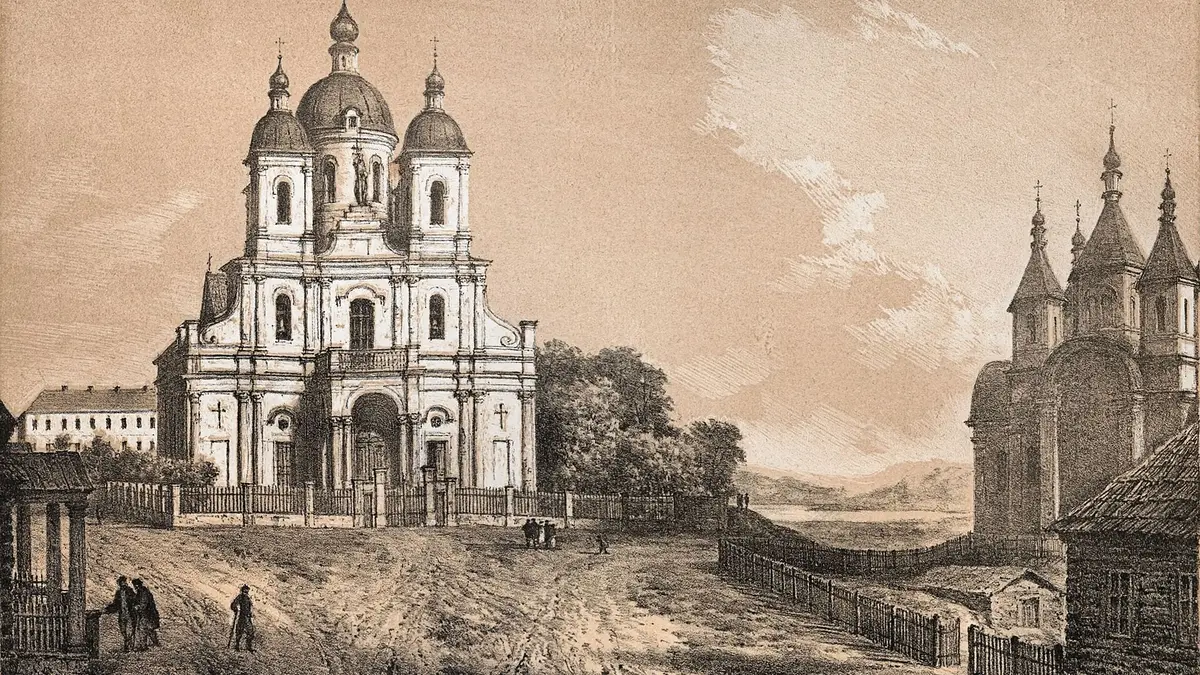
The Shrine of Our Lady of Białynicze
For centuries Białynicze on the Druts river was one of the most important Marian shrines of the old Polish–Lithuanian Commonwealth, known as the “Częstochowa of Belarus”. The Carmelite church with the miraculous image of Our Lady, crowned in 1761, was destroyed in Soviet times.
Today the parish is rebuilding the shrine, and every Mass requested here supports this work.
History of the shrine →Request a Holy Mass
Leave your contact details and intention – we will reply by e-mail with a proposed date.
Thank you! We have received your request and will reply shortly to the e-mail address you gave.