
 gregorianka.belynichi@gmail.com
What Are Gregorian Masses?
Gregorian Masses are thirty Holy Masses celebrated day after day for one deceased person. We explain where the practice comes from, why there are exactly thirty Masses, what it looks like in practice and how the Church understands it.
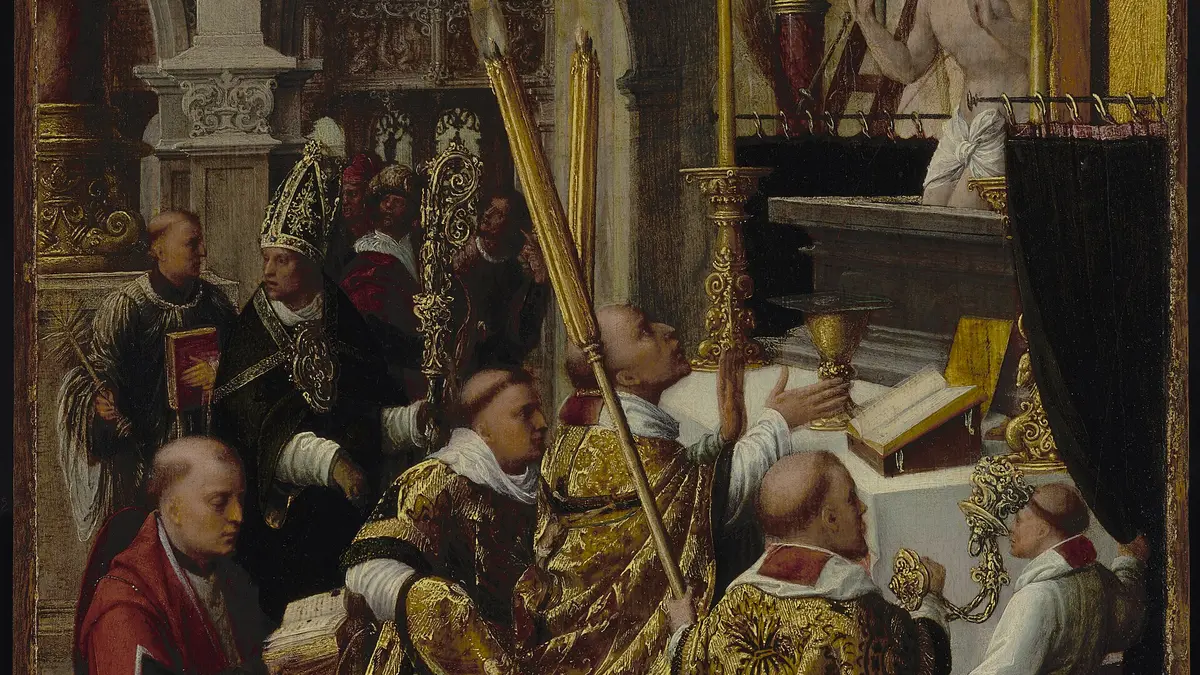
Gregorian Masses in one sentence
Gregorian Masses are thirty Holy Masses celebrated on thirty consecutive days for one deceased person. The name comes from St Gregory the Great, Pope at the turn of the sixth and seventh centuries, who described the event that gave rise to this custom. Gregorian Masses are not a separate rite or a special liturgy: each of the thirty is an ordinary Holy Mass in which the priest offers to God the Sacrifice of Christ for the intention of one deceased person.
People sometimes speak of “a Gregorian Mass” in the singular, but it always means the whole series (sometimes called a “Gregorian trental”). A single Mass for a deceased person is something different – we write about it on the Holy Mass for the dead page.
Three features that set Gregorian Masses apart
- Thirty Masses day after day. The Masses are celebrated daily, with no planned breaks, over thirty consecutive days.
- One deceased person. The intention concerns only one deceased person – not a married couple, not a family, not “all the departed of the family”. Why this is so, and what to do if we wish to pray for several people, is explained in the article who Gregorian Masses can be requested for.
- One priest or many. It is not necessary for all the Masses to be celebrated by the same priest or at the same altar. The series may be shared among several priests – in the extreme case each of the thirty Masses may be celebrated by a different priest. What matters is continuity: on each of the thirty days someone celebrates the Eucharist for this intention.
Why exactly thirty Masses?
The number thirty comes from history, not from some “power of the number”. In Book IV of his Dialogues, St Gregory tells the story of the deceased monk Justus of the Roman monastery of St Andrew. Gregory, then abbot, ordered Mass to be offered for him on thirty consecutive days. After the last of them the deceased appeared to his own brother Copiosus and said that he had now been set free.
The Church has never taught that thirty Masses “work automatically” or that exactly this number is needed for the purification of a soul. The value of each Mass comes from the fact that it makes present the one Sacrifice of Christ. The thirty days are rather an expression of perseverance in prayer – a month in which the Church intercedes every day for a particular person. In 1884 the Sacred Congregation of Indulgences declared the confidence of the faithful in the value of the thirty Gregorian Masses to be pious and reasonable. This is an important formulation: the Church approves of the practice and of the trust with which the faithful turn to it, but it makes no promises that belong to God alone.
How long do Gregorian Masses last?
The whole series lasts thirty days – roughly a month from the first Mass to the last. Each Mass lasts as long as an ordinary weekday Mass – the family does not need to set aside a whole day for it. The start date is agreed with the parish or the priest: it may be the day after the funeral, around the anniversary of death or simply the next available date. Choosing the moment is discussed in the article When should Gregorian Masses be requested?
What if the series is interrupted?
The rule is continuity, but the Church has provided for exceptional situations. The declaration of the Sacred Congregation of the Council “Tricenario Gregoriano” of 24 February 1967 states that a series interrupted by an unforeseen impediment (e.g. the sudden illness of the priest) or another reasonable cause (e.g. a funeral or wedding Mass) keeps the fruits of this prayer, and the priest is to make up the missing Masses as soon as possible. A break is also permitted during the Easter Triduum. If, however, the priest has neglected to celebrate a Mass through his own fault, he should begin the thirty Masses again. We discuss the details in Can Gregorian Masses be interrupted?
What do Gregorian Masses look like in practice?
For the family, requesting Gregorian Masses is simple and does not require being present in church. It usually works like this:
- You give the intention: the name of one deceased person and, if the date matters to you, your preferred start date.
- The parish or the priest proposes a start date and the times of the Masses.
- You make an offering – a voluntary gift for the support of the priest and the needs of the Church, not a “fee for the Mass”.
- For thirty days the priest (or several priests) celebrates Mass every day for this intention.
- You receive a confirmation with the dates and times of the Masses.
The family may attend the Masses if they live nearby, but this is not a condition. Many of the faithful unite themselves with the prayer of the Church from afar during these days: they pray for the dead or say the Rosary, go to Mass in their own parish and offer their Holy Communion for the deceased. In this way the month of Gregorian Masses becomes a time of shared, living remembrance.
In our parish we accept intentions through the form, by e-mail or WhatsApp. In our e-mail reply we propose a date and times, and once the offering has reached the parish account we send – within two days at the latest – a confirmation with the intention, the dates and the time of each Mass. We celebrate the Masses first of all in the shrine in Białynicze; priests of other parishes in eastern Belarus also help us. We describe this step by step in our guide how to request Gregorian Masses.
What is the meaning of Gregorian Masses?
To understand Gregorian Masses, we must start from how the Church understands prayer for the dead. The Catechism of the Catholic Church teaches that those who die in God's grace but are still imperfectly purified undergo after death a purification which the Church calls purgatory (CCC 1030–1031). Sacred Scripture already speaks of a sacrifice offered for the dead “that they might be delivered from their sin” (2 Macc 12:46), and from the beginning the Church has honoured the memory of the dead and offered for them above all the Eucharistic sacrifice (CCC 1032; cf. CCC 958 and 1371).
Gregorian Masses are therefore above all the Eucharist offered for a deceased person – thirty times, day after day. Their value comes not from the number, a formula or the mere fact of a request, but from the Sacrifice of Christ and from God's mercy. That is why we do not say that Gregorian Masses “guarantee” heaven or shorten purgatory by a set amount of time. We say what the Church says: this is a prayer which the Church recognises as pious and reasonable, offered in the trust that God will accept it for the good of the deceased – as He Himself wills.
Gregorian Masses also have meaning for the living. For many families they are a concrete way of living through their grief: instead of helplessness, a month in which their loved one is commended to God every day. They are also an expression of faith in the communion of saints – a bond that death does not break. Whoever requests Gregorian Masses does not “settle matters” on behalf of the deceased, but includes him or her in the prayer of the whole Church and learns to entrust that person to God.
A brief history
The custom goes back to an event described by St Gregory the Great (Pope from 590 to 604) in his Dialogues. Over time the practice of thirty Masses spread throughout the Western Church. In 1884 it was confirmed by the Sacred Congregation of Indulgences, and in 1967 the declaration “Tricenario Gregoriano”, issued by order of Pope Paul VI, settled the question of an interrupted series.
Gregorian Masses in Białynicze
If you wish to offer thirty Masses for a deceased loved one, you can request Gregorian Masses online in the Parish of Our Lady of Białynicze. You can read more about how we celebrate them and whom your offering serves on the home page: Gregorian Masses at the shrine in Białynicze.
Sources
- Catechism of the Catholic Church – nos. 958, 1030–1032, 1371
- Acta Apostolicae Sedis 59 (1967), pp. 229–230 – declaration “Tricenario Gregoriano”
- Liturgista.pl – Polish text of the declaration “Tricenario Gregoriano” (in Polish)
- Jesuits, St Stephen's Parish – Mass intentions (in Polish)
- Niedziela.pl – St Gregory the Great and the Gregorian Masses (in Polish)
Questions and answers
Can Gregorian Masses be requested more than once for the same person?
Yes. There is no rule restricting this. Some families request Gregorian Masses immediately after the death of a loved one and then again – for example, on the anniversary.
Do Gregorian Masses require a special rite or Mass formulary?
No. What makes them Gregorian Masses is the intention and the continuity of the thirty days, not a special rite. The priest celebrates Mass according to the liturgical norms of the day – it may be a Mass for the dead, if the liturgical calendar allows, or the Mass of the day.
How do Gregorian Masses differ from the “30 Masses to the Heavenly Court”?
Both series consist of thirty Masses, but Gregorian Masses are offered for one deceased person, whereas the Masses to the Heavenly Court are offered for a living person, through the intercession of Mary, the angels and the saints.
Are any documents needed to request Gregorian Masses?
No. The name of the deceased person is enough. There is no need to provide a death certificate or any parish documents.
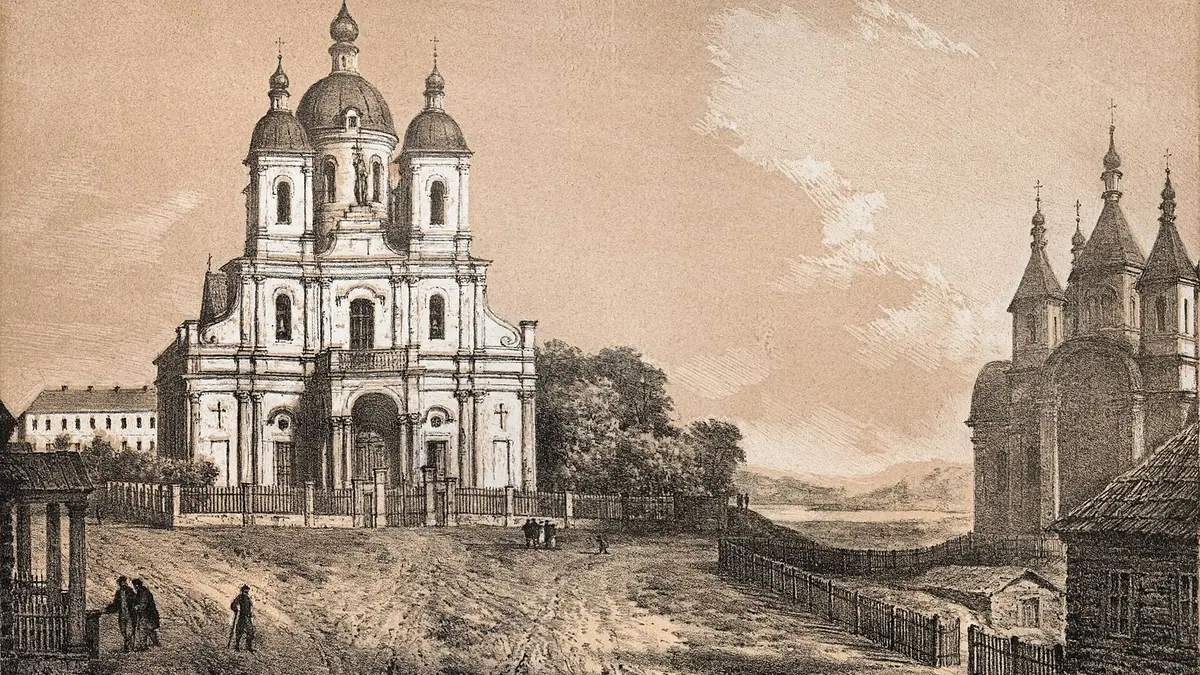
The Shrine of Our Lady of Białynicze
For centuries Białynicze on the Druts river was one of the most important Marian shrines of the old Polish–Lithuanian Commonwealth, known as the “Częstochowa of Belarus”. The Carmelite church with the miraculous image of Our Lady, crowned in 1761, was destroyed in Soviet times.
Today the parish is rebuilding the shrine, and every Mass requested here supports this work.
History of the shrine →Request a Holy Mass
Leave your contact details and intention – we will reply by e-mail with a proposed date.
Thank you! We have received your request and will reply shortly to the e-mail address you gave.