
 gregorianka.belynichi@gmail.com
Tricenario Gregoriano (1967) – the rules on the continuity of Gregorian Masses
The declaration of the Congregation of the Council of 24 February 1967 is the Church's basic document on interruptions in Gregorian Masses. We give its full text in English and in Latin and explain what follows from it.
What this document is
Tricenario Gregoriano is a short declaration (Latin declaratio) of the Sacred Congregation of the Council dated 24 February 1967, entitled De continuitate celebrationis Missarum Tricenarii Gregoriani – “On the continuity of the celebration of the Masses of the Gregorian thirty-day series”. The name by which it is cited comes from its opening words. The document has a single purpose: to settle what happens to Gregorian Masses when the series of thirty Masses is interrupted.
Who issued it and where it was published
- Issuing body: the Sacred Congregation of the Council (Sacra Congregatio Concilii) – an office of the Roman Curia which, later in 1967, was renamed the Congregation for the Clergy;
- On whose authority: the declaration was issued “by order of Pope Paul VI” (de mandato Summi Pontificis Pauli VI);
- Signatories: Archbishop Pietro Palazzini, secretary of the Congregation, and Florenzio Romita, undersecretary;
- Publication: “Acta Apostolicae Sedis” 59 (1967), pp. 229–230 – in the section for acts of the Congregation, immediately after a reply to a doubt about days of penance issued on the same day.
Full text
English translation, made from the Latin:
“A series of thirty Gregorian Masses interrupted by an unforeseen impediment (e.g. a sudden illness) or by another reasonable cause (e.g. the celebration of a funeral or wedding Mass) retains, by disposition of the Church, the fruits of this prayer recognised by the practice of the Church and the piety of the faithful, the celebrating priest remaining obliged to complete the celebration of the thirty Masses as soon as possible. The Ordinary, for his part, is to watch carefully that no abuses arise in so important a matter.”
The Latin text as published in “Acta Apostolicae Sedis”:
“Tricenario Gregoriano, quod ex improviso impedimento, (e. g. superveniente morbo), aut ex alia rationabili causa, (e. g. celebratione Missae funeris vel sponsalium), interrumpitur, ex dispositione Ecclesiae, fructus suffragii servantur, quos eidem Tricenario praxis Ecclesiae et pietas fidelium hucusque agnoverunt, firma obligatione Sacerdotis celebrantis quamprimum complendi celebrationem triginta Missarum. Ordinarius vero opportune invigilet ne in re tanti momenti abusus irrepserint.”
The text point by point
When an interruption does no harm
The document names two categories of cause. The first is an unforeseen impediment – Latin improvisum impedimentum – with the example of a sudden illness (superveniente morbo). The second is another reasonable cause (alia rationabilis causa) – for example a funeral or wedding Mass that the priest must offer for another intention. Both examples are given as illustrations (“e.g.”), not as a closed list.
What is preserved
The key phrase is fructus suffragii servantur – “the fruits of the intercession are preserved”. These are the fruits that “the practice of the Church and the piety of the faithful have so far recognised” in Gregorian Masses. The declaration therefore neither defines new spiritual effects nor measures them; it simply states that an interruption for a justified cause does not take them away. This happens ex dispositione Ecclesiae – “by disposition of the Church”.
The priest's obligation
The preservation of the fruits does not release the priest from anything. The declaration stresses his “firm obligation” (firma obligatione) to complete the thirty Masses as soon as possible (quamprimum). The series is to be finished, not abandoned.
The vigilance of the Ordinary
The final sentence entrusts the Ordinary with ensuring that no abuses creep in “in so important a matter”. The relief applies to genuine impediments – it must not become a pretext for interrupting Gregorian Masses at will.
What the declaration changed
The document itself does not describe the earlier rules, but its title and content show what question it was answering. Until then the continuity of the thirty Masses was understood strictly: an interruption called the whole series into question. The 1967 declaration holds that a series interrupted for an unforeseen or reasonable cause retains its fruits, provided the missing Masses are made up without delay. The requirement of continuity remained – only the consequences of an interruption for which no one is to blame were eased.
The declaration says nothing, however, about an interruption that is someone's fault. In pastoral practice it is accepted that if a priest has neglected a Mass through his own fault, the series is begun again. Nor does it mention the Easter Triduum separately, although no Mass is celebrated on Good Friday. We deal with these questions in practical terms in the article can Gregorian Masses be interrupted?
Why this matters for families
The declaration gives those who request Gregorian Masses the assurance that a priest's illness or a sudden funeral in the parish will not cancel the series they have offered. In keeping with the Church's teaching on purification after death, we help the dead above all through the Eucharistic sacrifice (CCC 1032), and the Church takes care that this prayer is celebrated faithfully. You can read more about the practice itself on the page Gregorian Masses, about its origins in the history of Gregorian Masses, and about other forms of prayer in our overview of Mass intentions. If you wish to offer thirty Masses for someone close to you, request Gregorian Masses in our parish.
Sources
Questions and answers
Is the declaration “Tricenario Gregoriano” still in force?
It has not been revoked and is cited in current pastoral materials on Gregorian Masses. The 1983 Code of Canon Law does not regulate Gregorian Masses separately, so this declaration remains the basic document on the question of interruptions.
Is there an official English translation?
The official text is the Latin one published in “Acta Apostolicae Sedis”. The English version quoted here is a working translation made from the Latin.
Does the document say how many Masses may be missed?
No. It sets no limit – it requires only that the cause be unforeseen or reasonable and that the missing Masses be made up as soon as possible.
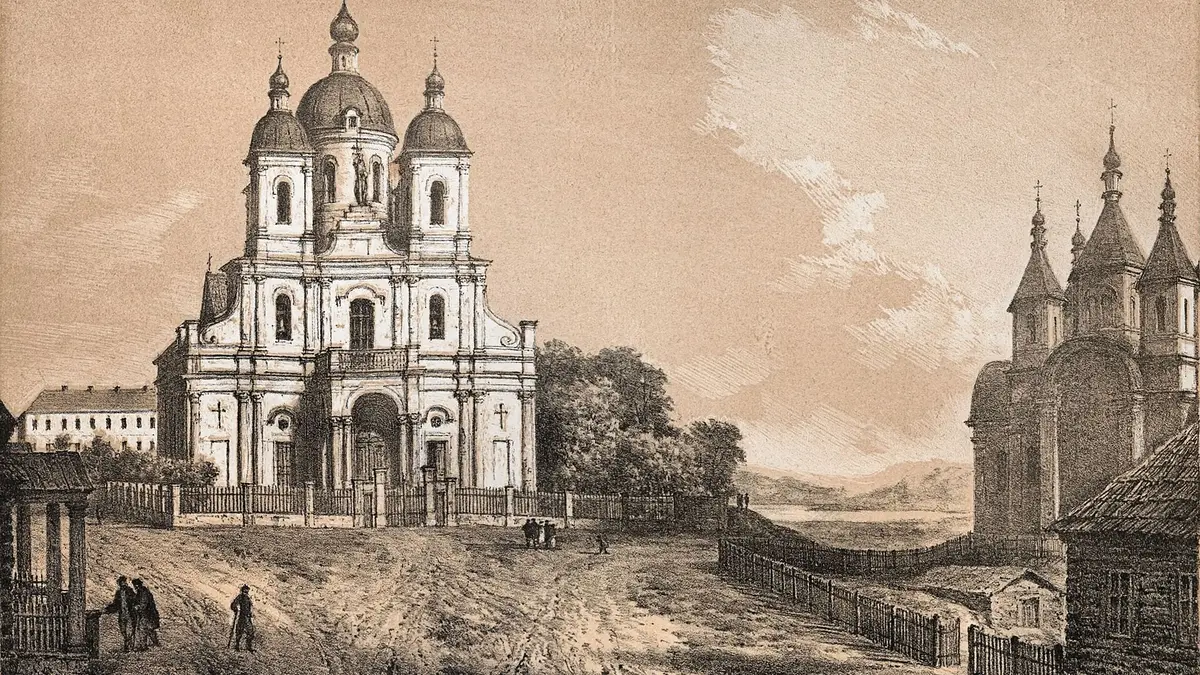
The Shrine of Our Lady of Białynicze
For centuries Białynicze on the River Drut was one of the most important Marian shrines of the Polish–Lithuanian Commonwealth, known as the “Częstochowa of Belarus”. The Carmelite church with the miraculous image of Our Lady, crowned in 1761, was destroyed in Soviet times.
Today the parish is rebuilding the shrine, and every Mass requested here supports this work.
History of the shrine →Request a Holy Mass
Leave your contact details and intention – we will reply by e-mail with a proposed date.
Thank you! We have received your request and will reply shortly to the e-mail address you gave.