
 gregorianka.belynichi@gmail.com
All Souls' Day – prayer and Masses for the dead
The Solemnity of All Saints and All Souls' Day open November – the month in which the Church prays for the dead in a special way. We explain how 1 and 2 November differ, how to request a Mass for the dead on these days, and whether this is a good time to begin Gregorian Masses.
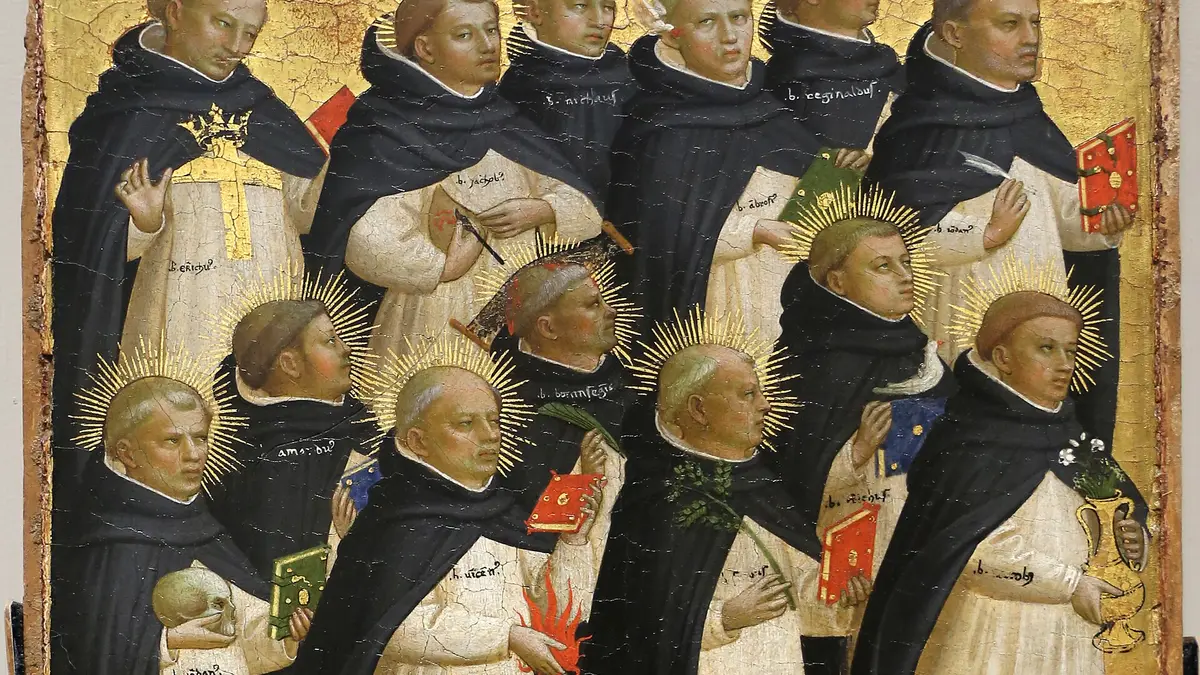
All Saints and All Souls – two different days
Although in everyday speech the two days often merge into one “day of the dead”, the Church's liturgy clearly distinguishes them.
| 1 November | 2 November | |
|---|---|---|
| Name | Solemnity of All Saints | Commemoration of All the Faithful Departed (All Souls' Day) |
| Who it is about | those who are already in heaven – including those whose names we do not know | the dead who may still need purification |
| Character | joy and hope; in many countries a holy day of obligation | prayer of intercession, liturgy for the dead |
On the first of November the Church looks upward: she gives thanks for the saints and reminds us that everyone is called to holiness. On the second of November she takes the attitude of petition – commending to God all the dead, especially those whom no one remembers any more. The annual commemoration of all the faithful departed was established for the monasteries of his congregation by St Odilo, Abbot of Cluny (d. 1048); from there the custom gradually spread to the whole Western Church. Where 1 November is a public holiday and the faithful visit the cemeteries that evening, popular piety joins the two days into a single time of remembrance.
November – the month of prayer for the dead
In Catholic tradition the whole of November is a month of special remembrance of the dead. The Rosary is prayed for them, their names are read out in church and Masses are requested. This practice rests on the Church's teaching: whoever has died in God's grace but is not yet fully purified can receive help from the living (CCC 1030–1032). The Catechism lists almsgiving, indulgences and works of penance, and above all the Eucharistic sacrifice. Scripture gives the example of Judas Maccabeus, who made an atoning sacrifice for the fallen (2 Macc 12:43–46). We write more about this in the articles prayer for the dead and purgatory in the teaching of the Church.
November is not, however, the “only proper” time. The dead can be helped all year round – November simply reminds the whole community of this.
Three Masses on All Souls' Day
On the second of November every priest may celebrate three Masses. Pope Benedict XV extended this privilege to the whole Church by the Apostolic Constitution “Incruentum Altaris” of 10 August 1915, during the First World War. Only one of these Masses may be offered by the priest for an intention for which he accepts an offering; the second he offers for all the faithful departed, and the third for the intentions of the Holy Father. In practice this means that even when more Masses are celebrated that day, the number of individual intentions a priest can accept is limited.
How to request a Mass for the dead on All Saints' or All Souls' Day
A Mass for the dead on these days is requested in the same way as on any other day – it is simply worth doing so earlier, because many families want their intention to fall on 1 or 2 November.
- Choose the form: a single Mass for the dead, a novena of Masses for the dead (nine Masses) or thirty Gregorian Masses.
- Write the intention: the first name and surname of the deceased, e.g. “For the repose of the soul of Anne Taylor”. A single Mass or a novena may include several people; we show how to word this in the guide how to word a Mass intention.
- Give your preferred date: in the form, by e-mail or via WhatsApp. In our e-mail reply we will suggest a date and time; if 1 or 2 November is no longer free, we will give the nearest possible date.
- Make the offering to the parish account. We send a confirmation with the intention, date and time of the Mass no later than 2 days after it arrives.
The Masses are celebrated first and foremost at the Shrine of Our Lady in Białynicze. You do not need to attend in person – many of those who request Masses unite themselves spiritually, praying that day in their own church or at the grave of their loved one.
Is November a good time to begin Gregorian Masses?
Gregorian Masses are thirty Masses offered day after day for one deceased person (more: what are Gregorian Masses). No rule ties them to November – they can be requested in any month, however much time has passed since the death. November can nevertheless be a good opportunity: a series begun at the start of the month covers the whole period of the Church's special prayer for the dead, and the family has a concrete plan of remembrance before them.
Two things should be borne in mind:
- Gregorian Masses are offered for one person only – if you want to commend several loved ones at once, a novena or single Masses will be better (comparison: Gregorian Masses or a novena);
- the starting date depends on when a priest can commit himself to thirty consecutive days. We do not promise a specific date in advance – you can check current availability on the page available dates for Gregorian Masses, and we confirm the date by e-mail.
If you would like the series to end on a particular day – for example on the anniversary of the death – please say so in your request.
November remembrance of the dead
Remembrance of the dead (in Polish, wypominki) means reading out the names of the dead together with the prayer of the community. In Poland the best known are the November lists: one-off (usually on 1 or 2 November) and octave (for eight days, 1–8 November). There is also annual remembrance, with the names read out throughout the year. In our parish you can use the form to submit names for annual remembrance of the dead – your loved ones are then commended to God not only in November.
Remembrance of the dead does not replace a Mass for a particular deceased person, but it complements it well – they are two different forms of the same love.
The indulgence for the dead, 1–8 November
From 1 to 8 November the faithful who visit a cemetery and pray for the dead can gain, each day, a plenary indulgence applicable to the dead, and on 2 November also by visiting a church or oratory and praying the “Our Father” and the Creed. The usual conditions apply: confession, Holy Communion and prayer for the intentions of the Holy Father. We have gathered the details and practical advice on the page the indulgence for the dead in November.
How to live these days in practice
- visit the grave of your loved ones and pray there – even just a short “Eternal rest”;
- take part in Mass on 1 and 2 November and, if you can, receive Holy Communion for the dead;
- request a Mass or a series of Masses for the deceased; you can request Gregorian Masses online or another intention using the same form;
- remember the dead for whom no one prays – it is precisely for them that the Church instituted All Souls' Day.
Sources
- Catechism of the Catholic Church, nos. 958, 1030–1032, 1371
- Apostolic Penitentiary, decree on indulgences for the dead (22.10.2020) – refers to the constitution “Incruentum Altaris” of 10.08.1915 (in Italian)
- Catholic Culture, All Souls, November 2 – the three Masses and their intentions
- Catholic Encyclopedia, All Souls' Day – St Odilo of Cluny
Questions and answers
Is a Mass requested for 1 November a “Mass for the dead”?
On 1 November the Church celebrates the liturgy of the Solemnity of All Saints, not the liturgy for the dead. The priest can nevertheless offer that Mass for a particular deceased person – the intention does not depend on the Mass texts of the day. If the liturgy for the dead matters to you, choose 2 November or another day.
What if 2 November is already fully booked?
We will suggest the nearest possible day. The value of the Mass does not depend on the date in the calendar – a Mass celebrated a few days later is the same Sacrifice of Christ offered for the deceased.
Can I request a Mass for All Souls' Day from abroad?
Yes. The whole request is made through the form, by e-mail or via WhatsApp, and you will receive the confirmation with the date and time of the Mass by e-mail. You do not need to be present in Białynicze.
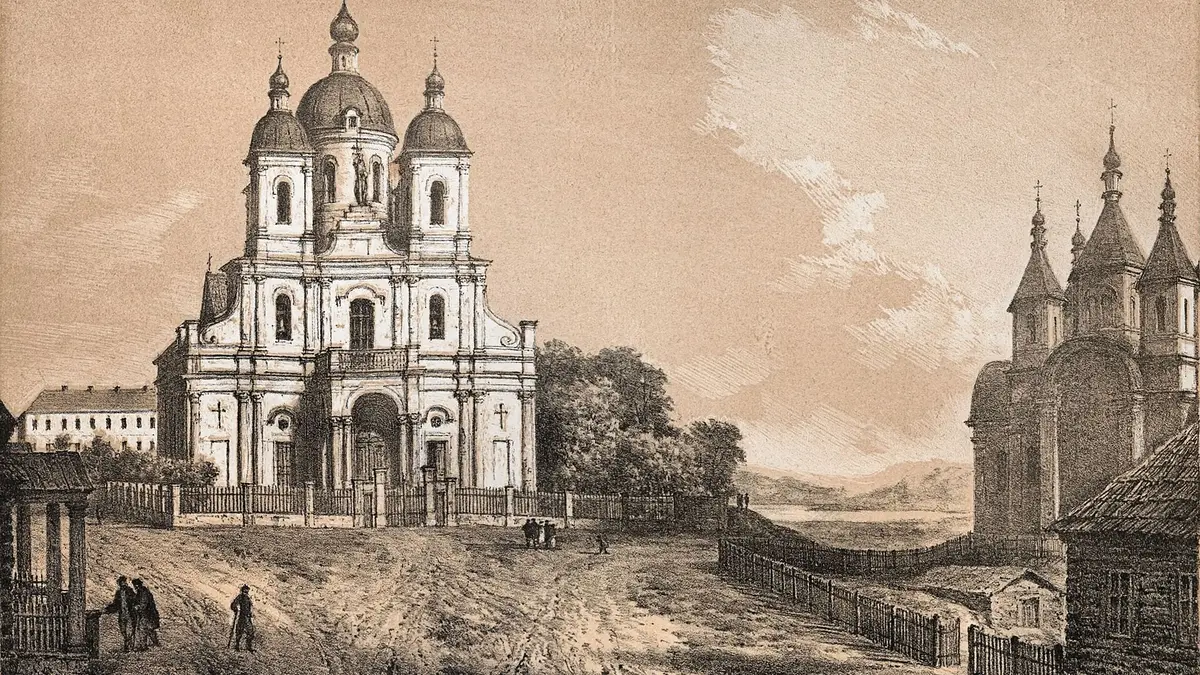
The Shrine of Our Lady of Białynicze
For centuries Białynicze on the River Drut was one of the most important Marian shrines of the Polish–Lithuanian Commonwealth, known as the “Częstochowa of Belarus”. The Carmelite church with the miraculous image of Our Lady, crowned in 1761, was destroyed in Soviet times.
Today the parish is rebuilding the shrine, and every Mass requested here supports this work.
History of the shrine →Request a Holy Mass
Leave your contact details and intention – we will reply by e-mail with a proposed date.
Thank you! We have received your request and will reply shortly to the e-mail address you gave.