
 gregorianka.belynichi@gmail.com
To the Heavenly Court – a Tradition of Prayer for the Living
The Masses to the Heavenly Court are a traditional form of prayer for a living person: a series of Holy Masses for one intention in which we ask for the intercession of Mary, the angels and the saints. In Białynicze we accept it as thirty Masses; it is popularly called the “Gregorian Masses for the living”.
Request an intention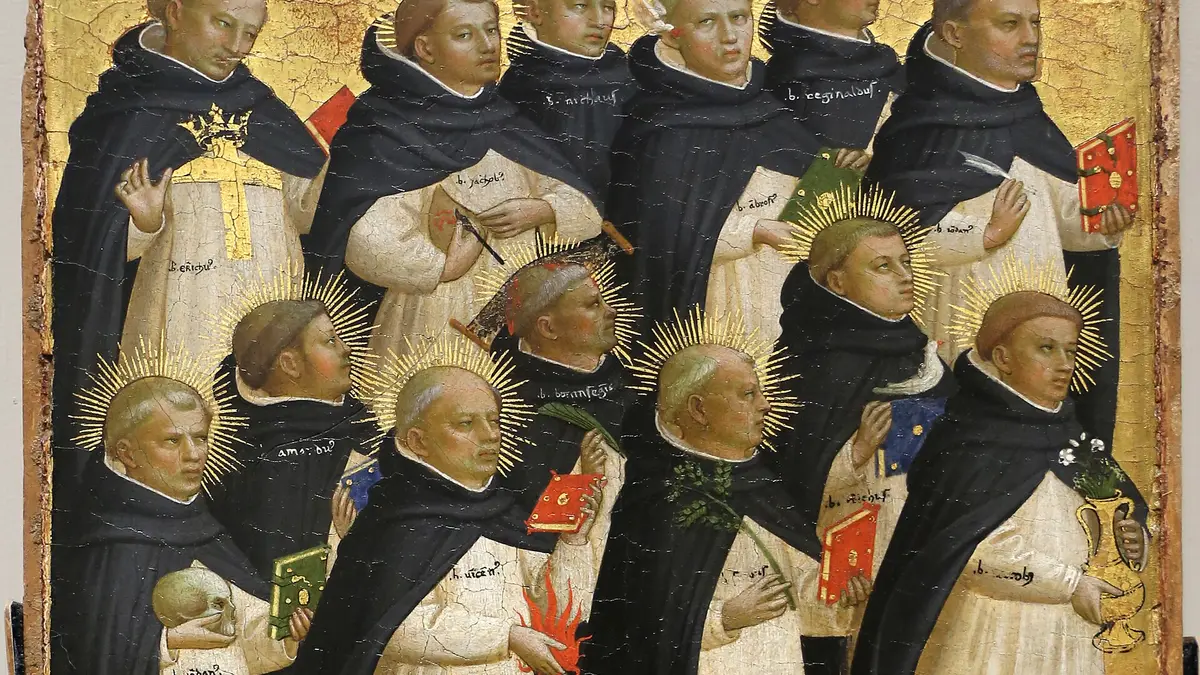
What the “Heavenly Court” means
The “Heavenly Court” is an old, pictorial name for heaven: the Holy Trinity surrounded by Mary, the angels and all the saints. The Masses to the Heavenly Court are a pious custom known in Poland and Belarus – a series of Holy Masses celebrated for one intention for a living person, in which we ask the inhabitants of heaven to intercede for that person with God.
It is important to understand this form correctly. Every Mass is always a sacrifice offered to God alone – in it we remember the saints and ask for their intercession, but the sacrifice is not offered to them (as the Council of Trent already taught). Belief that the saints pray for us belongs to the truth of the communion of saints (CCC 956). The Masses to the Heavenly Court are therefore not a separate rite or a “special” Mass, but a series of ordinary Holy Masses in which the same petition is brought before God with trust in the prayer of the whole Church in heaven.
What this form looks like in Białynicze
In our parish we accept the Masses to the Heavenly Court as a series of thirty Holy Masses for one intention for a living person (or for a family), commended to God through the intercession of the Blessed Virgin Mary and all the saints. In different parishes the custom is described somewhat differently – the number of Masses varies, as does whether the successive Masses are offered in honour of particular mysteries or saints. We do not publish any “obligatory” scheme: the exact wording of the intention is set by the priest and we give it in our e-mail reply.
How it differs from Gregorian Masses
The name “Gregorian Masses for the living” is a popular one and can be misleading. Gregorian Masses are thirty Masses offered only for one deceased person; it is they that have behind them a tradition going back to St Gregory the Great and particular norms of the Church, for example regarding a break in the series. These principles do not apply to the Masses to the Heavenly Court. See: what are Gregorian Masses and Gregorian Masses in Białynicze.
| To the Heavenly Court | Novena for the living | Gregorian Masses | |
|---|---|---|---|
| For whom | a living person or a family | a living person or a family | one deceased person only |
| Number of Masses | 30 in Białynicze | 9, day after day | 30, day after day |
| Wording of the intention | through the intercession of Mary and the saints – the exact wording is confirmed by the priest | any petition or thanksgiving | “For the repose of the soul of …” – one person |
| Basis | pious custom | pious custom | tradition recognised by the Church, 1967 declaration |
For what intentions it is requested
- for health in a serious or long-term illness,
- for the grace of conversion and reconciliation with God for a loved one,
- for the grace of a good death, reconciled with God,
- for God's blessing on a new stage of life – marriage, priesthood, moving abroad,
- in thanksgiving for a whole life, e.g. on the occasion of a jubilee.
When the matter is urgent and short-term, a novena for the living is more often chosen, and when it concerns one day – a single Mass intention. All the forms are compared in our guide Mass intentions.
On the parish's former website we recorded the testimony of a couple of doctors who requested thirty Masses to the Heavenly Court, asking that at the hour of death they would not turn away from God. Both were gravely ill at the time; they received the sacrament of the anointing of the sick and confession, and contrary to the prognosis they recovered. We quote it with gratitude – not as a promise, but as a sign of God's goodness.
How to request the Masses to the Heavenly Court
Choose “To the Heavenly Court” in the form and write for whom and for what intention we should pray.
You can send the intention through the form on this page, by e-mail or via WhatsApp. We reply by e-mail with a proposed date and the times of the Masses. Once your offering has reached the parish account, within two days at the latest you will receive a confirmation giving the intention, the date (or dates) and the time of each Mass.
The Masses are celebrated first of all in the Parish of Our Lady of Białynicze, and also by priests of other parishes in eastern Belarus. Information about the offering can be found on the offering for Holy Masses page.
Sources
Questions and answers
Can the Masses to the Heavenly Court be offered for a deceased person?
Are all thirty Masses celebrated by the same priest?
Can I request this form of prayer for myself?
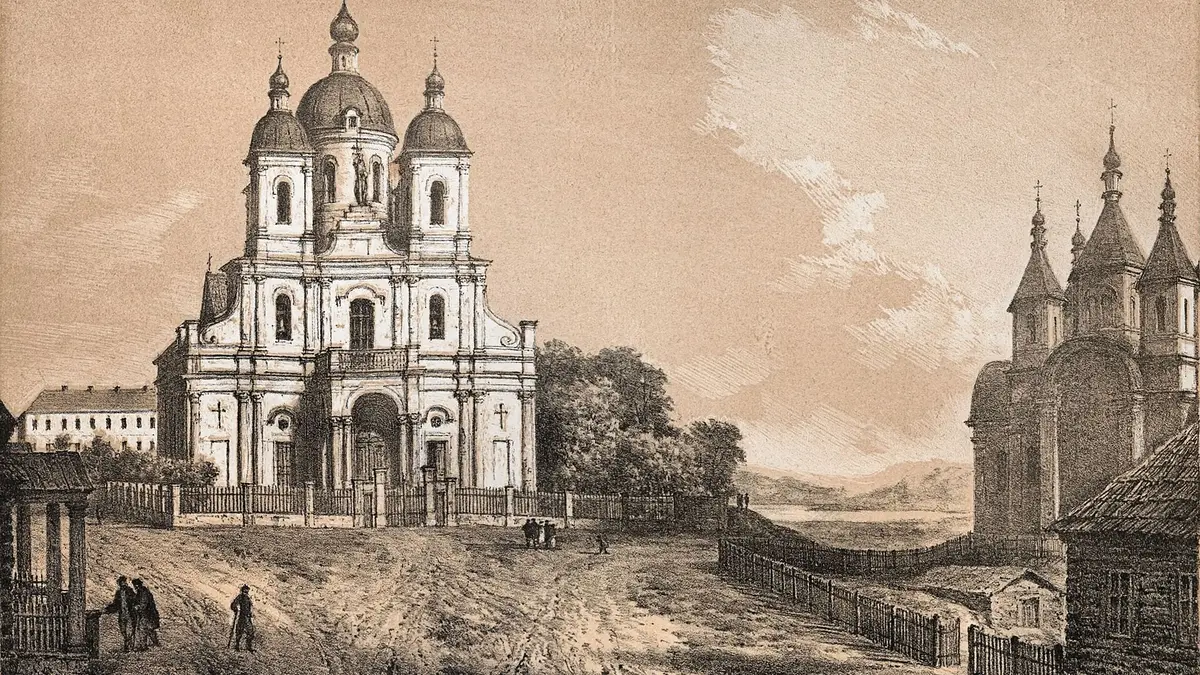
The Shrine of Our Lady of Białynicze
For centuries Białynicze on the Druts river was one of the most important Marian shrines of the old Polish–Lithuanian Commonwealth, known as the “Częstochowa of Belarus”. The Carmelite church with the miraculous image of Our Lady, crowned in 1761, was destroyed in Soviet times.
Today the parish is rebuilding the shrine, and every Mass requested here supports this work.
History of the shrine →Request a Holy Mass
Leave your contact details and intention – we will reply by e-mail with a proposed date.
Thank you! We have received your request and will reply shortly to the e-mail address you gave.