
 gregorianka.belynichi@gmail.com
Novena for the Dead Online – Nine Holy Masses
A novena for the dead is nine Holy Masses celebrated day after day for one deceased person or for several. We explain what it involves, how it differs from Gregorian Masses and how to request it online in the parish in Białynicze.
Request a novena
What a novena for the dead involves
The word “novena” comes from the Latin novem – nine. A novena of Holy Masses for the dead is nine Eucharists celebrated on consecutive days for the same intention: for the soul of one person or for several people, for example for deceased parents or grandparents. Tradition sees the model of nine days of prayer in the time the Apostles spent in prayer together with Mary between the Ascension and Pentecost (Acts 1:14).
A novena is not a separate liturgical rite. It is a pious custom: nine ordinary Holy Masses in which the priest commends the same deceased person to God each day.
Why we request Masses for the dead
From the beginning the Church has prayed for the dead. The Catechism reminds us that our prayer for them can help them, and can also make their intercession for us effective (CCC 958). Those who have died in God's grace but still need purification can be helped by the living – the Catechism mentions above all the Eucharistic sacrifice, and also almsgiving, indulgences and works of penance (CCC 1032; cf. 2 Macc 12:46).
A novena is therefore above all an expression of faith and love: for nine days the whole Mass, celebrated for a particular person, becomes our prayer for them.
Who a novena can be offered for
- for one deceased person – who died recently or many years ago,
- for several people, e.g. “for our late parents, John and Mary”,
- for the deceased of a family, e.g. “for the deceased of the Smith and Jones families”,
- for the holy souls in purgatory.
This is an important difference from Gregorian Masses, which according to the practice of the Church are offered for one deceased person only. What exactly the thirty-day series is, we explain on the page what are Gregorian Masses.
When a novena is requested
- in the first days and weeks after the funeral – as prayerful accompaniment during the time of mourning,
- before the anniversary of death, so that the last Mass falls on the anniversary itself,
- in November, when the Church remembers the dead in a special way – it is then worth combining it with prayer to gain the indulgence for the dead,
- when a single Mass seems too little and Gregorian Masses are not possible, e.g. because we wish to pray for several people.
A novena, Gregorian Masses or a single Mass?
| Single Mass | Novena for the dead | Gregorian Masses | |
|---|---|---|---|
| Number of Masses | 1 | 9, day after day | 30, day after day |
| For whom | one or several people | one or several people | one deceased person only |
| Basis | cann. 901, 945–958 | pious custom | tradition recognised by the Church, 1967 declaration |
| When chosen | anniversary, name day of the deceased | mourning, anniversary, November | usually after the death of one person |
If one Mass on a particular day is enough for you, choose a Mass intention. A similar nine-day prayer can also be offered for the living – the novena for the living. Other forms of remembering the dead are described in our guide Mass for the dead.
How to request a novena for the dead online
Give the name of the deceased person (or people) and, if the date matters to you, the day on which the novena should begin or end. A short formula is enough in the intention field, e.g. “For the repose of the soul of Anne Taylor” or “For our late parents, Thomas and Helen”.
You can send the intention through the form on this page, by e-mail or via WhatsApp. We reply by e-mail with a proposed date and the times of the Masses. Once your offering has reached the parish account, within two days at the latest you will receive a confirmation giving the intention, the date (or dates) and the time of each Mass.
The whole process is described step by step in our guide how to request a Mass online, and the principles of the Mass offering on a separate page. The Masses are celebrated first of all in the Parish of Our Lady of Białynicze, and also by priests of other parishes in eastern Belarus. The offerings support these priests and the rebuilding of the shrine.
Sources
Questions and answers
Must a novena be celebrated without any break?
How can I unite myself spiritually with the Masses when they are celebrated in Belarus?
Can a novena be requested for a non-believer or a person of another faith?
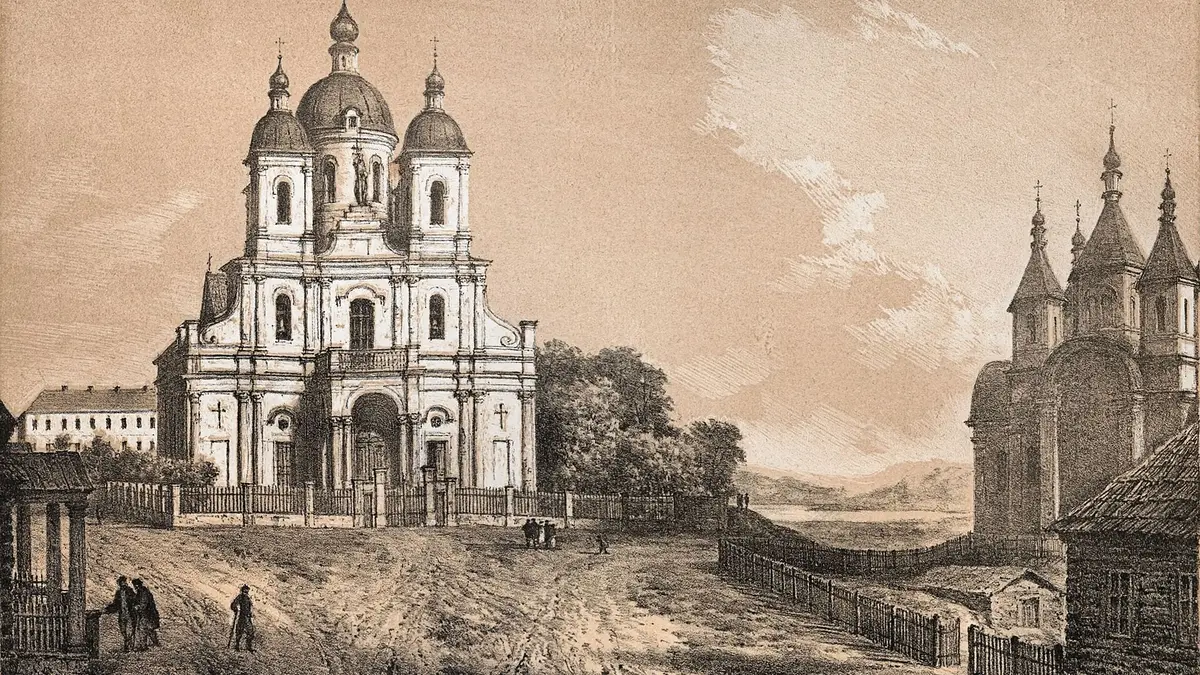
The Shrine of Our Lady of Białynicze
For centuries Białynicze on the Druts river was one of the most important Marian shrines of the old Polish–Lithuanian Commonwealth, known as the “Częstochowa of Belarus”. The Carmelite church with the miraculous image of Our Lady, crowned in 1761, was destroyed in Soviet times.
Today the parish is rebuilding the shrine, and every Mass requested here supports this work.
History of the shrine →Request a Holy Mass
Leave your contact details and intention – we will reply by e-mail with a proposed date.
Thank you! We have received your request and will reply shortly to the e-mail address you gave.