
 gregorianka.belynichi@gmail.com
Anniversary Mass for the dead – how to request the intention
The anniversary of a loved one's death, birthday or name day is a good day to entrust them to God at the altar. We explain what the liturgical norms say, how to request the Mass and how to word the intention – with ready-made examples.
Why a Mass on the anniversary of a death
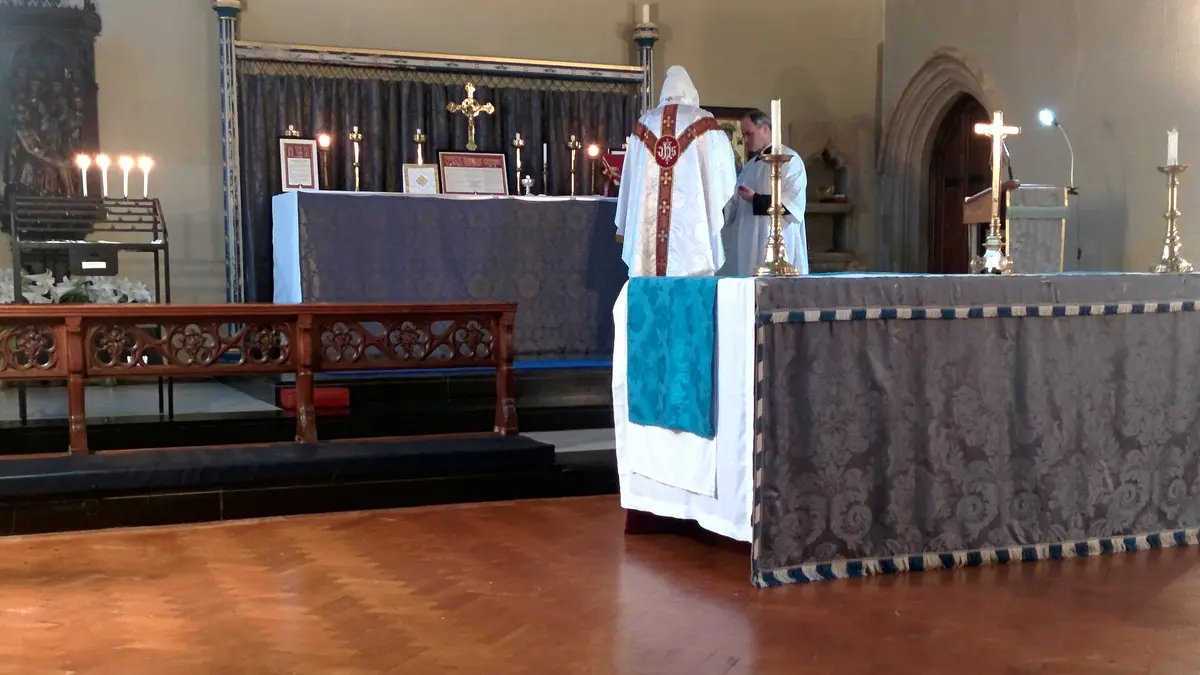
The anniversary of the death of someone close is a day when memories return with particular force. For centuries Catholics have spent it at the altar: they request Holy Mass, asking that the fruits of Christ's Sacrifice may embrace the deceased and that – if he or she still needs purification – they may enter as fully as possible into God's peace. We write more about why the Church offers the Eucharist for the dead in Mass for the dead.
The first anniversary has a place of its own in the liturgy. The General Instruction of the Roman Missal (no. 381) names it alongside the Mass on receiving news of a death and the Mass on the day of final burial: on these days a Mass for the dead may be celebrated even within the Octave of Christmas, on obligatory memorials and on ordinary weekdays – except Ash Wednesday and the days of Holy Week. Later anniversaries – the fifth, tenth or twentieth – have no such distinction in the norms, but prayerful remembrance of the dead has no expiry date. It is also worth distinguishing the Mass formulary (the texts of the prayers, which the priest chooses according to the liturgical calendar) from the intention: even when the texts of a feast or a Sunday are prescribed on a given day, the Mass can be offered for the deceased.
How to request an anniversary Mass from us
- Fill in the request form and choose the option “Individual Mass intention”.
- In the text, give the first name and surname of the deceased, the occasion (e.g. the 3rd anniversary of death) and the date you would like.
- In our e-mail reply we will suggest a date for the Mass. If the day you asked for is already taken, we will suggest one as close as possible.
- Once the offering has been made, you will receive a confirmation with the wording of the intention, the date and the time – we describe the details on the page Mass confirmation.
You will find the general rules for accepting intentions in our guide to Mass intentions. You can also make a request by e-mail or via WhatsApp (details on the contact page).
How far in advance to request
It is best to request well ahead. Mass dates fill up gradually, and only a limited number of intentions can be accepted for each day. If the anniversary falls on a particular day and that day matters to you, submit the intention as soon as you think of it. If the date is flexible (e.g. “in the week of the anniversary”), say so straight away – it is then easier to find a free date.
Sample intentions
An intention should be short and clear: who, for whom, on what occasion. A few examples:
- “For the late Anne Taylor on the first anniversary of her death.”
- “For the late John Smith on the tenth anniversary of his death – for the joy of eternal life.”
- “For the late Thomas and Helen Walsh on the anniversary of Thomas's death – from their children and grandchildren.”
- “For the late Peter Murphy on the anniversary of his birth.”
- “For our late mother, Barbara, on her birthday – from her daughter and family.”
- “For the late Joseph Brown on his name day.”
- “For the late Catherine on her name day – for the grace of salvation for her and peace for the whole family.”
You will find more advice on how to put the wording together in the article how to word a Mass intention. If your loved one has only just died, see also Masses after a funeral.
Can Gregorian Masses be requested for an anniversary?
Yes. Gregorian Masses – thirty Masses offered day after day for one deceased person – are not tied to the date of death. They can be requested straight after the funeral, after a year or after many years. An anniversary can be a good moment: the series can be arranged so that it begins on the anniversary or ends on it. More in the article when to request Gregorian Masses, and about the practice itself on the page what are Gregorian Masses. If you are hesitating between a single Mass, a novena and Gregorian Masses, the comparison Gregorian Masses or a novena will help.
Does the family have to be present?
It is not a condition for the Mass to be offered for the deceased. The Church encourages the family to take part in the Eucharist offered for the deceased, including by receiving Holy Communion (General Instruction of the Roman Missal, no. 383), and where possible it is worth doing so. When the Mass is celebrated far away, for example at our shrine in Białynicze, you can unite yourself with it spiritually: pray at home at the same hour, visit the grave, or go to Mass in your own parish and commend the deceased to God there. You will find suggested prayers on the page prayer for the dead.
Sources
Questions and answers
Can I request several anniversary Masses for different people?
Yes. Submit each intention separately or list them all in one form – in our e-mail reply we will suggest a date for each of them.
Can both parents be named in one intention?
Yes, a single Mass may be offered for several people, e.g. “For our late parents, Thomas and Helen”. Gregorian Masses are different – they are always for one deceased person.
Can an anniversary Mass be requested for someone who was not a believer or belonged to another denomination?
Yes. Prayer for the dead embraces every person, and it is God who decides the fate of the deceased. Simply give the name and the occasion – we do not ask about religion.
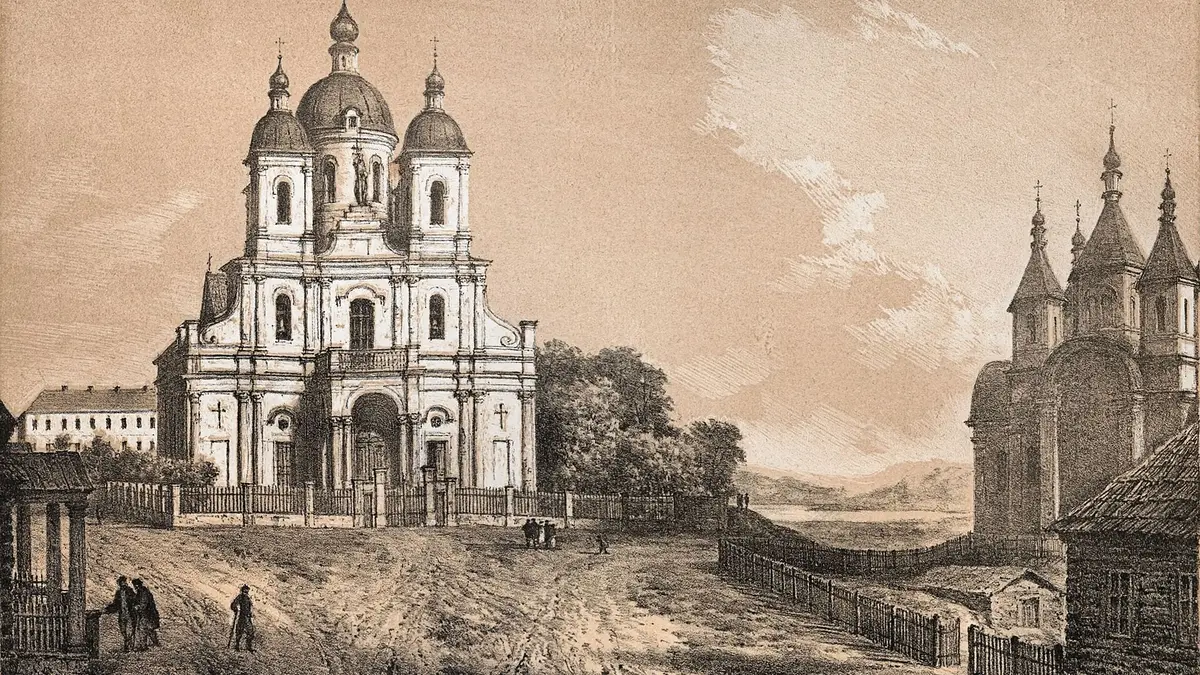
The Shrine of Our Lady of Białynicze
For centuries Białynicze on the River Drut was one of the most important Marian shrines of the Polish–Lithuanian Commonwealth, known as the “Częstochowa of Belarus”. The Carmelite church with the miraculous image of Our Lady, crowned in 1761, was destroyed in Soviet times.
Today the parish is rebuilding the shrine, and every Mass requested here supports this work.
History of the shrine →Request a Holy Mass
Leave your contact details and intention – we will reply by e-mail with a proposed date.
Thank you! We have received your request and will reply shortly to the e-mail address you gave.