
 gregorianka.belynichi@gmail.com
The History of Gregorian Masses
The custom of offering thirty Masses for one deceased person is more than fourteen centuries old. Here we tell what St Gregory the Great actually wrote about the monk Justus, how the practice spread through the Church, and what was decided in 1884 and 1967.
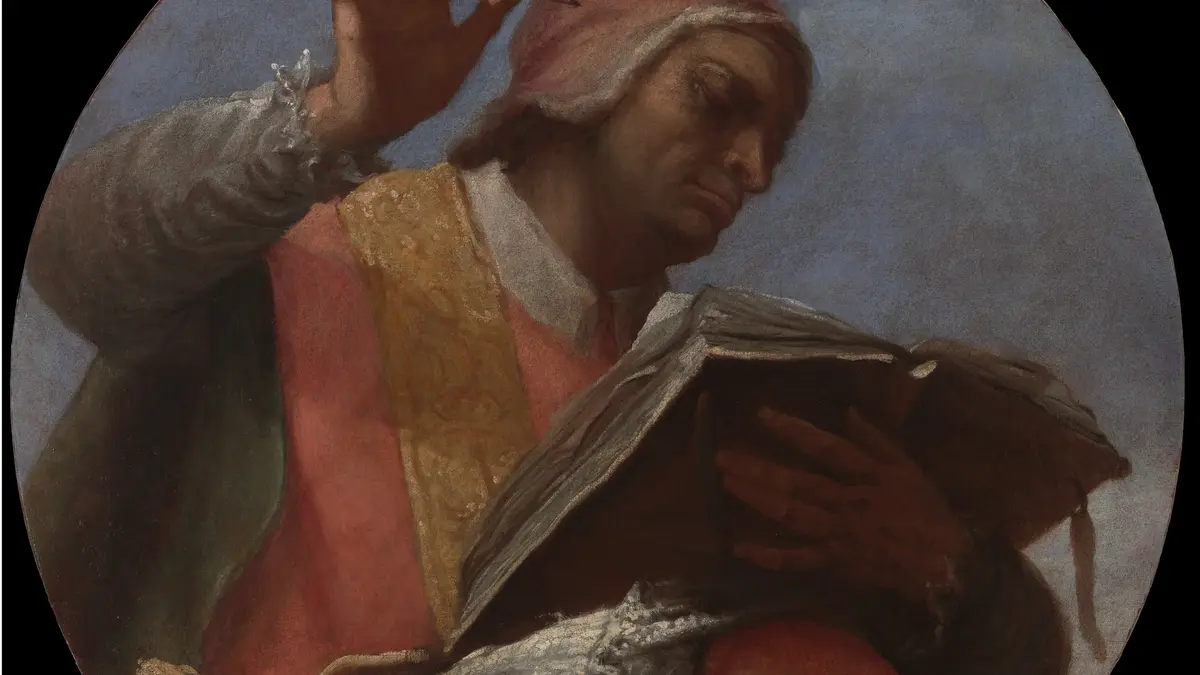
St Gregory the Great – pope and monk
Gregory was born in Rome around 540 into a wealthy senatorial family. As a young man he served as prefect of the city, one of the most important offices in Rome. A few years later he gave it up, founded a monastery dedicated to St Andrew in his family home on the Caelian Hill and became a monk there himself. He was later ordained deacon and spent time in Constantinople as the pope's representative. On his return he went back to the monastery, and in 590 he was elected to the See of Peter.
As pope he cared for the poor in times of famine and plague, sent missionaries to England and left a rich body of writings – homilies, the “Pastoral Rule” and the “Moralia” on the Book of Job. He died on 12 March 604. The Church calls him “the Great”; he is one of the four great Fathers of the Western Church.
The “Dialogues” – where the story comes from
Around 593–594 Gregory wrote the “Dialogues”, a conversation with the deacon Peter about the saints and miracles of Italy. The best known is Book II, devoted entirely to St Benedict. Book IV deals with the fate of the soul after death. Among other things, Gregory writes there that there is a cleansing after death for certain lesser faults and that the souls of the dead are helped by the Sacrifice of the Mass. In support he recounts several events – one of which, as he himself notes, took place in his own monastery about three years earlier. This is the story of the monk Justus (Book IV, chapter 55 or 57, depending on the edition).
The monk Justus and the three gold coins
Justus was a monk of St Andrew's monastery and was skilled in medicine – he had looked after Gregory himself in his frequent illnesses. When he fell gravely ill, he admitted to his own brother Copiosus that he had three gold coins hidden away. The brethren found them concealed among his medicines. In a monastery where everything was meant to be held in common, this was a serious breach of the vow of poverty.
Gregory, then abbot, decided to act severely – both for the good of the dying man and as a warning to others. He instructed the prior, Pretiosus, that the brethren were not to visit Justus, and that after his death he was to be buried outside the monks' cemetery, together with the coins. When Justus learned why the brethren had left him alone, he sincerely repented of his sin and died in that sorrow.
About thirty days after his death Gregory, as he writes, began to feel compassion for the dead man. He called Pretiosus and ordered that the Sacrifice of the Mass be offered for Justus on thirty consecutive days, without missing a single day. The brethren did as he asked. One night Justus appeared to Copiosus, who knew nothing of the Masses being offered, and told him that until then he had been in a bad way, but now all was well, because that day he had received communion. When the monks counted the days, it turned out that the thirtieth Mass had been offered on that very day.
Gregory ended his account with the conclusion that the deceased brother had been set free through the Sacrifice of the Mass. Since then, thirty Masses offered for one deceased person have been called Gregorian.
Background: prayer for the dead before Gregory
Gregory did not invent prayer for the dead – he described one of its forms. The Old Testament already tells how Judas Maccabeus made an atoning sacrifice for the fallen, “that they might be delivered from their sin” (2 Macc 12:43–46). The first Christians remembered the dead at the Eucharist: at the turn of the second and third centuries Tertullian mentions offerings made for the dead on the anniversary of their death, and in his “Confessions” St Augustine describes how his dying mother, St Monica, asked for only one thing – to be remembered at the altar. The Catechism sums up this tradition by saying that from the beginning the Church has honoured the memory of the dead and offered prayers for them, above all the Eucharistic sacrifice (CCC 1032). We write more about this teaching in Purgatory in the teaching of the Church.
How the custom spread
The “Dialogues” were among the most widely read books of the Middle Ages, and the story of Justus travelled with them. The custom of thirty Masses for one deceased person took root first in monasteries, then in parishes throughout the Western Church, and the name “Gregorian trental” (Latin tricenarium Gregorianum) became its established term. In Polish it is popularly called simply “gregorianka”.
For centuries the practice developed mainly as a devotion of the faithful. The Church did not establish it by decree, but in time confirmed that it was in keeping with the faith and clarified the rules for its celebration.
1884 – recognition by the Congregation of Indulgences
In 1884 the Sacred Congregation of Indulgences recognised the confidence of the faithful in the value of the thirty Gregorian Masses as pious and reasonable. The wording matters: the Church does not promise a particular effect here, but states that people's trust in this practice has solid grounds and is not superstition.
1967 – the declaration “Tricenario Gregoriano”
The most important modern document is the declaration of the Sacred Congregation of the Council “Tricenario Gregoriano” of 24 February 1967 (AAS 59 [1967], pp. 229–230), issued by order of Pope Paul VI. It answers a practical question: what happens when a series of thirty Masses is interrupted? The document states:
“A series of thirty Gregorian Masses interrupted by an unforeseen impediment (e.g. a sudden illness) or by another reasonable cause (e.g. the celebration of a funeral or wedding Mass) retains, by disposition of the Church, the fruits of this prayer recognised by the practice of the Church and the piety of the faithful, the celebrating priest remaining obliged to complete the celebration of the thirty Masses as soon as possible. The Ordinary, for his part, is to watch carefully that no abuses arise in so important a matter.”
The declaration was signed by Archbishop Pietro Palazzini as secretary and Florenzio Romita as undersecretary. Later that same year the Congregation of the Council was renamed the Congregation for the Clergy. We discuss the document in more detail on the page “Tricenario Gregoriano” – the 1967 declaration, and its practical consequences in the article can Gregorian Masses be interrupted?
Gregorian Masses today
After fourteen centuries the practice remains essentially what it was in the monastery on the Caelian Hill: thirty Masses, day after day, for one deceased person. The only change is that today the Masses may be celebrated by one priest or by several, in different churches, and the intention can be submitted from a distance. How we understand this prayer today is explained in the article What are Gregorian Masses?, and its place among other ways of remembering the dead on the page prayer for the dead.
At the Shrine of Our Lady of Białynicze we continue this tradition: we accept intentions from all over the world and celebrate Gregorian Masses in Białynicze and with the help of priests from other parishes in eastern Belarus. If you would like your departed loved one to be included in this centuries-old prayer, you can request Gregorian Masses using the form.
Sources
- St Gregory the Great, “Dialogues”, Book IV (English translation of 1608)
- Acta Apostolicae Sedis 59 (1967), pp. 229–230 – the declaration “Tricenario Gregoriano”
- Liturgista.pl – Polish text of the declaration “Tricenario Gregoriano” (in Polish)
- Catechism of the Catholic Church – nos. 958, 1030–1032
- Niedziela.pl – St Gregory the Great and Gregorian Masses (in Polish)
- Jesuits, St Stephen's Parish – Mass intentions (in Polish)
Questions and answers
Was St Gregory already pope when he ordered the Masses for Justus?
No. The event took place while he was abbot of St Andrew's monastery in Rome. He described it a few years later, by then as pope, in Book IV of the “Dialogues”.
Why do paintings show the “Mass of St Gregory” with Christ on the altar?
That is a different, later motif – a medieval legend about Christ appearing to Gregory during Mass, popular in fifteenth- and sixteenth-century art. It is not connected with the story of Justus, although both are linked by the Eucharist.
Where can I read the “Dialogues” in English?
The “Dialogues” of St Gregory the Great are available in English translation, including the 1608 version listed in the sources above; the story of Justus is in Book IV. Modern translations can be found in series of the Church Fathers in parish and university libraries.
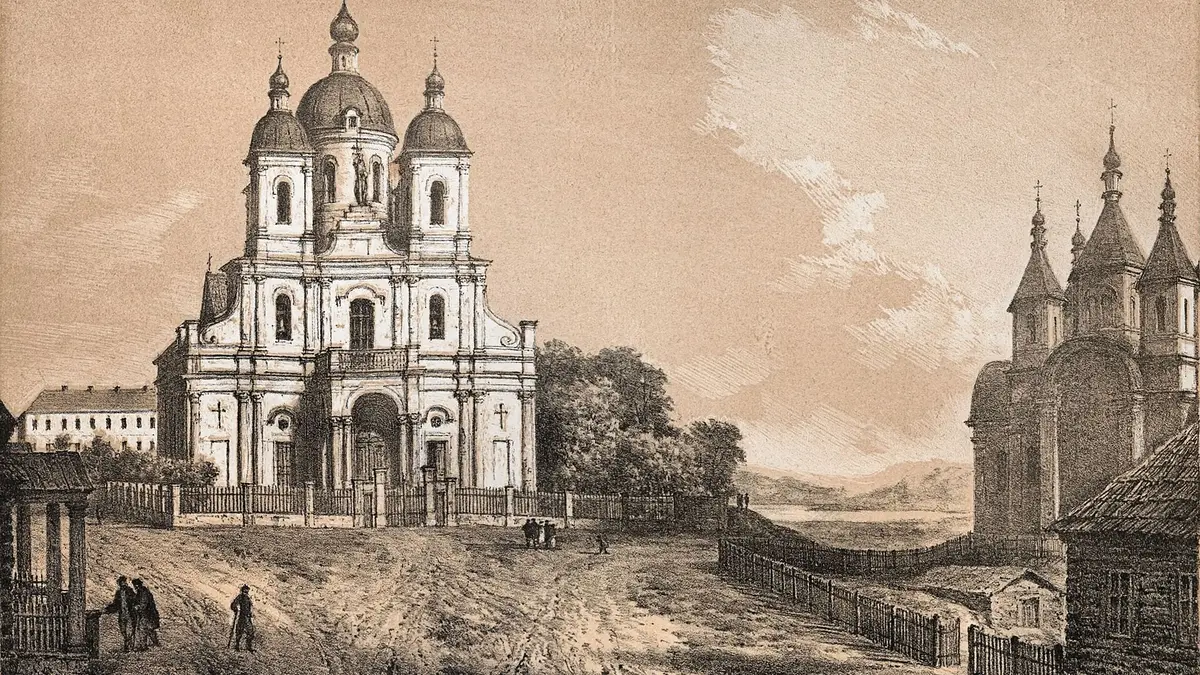
The Shrine of Our Lady of Białynicze
For centuries Białynicze on the River Drut was one of the most important Marian shrines of the Polish–Lithuanian Commonwealth, known as the “Częstochowa of Belarus”. The Carmelite church with the miraculous image of Our Lady, crowned in 1761, was destroyed in Soviet times.
Today the parish is rebuilding the shrine, and every Mass requested here supports this work.
History of the shrine →Request a Holy Mass
Leave your contact details and intention – we will reply by e-mail with a proposed date.
Thank you! We have received your request and will reply shortly to the e-mail address you gave.