
 gregorianka.belynichi@gmail.com
Plenary Indulgence for the Dead, 1–8 November, and All Souls' Day – How to Help Your Loved Ones
November is a month of special remembrance of the dead. In the first days of November the Church gives the faithful the opportunity to gain a plenary indulgence for the dead. We explain what an indulgence is, what the conditions are and how else you can help your loved ones.
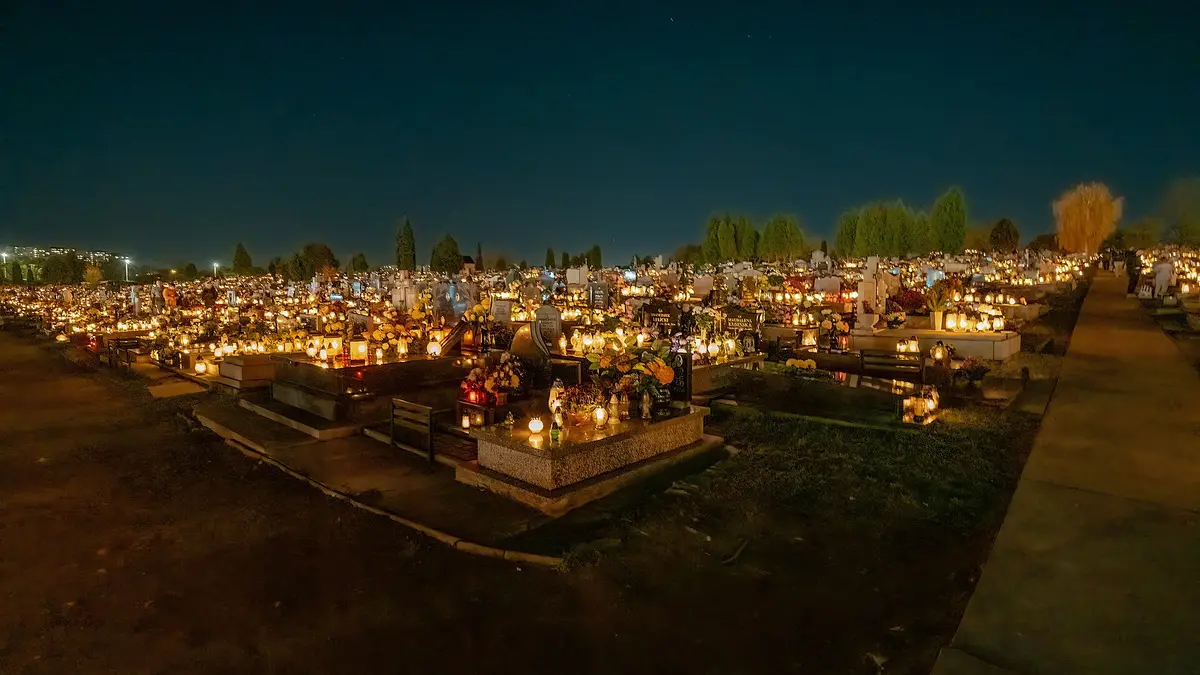
What an indulgence is
An indulgence is a remission before God of the temporal punishment due to sins whose guilt has already been forgiven (CCC 1471). A plenary indulgence removes all temporal punishment, a partial indulgence part of it. The Church grants it by drawing on the treasury of the merits of Christ and the saints. The faithful can gain an indulgence for themselves or apply it to the dead (CCC 1479); it cannot, however, be applied to another living person.
Behind the indulgence stands the truth about purgatory and the communion of saints: the dead who are undergoing purification can no longer help themselves, but our prayer and sacrifice can help them.
The indulgence for the dead, 1–8 November
From 1 to 8 November a plenary indulgence can be gained each day, applicable only to the dead. All that is required is to:
- visit a cemetery,
- pray there for the dead – even if only mentally.
On the other days of the year, the same visit to a cemetery with prayer for the dead gains a partial indulgence.
The indulgence on All Souls' Day – 2 November
On the Commemoration of All the Faithful Departed a plenary indulgence for the dead can be gained by visiting a church or oratory and reciting there the Our Father and the Creed.
The necessary conditions
To gain a plenary indulgence, the usual conditions are also required:
- the state of sanctifying grace and sacramental confession,
- Holy Communion,
- prayer for the intentions of the Holy Father (e.g. an Our Father and a Hail Mary),
- exclusion of all attachment to any sin, even venial sin.
A plenary indulgence can be gained once a day. If any of the conditions is lacking, the indulgence is partial. So it is not a matter of “all or nothing” – every prayer for the dead has value, even if it was not possible to fulfil all the conditions for a plenary indulgence.
How to prepare in practice
- At the end of October or the beginning of November go to confession – one confession is sufficient for several days of indulgences.
- On each day on which you wish to gain the indulgence, receive Holy Communion and pray for the intentions of the Holy Father.
- At the cemetery, pray for the dead – for example, a decade of the Rosary or “Eternal rest” repeated several times.
- In your mind, name the person for whom you are offering the indulgence: a particular person or all the dead.
You do not have to visit the grave of your loved one – it is enough to visit any cemetery, including in another town or country.
Partial indulgences throughout the year
Help for the dead does not end on 8 November. A partial indulgence applicable to the dead is attached, among other things, to the prayer “Eternal rest grant unto them, O Lord” and to the recitation of Lauds or Vespers from the Office for the Dead.
The indulgence and Holy Mass for the deceased
An indulgence and a Mass are two different things. An indulgence is a gift the Church grants on certain conditions. Holy Mass makes present the Sacrifice of Christ, and from the beginning the Church has offered it for the dead as well (CCC 1371). Among the ways of helping the dead, the Catechism lists almsgiving, indulgences and works of penance, but above all the Eucharistic sacrifice (CCC 1032). That is why many families combine the November indulgence with requesting a Mass for the dead. Gregorian Masses are not an indulgence – they are thirty Masses celebrated day after day for one deceased person (more: Gregorian Masses).
Why priests celebrate three Masses on 2 November
On All Souls' Day every priest may celebrate three Holy Masses. This privilege was granted to the whole Church by Pope Benedict XV in 1915 (the constitution Incruentum Altaris), during the First World War, when millions of people were dying. Only one of these Masses may be celebrated for an intention for which the priest accepts an offering; the second is offered for all the faithful departed, and the third for the intentions of the Holy Father.
How else to help the dead in November
- Holy Mass – a single Mass, a novena for the dead or thirty Gregorian Masses, which you can request using the form.
- Remembrance of the dead – one-off, octave or annual.
- Personal prayer – “Eternal rest”, the Rosary, the Chaplet of Divine Mercy.
Sources
Questions and answers
Can an indulgence be offered for a particular person?
Do I have to go to confession every day?
Can a sick person who cannot go to a cemetery gain the indulgence?
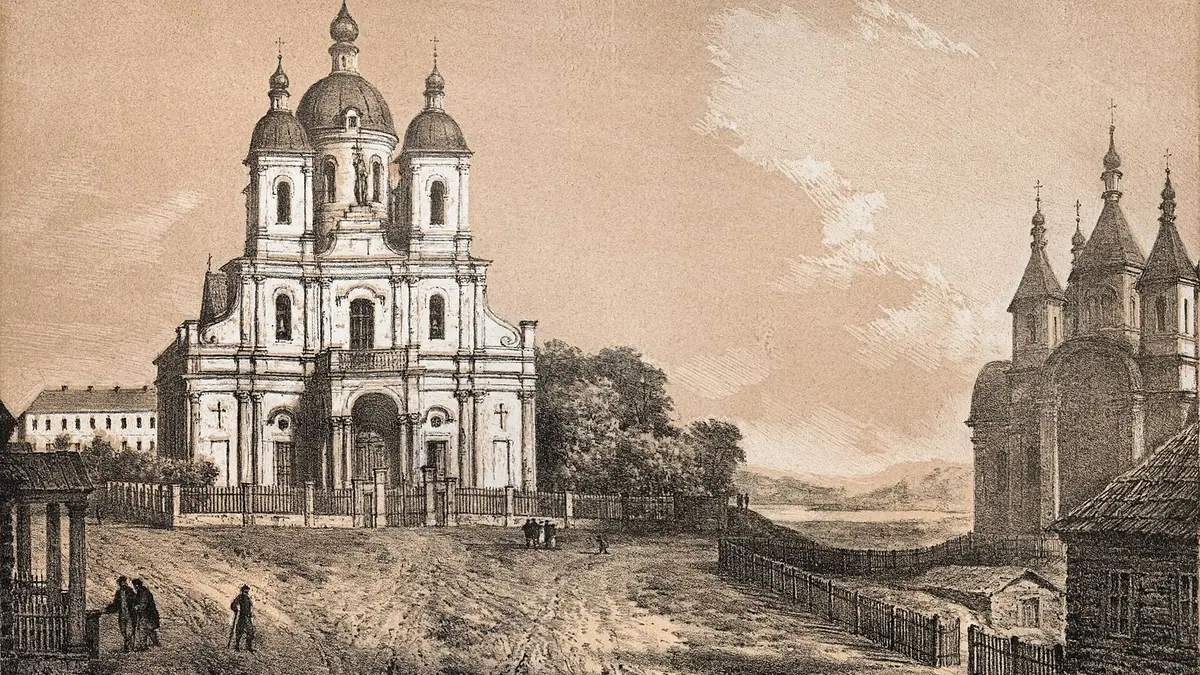
The Shrine of Our Lady of Białynicze
For centuries Białynicze on the Druts river was one of the most important Marian shrines of the old Polish–Lithuanian Commonwealth, known as the “Częstochowa of Belarus”. The Carmelite church with the miraculous image of Our Lady, crowned in 1761, was destroyed in Soviet times.
Today the parish is rebuilding the shrine, and every Mass requested here supports this work.
History of the shrine →Request a Holy Mass
Leave your contact details and intention – we will reply by e-mail with a proposed date.
Thank you! We have received your request and will reply shortly to the e-mail address you gave.