
 gregorianka.belynichi@gmail.com
How to word a Mass intention
A good Mass intention is short, includes the person's full name and says clearly what we are asking for. We give the rules and ready-made examples of intentions for the dead and for the living – to copy and complete with your own names.
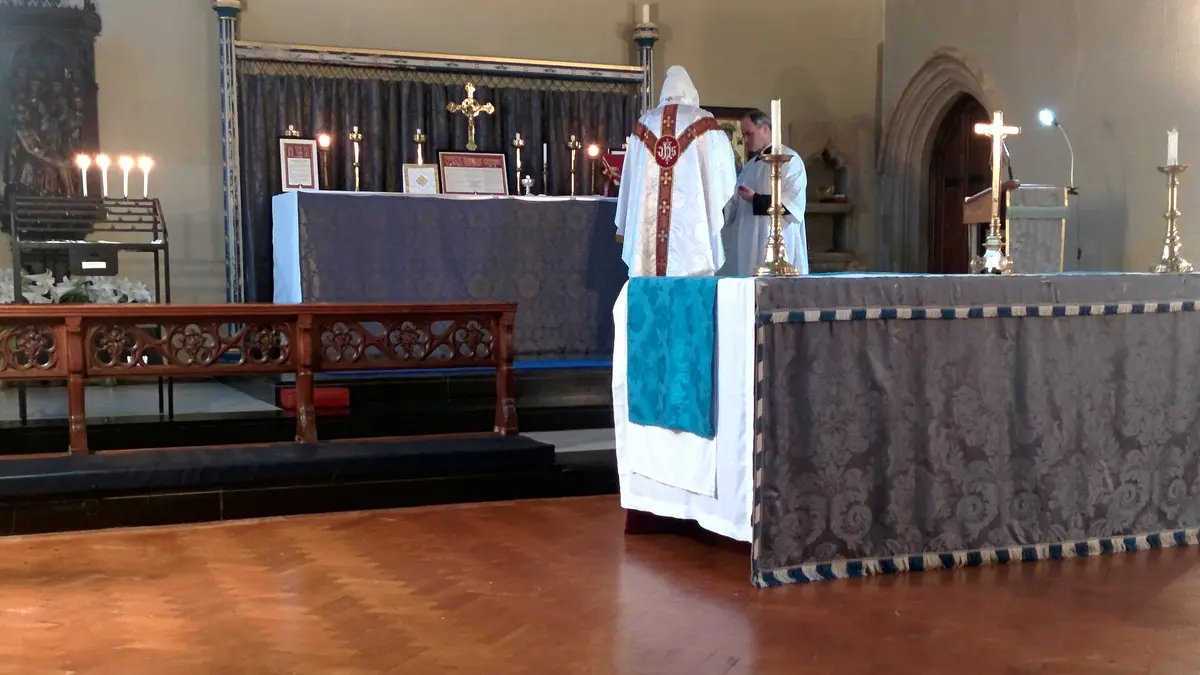
What the wording of an intention is
A Mass intention is a short formula in which we say for whom or for what the priest is to offer Holy Mass. The priest may offer it for anyone, living or dead (can. 901). The wording does not have to be beautiful or solemn – it has to be clear. In many parishes the intention is read out at the start of Mass or given in the parish notices, so a well-written intention is one that can be read in a single breath, without anyone wondering who is meant. We have gathered the kinds of Mass that can be requested and the Church's rules in our guide to Mass intentions; here we focus solely on how to write the intention down.
Six rules for a good intention
- Keep it short. One sentence, ideally no more than twenty words. Leave the details of the story, the illness or the conflict to God – there is no need to explain or announce them.
- First name and surname. The full first name (not a nickname) and surname help avoid mistakes. For the living the first name alone is often enough, e.g. “for Peter”, if you do not want the surname mentioned in public.
- For the dead – “the late” or “the repose of the soul of”. In English an intention for someone who has died usually begins “For the repose of the soul of…” or “For the late…”. The cross “†” and “RIP” belong to death notices and are not needed in an intention. These forms traditionally refer to deceased Christians; for someone who was not a believer you can simply write “For John Smith, who has died”.
- For the living – a petition or thanksgiving. An intention for a living person begins with “For…” (for health, for God's blessing, for the grace of conversion), “In thanksgiving for…” or “For the intentions of…”. The two are often combined: “In thanksgiving for…, asking for…”.
- The occasion at the end. An anniversary, a birthday or a jubilee is added after the name: “…on the tenth anniversary of his death”, “…on her eighteenth birthday”.
- Nothing you would not want to hear in church. Diagnoses, addictions, family disputes – it is better to put them in general terms: “for healing”, “for reconciliation in the family”, “in a difficult matter”. God knows the details.
Note that a list of names for remembrance of the dead is written differently – simply as a list of the names of the dead. Remembrance of the dead is a different prayer from a Mass offered for an intention.
Examples of Mass intentions
You can copy the formulas below and insert your own names.
For someone who has died
- For the repose of the soul of John Smith.
- For the late Mary Jones, for the joy of eternal life.
- For the late Thomas Walsh on the thirtieth day after his death.
- For the late Christine Brown – from her neighbours on Church Street.
Adding “from…” is a custom, not a requirement; it is particularly useful in the first weeks after a death, when various people ask for Masses – we write about this time on the page Masses after a funeral.
For deceased parents and family
- For our late parents, Thomas and Helen Walsh.
- For our late parents, Joseph and Jean, and our grandparents on both sides.
- For the deceased of the Smith and Jones families.
- For the holy souls in purgatory.
On the anniversary of a death
- For the late Anne Taylor on the first anniversary of her death.
- For my late husband, Andrew, on the tenth anniversary of his death, asking for the grace of heaven.
- For the late Sophie and William Clarke on the anniversary of their deaths.
How to choose the date, and whether the Mass must fall exactly on the anniversary, we explain in the article anniversary Mass for the dead.
For health
- For health and strength for Peter during his illness.
- For a successful operation and recovery for Eve Martin.
- For the grace of health of soul and body for our mother, Barbara.
In thanksgiving
- In thanksgiving for graces received, asking for God's continued blessing.
- In thanksgiving for Helen's eighty years of life, asking for health and the protection of Our Lady.
- In thanksgiving for Mark's happy recovery.
For God's blessing on a family
- For God's blessing and the protection of Our Lady for the Smith family.
- For peace and harmony in the family.
- For good work for Michael and God's care for his family.
For a married couple
- On the twenty-fifth wedding anniversary of Mary and Thomas, in thanksgiving for their years together, asking for God's continued blessing.
- For love, unity and faithfulness for Martha and Paul.
- For the gift of children for Anne and James.
For a child
- For the gifts of the Holy Spirit for Jack on the day of his First Holy Communion.
- For health and God's blessing for Sophie on her first birthday.
- For the light of the Holy Spirit for Julia before her final exams.
- For a safe delivery and good health for mother and child.
If your matter is very personal, you can simply write: “For an intention known to God”.
How to write the intention for Gregorian Masses
With Gregorian Masses the rule is simple: the thirty Masses are offered for one deceased person only. So you give one first name and surname, without adding parents, siblings or “all the deceased of the family”:
For the repose of the soul of Joseph Murphy.
The priest offers the same intention for thirty consecutive days. If you want to pray for two people – for example both parents – you need two separate series or another form, such as a novena. Why this is so, and for whom Gregorian Masses can be requested, we explain on the page who Gregorian Masses are for, and the differences between the forms in the comparison Gregorian Masses or a novena.
How to enter the intention in our form
- In the “Type of intention” field, choose the form: Gregorian Masses, a novena, “Individual Mass intention” (one Mass) and so on.
- In the “Intention / comments” field, enter just the wording of the intention, ideally on a separate line, with any notes below it, such as a request for a particular day.
- Write first names and surnames in their original spelling – with any accents or special letters, without abbreviations or altered forms. The Masses are celebrated in Belarus, so we want your loved ones' names to reach the priest exactly as you wrote them.
- If you are not sure how to phrase your request, describe it in your own words – we will suggest a short formula for you to approve.
We reply by e-mail suggesting a date and times. In the confirmation we send once the offering has been made, we give the wording of the intention – it is worth reading it through once more at that point. We describe the whole process step by step in the guide how to request a Mass online. Once your intention is ready, you can request the Mass online straight away.
Sources
Questions and answers
Can several people be commended in one Mass?
Yes, for a single Mass or a novena – e.g. “For our late parents, Thomas and Helen”. The exception is Gregorian Masses, which are always offered for one deceased person. It is good, though, for one Mass to have one main concern rather than a long list of different requests.
Can I request a Mass for someone who does not know I am praying for them?
Yes. The person's consent or knowledge is not needed. If you prefer discretion, the first name alone or the formula “for an intention known to God” is enough.
Does the intention have to be written in Polish?
Polish is easiest for us, but you can also write it in another language, including English – what matters is that first names and surnames are written accurately, in their original spelling. If anything is unclear, we will ask by e-mail.
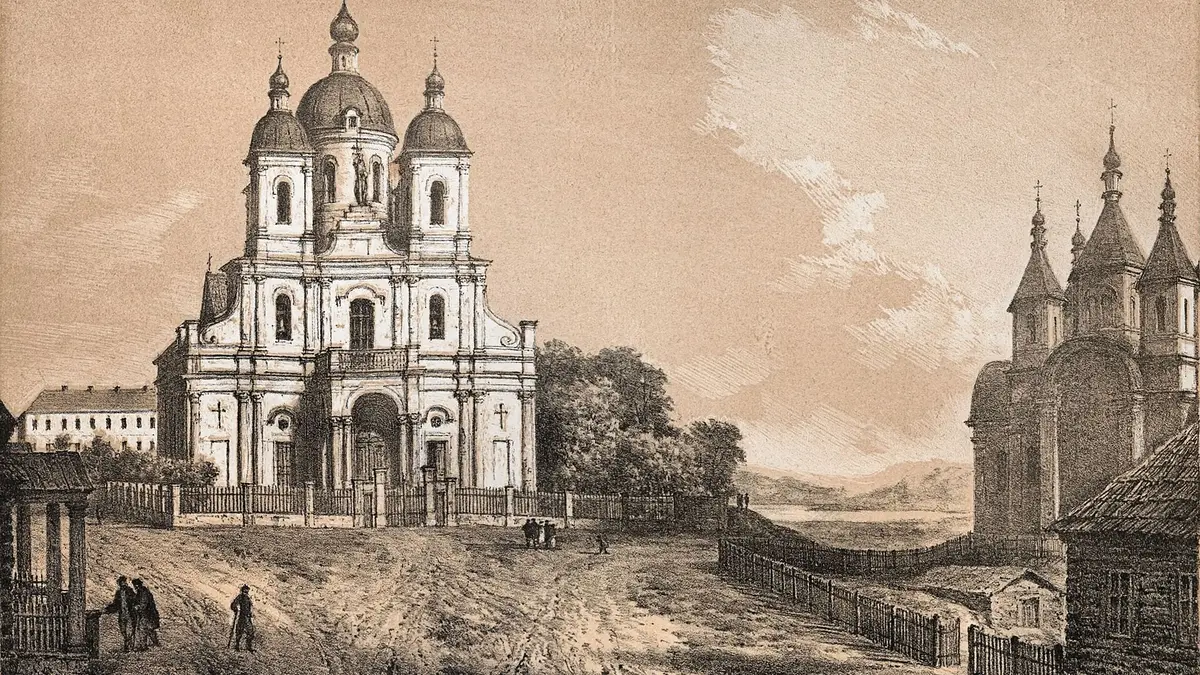
The Shrine of Our Lady of Białynicze
For centuries Białynicze on the River Drut was one of the most important Marian shrines of the Polish–Lithuanian Commonwealth, known as the “Częstochowa of Belarus”. The Carmelite church with the miraculous image of Our Lady, crowned in 1761, was destroyed in Soviet times.
Today the parish is rebuilding the shrine, and every Mass requested here supports this work.
History of the shrine →Request a Holy Mass
Leave your contact details and intention – we will reply by e-mail with a proposed date.
Thank you! We have received your request and will reply shortly to the e-mail address you gave.