
 gregorianka.belynichi@gmail.com
Masses after a funeral – when to request further intentions
After a funeral many families ask which Masses to request next, and when. We explain what the funeral Mass is, where the custom of Masses on the 7th and 30th day after death comes from, and how the “thirtieth-day Mass” differs from Gregorian Masses.
The short answer
A funeral does not close our prayer for the deceased – rather, it begins it. In Polish tradition, after the funeral Mass the family usually requests further Masses: on the 7th and 30th day after death, on the first anniversary, and often also Gregorian Masses, that is, thirty Masses offered day after day. Below we explain how these intentions differ and how to spread them across the first year after the death of a loved one.
The Mass on the day of the funeral
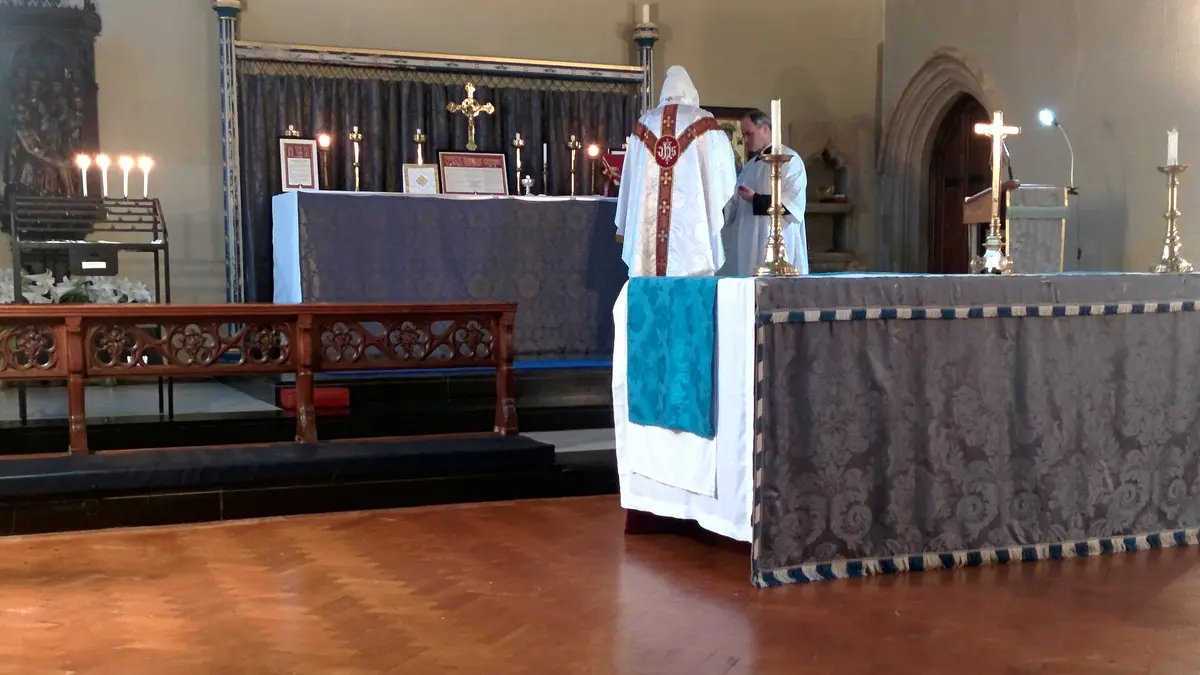
The funeral Mass is part of the funeral rites and, according to the General Instruction of the Roman Missal (no. 380), holds first place among Masses for the dead. It may be celebrated on any day except solemnities that are holy days of obligation, Holy Thursday, the Easter Triduum and the Sundays of Advent, Lent and Easter Time.
We should say plainly: the funeral Mass is not requested through our website. It is arranged with the parish where the funeral takes place – usually the family does this with the funeral director through the parish office. From Białynicze, however, we can accompany the deceased with prayer straight away, even before the funeral, for example by beginning Gregorian Masses.
Masses on the 7th and 30th day after death
In the tradition of the Western Church it became customary to offer Mass for the deceased on the third day (usually the day of the funeral), the seventh and the thirtieth. The third day recalled the resurrection of Christ, the seventh eternal rest, and the thirtieth referred to Israel's thirty days of mourning for Aaron and Moses (Num 20:29; Deut 34:8). The pre-conciliar Missal of 1962 had a separate Mass formulary for these days; the present Missal does not, but the custom of requesting such Masses has remained very much alive.
The Mass on the thirtieth day is especially important – in Polish it is popularly called the trzydziestka, the “thirtieth”. For many families it closes the first and hardest period of mourning. In some parishes the date of this Mass is announced at the funeral itself. If the family cannot be in the parish of the deceased, such a single Mass can also be requested from us as a Mass intention – it is then worth saying that it is for the 30th day after death, and wording the intention as we suggest in how to word a Mass intention.
The thirtieth-day Mass and Gregorian Masses are not the same
Both are linked to the number 30, which is why they are often confused.
| Mass on the 30th day | Gregorian Masses | |
|---|---|---|
| How many Masses | one | thirty |
| When | on the 30th day after the death or the funeral | 30 consecutive days, without a break |
| For whom | for the deceased, sometimes combined with other intentions for the family's dead | for one deceased person only |
| Where | usually in the parish of the deceased | in any church, also by different priests |
One does not exclude the other. Gregorian Masses can be under way at the same time as the parish celebrates the 30th-day Mass – the family loses nothing by this. The tradition of Gregorian Masses goes back to St Gregory the Great; we describe the rules for their celebration in the article what are Gregorian Masses.
A plan of intentions for the first year after a death
There is no single compulsory pattern. The plan below is a suggestion that brings the most common customs into order:
- The days after death, up to the funeral – the funeral Mass in the parish of the funeral; if you wish, you can already request Gregorian Masses at this point. More on choosing the moment in the article when to request Gregorian Masses.
- The first month – a Mass on the 7th day (if this is your family's custom) and the 30th-day Mass; a series of Gregorian Masses may run alongside them.
- The following months – single Masses on dates that matter to the family (the deceased's name day or birthday), adding the name to annual remembrance of the dead, or a novena; you will find a comparison of the forms in Gregorian Masses or a novena.
- The first anniversary – a Mass on the anniversary of the death, which the liturgical norms single out alongside the funeral Mass; some families request Gregorian Masses a second time then. Details: anniversary Mass for the dead.
What matters most is that the Masses are not just “a formality to tick off”, but a prayer in which the family also takes part – at least spiritually, if they cannot be in church. We write more about the meaning of this prayer on the pages Mass for the dead and prayer for the dead.
How to request Masses from us
You can submit an intention – Gregorian Masses or a single Mass, for example for the 30th day or the anniversary – through the form, by e-mail or via WhatsApp. We reply by e-mail suggesting a date and times, and once the offering has been made we send a confirmation with the date and time of each Mass. The Masses are celebrated first and foremost at the shrine in Białynicze. Request Gregorian Masses or another intention for the dead.
Sources
- General Instruction of the Roman Missal, nos. 380–381 – discussed in: Archdiocese of Katowice, “Objaśnienia i przypomnienia” (in Polish)
- S. Hołodok, “Pogrzeb chrześcijański (VII)”, Czas Miłosierdzia 7/2002 (Masses on the 3rd, 7th and 30th day; in Polish)
- D. Makowski, “Msza święta za zmarłych – liturgia requiem” (formularies of the 1962 Missal; in Polish)
- Parish of Blessed Jerzy Popiełuszko in Szczecin, “Msza św. w miesiąc po pogrzebie” (in Polish)
- Catechism of the Catholic Church, nos. 958, 1032, 1371 – vatican.va
Questions and answers
Is the 30th day counted from the death or from the funeral?
Custom varies here – some parishes count from the day of death, others from the funeral. A difference of a few days makes no difference to the value of the prayer; it is best to choose a date when the family can come together.
Can I request a 30th-day Mass if the funeral was in another country?
Yes. A Mass for the dead can be requested in any church, regardless of where the funeral took place. Simply give the name of the deceased and the date you are asking for in your request.
Can Gregorian Masses begin on the day of the funeral?
Yes. The 1967 declaration explicitly names a funeral Mass as a justified reason for which a priest may interrupt the series and complete it later – all the more, then, the funeral itself is no obstacle to beginning it. See can Gregorian Masses be interrupted?
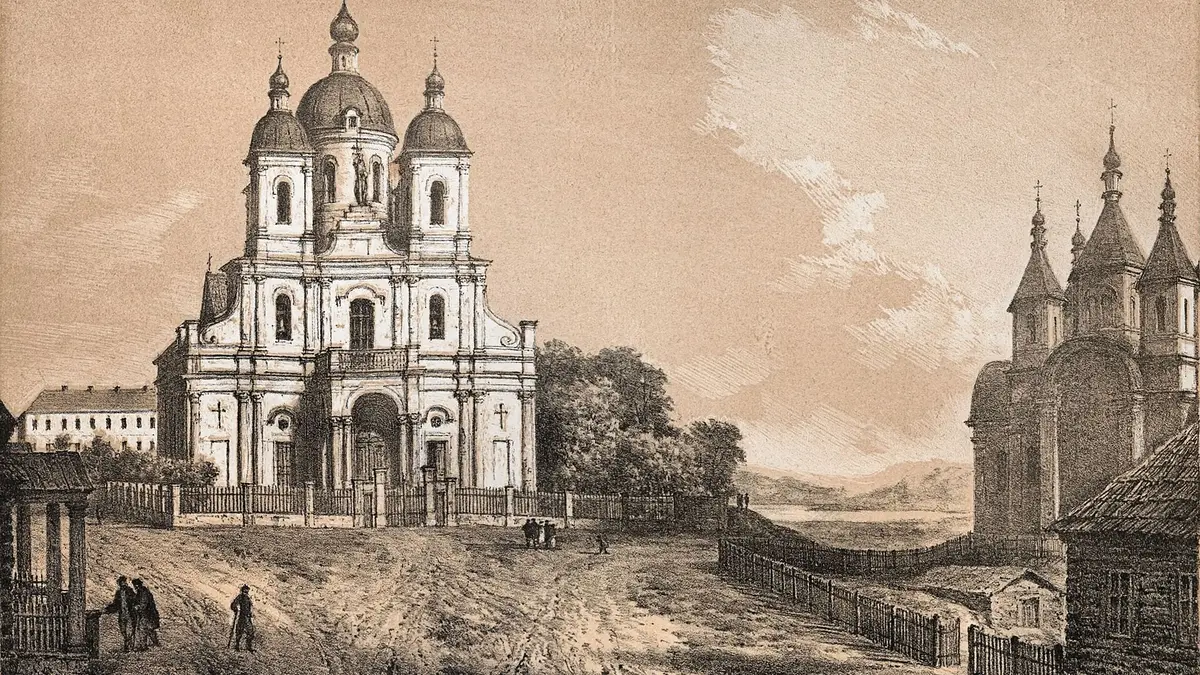
The Shrine of Our Lady of Białynicze
For centuries Białynicze on the River Drut was one of the most important Marian shrines of the Polish–Lithuanian Commonwealth, known as the “Częstochowa of Belarus”. The Carmelite church with the miraculous image of Our Lady, crowned in 1761, was destroyed in Soviet times.
Today the parish is rebuilding the shrine, and every Mass requested here supports this work.
History of the shrine →Request a Holy Mass
Leave your contact details and intention – we will reply by e-mail with a proposed date.
Thank you! We have received your request and will reply shortly to the e-mail address you gave.