
 gregorianka.belynichi@gmail.com
Can Gregorian Masses Be Interrupted?
Gregorian Masses are thirty Masses on thirty consecutive days. But what happens if the priest falls ill, there is a funeral in the parish or the Easter Triduum falls within the series? On the basis of the 1967 declaration of the Holy See, we explain when a break is permissible and how the series is completed.
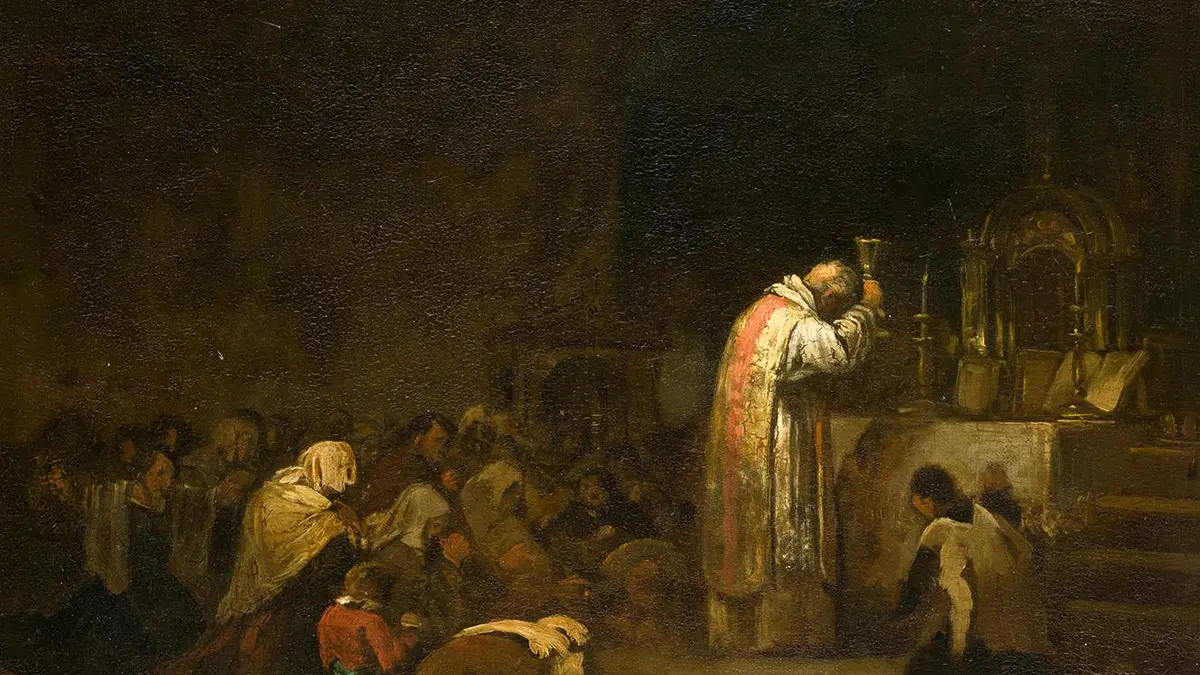
The short answer
Gregorian Masses are thirty Holy Masses celebrated on thirty consecutive days for one deceased person. Continuity is an essential feature – and that is precisely why families often ask what happens if the series is interrupted. The Church answered this directly in the declaration of the Sacred Congregation of the Council of 24 February 1967: a break resulting from an unforeseen impediment or another reasonable cause does not deprive the Gregorian Masses of their value, and the priest is obliged to make up the missing Masses as soon as possible. The only exception is when the break was the priest's own fault.
The principle: thirty days without a break
The custom of Gregorian Masses goes back to St Gregory the Great, who ordered Mass to be offered for a deceased monk on thirty days in a row. Since then the Church's practice has linked Gregorian Masses with three conditions: thirty Masses, thirty consecutive days and one deceased person as the intention. We describe this more fully on the page what are Gregorian Masses.
Continuity does not mean, however, that all the Masses must be celebrated by the same priest at the same altar. The series may be celebrated by one or several priests – in the extreme case even by thirty different ones – provided that each day one Mass is offered for this one intention.
What the Church says: the 1967 declaration
The question of breaks was settled by the declaration of the Sacred Congregation of the Council Tricenario Gregoriano, issued by order of Pope Paul VI and published in Acta Apostolicae Sedis 59 (1967), pp. 229–230. In full, it reads as follows:
“A series of thirty Gregorian Masses interrupted by an unforeseen impediment (e.g. a sudden illness) or by another reasonable cause (e.g. the celebration of a funeral or wedding Mass) retains, by disposition of the Church, the fruits of this prayer recognised by the practice of the Church and the piety of the faithful, the celebrating priest remaining obliged to complete the celebration of the thirty Masses as soon as possible. The Ordinary, for his part, is to watch carefully that no abuses arise in so important a matter.”
Three things follow from this short text: when a break is permissible, what then happens to the prayer and what obligation rests on the priest.
When a break is permissible
1. An unforeseen impediment through no fault of the priest
The declaration gives the example of an illness that suddenly “overtakes” the priest. This refers to situations that could neither be foreseen nor prevented: a sudden illness, an accident, some other unexpected event. The priest has not neglected his obligation – he simply could not celebrate Mass.
2. Another reasonable cause – e.g. a funeral or a wedding
The second case is “another reasonable cause”. The document gives the funeral Mass and the wedding Mass as examples. A priest who celebrates one Mass on a given day may be called to a ministry in which the Mass must be offered for the funeral or for the newly married couple. The Church recognises that such pastoral duties take precedence and do not cancel Gregorian Masses already under way.
3. The Easter Triduum
The days of the Easter Triduum are a special period. On Good Friday the Church does not celebrate Holy Mass at all – the Celebration of the Lord's Passion takes place instead. On Holy Saturday, too, no Mass is celebrated during the day, and on Maundy Thursday the liturgy centres on the Mass of the Lord's Supper. For this reason pastoral practice accepts that a break in the Gregorian Masses on these days is permissible and the missing Masses are made up afterwards. The 1967 declaration does not mention the Triduum separately – this follows from the order of the liturgy itself.
How an interrupted series is completed
The declaration places on the priest “the obligation to complete the celebration of the thirty Masses as soon as possible”. In practice this means that the series does not start again from the beginning but is continued: the missing Masses are celebrated on the nearest possible days until there are thirty in total. If, for example, after the twentieth Mass the priest suddenly fell ill and for three days no one could replace him, the remaining ten Masses are celebrated by him when he has recovered, or by another priest – and the series is simply completed. The same applies after the Easter Triduum – from Easter onwards the next Masses of the series are celebrated.
It is worth stressing that the document says “as soon as possible”, not “at some point”. Completing the Gregorian Masses must not be postponed without need.
When the series must begin again
The protection spoken of in the declaration concerns breaks that are nobody's fault. If the priest through his own fault – through negligence or forgetfulness – did not celebrate Mass on a given day, the series loses its continuity and the thirty Masses must be celebrated again from the beginning. This example shows the purpose of the whole regulation: the Church does not penalise the faithful for chance events, but it requires the clergy to be conscientious about the obligation they have accepted.
The role of the Ordinary
The last sentence of the declaration obliges the Ordinary – usually the diocesan bishop – to watch “that no abuses arise in so important a matter”. The Church takes Mass intentions and the offerings associated with them very seriously; the provisions of canon law on Mass offerings (cann. 945–958) serve the same purpose. Interrupting Gregorian Masses freely “for convenience” would be precisely such an abuse.
What this means for the person making the request
- You need not fear that the priest's illness or a funeral in the parish will “waste” the Gregorian Masses. According to the 1967 declaration, a series interrupted for such a cause keeps the fruits recognised by the Church.
- Responsibility for completing the series rests with the priest, not with the family. There is no need to request the Gregorian Masses again or to make an additional offering for the missing Masses.
- If you are planning Gregorian Masses around Easter, bear in mind that no Masses will be celebrated during the Triduum and the series will end correspondingly later.
- You can always ask how the series is progressing. In the confirmation we send after your offering has been made, we give the intention and the dates and times of the Masses – more on the page confirmation of Gregorian Masses.
The Gregorian Masses accepted in our parish are celebrated by priests in Białynicze and in other parishes of eastern Belarus. If you wish to offer thirty Masses for a loved one, you can request Gregorian Masses using the form, by e-mail or via WhatsApp. See also when it is best to request Gregorian Masses and, on the Mass for the dead page, what other ways of helping the dead the Church proposes.
Sources
- Acta Apostolicae Sedis 59 (1967), pp. 229–230 – Declaratio “De continuitate celebrationis Missarum Tricenarii Gregoriani” (PDF, vatican.va)
- Liturgista.pl – declaration “Tricenario Gregoriano” (Polish translation)
- Jesuits, St Stephen's Parish – Mass intentions (in Polish)
- Niedziela.pl – St Gregory the Great and the Gregorian Masses (in Polish)
Questions and answers
Do I need to do anything if I learn of a break in the Gregorian Masses?
No. Completing the thirty Masses is the obligation of the priest who accepted the intention. If you have any doubts about how the series is progressing, write to us by e-mail – we will explain the situation.
Does a break delay the end of the Gregorian Masses?
Yes – by as many days as there were Masses to be made up. The series still consists of thirty Masses; only the last one falls later than originally planned.
Can Gregorian Masses be deliberately planned with a break, e.g. for the priest's holiday?
No. The 1967 declaration speaks of an unforeseen impediment or of a reasonable pastoral cause. An absence of the priest known in advance must be dealt with differently – for example, by having another priest celebrate the Masses for this intention on those days.
Does the rule on breaks also apply to a novena?
The 1967 declaration concerns Gregorian Masses only. A novena is a separate form of prayer – we describe it on the page novena for the dead.
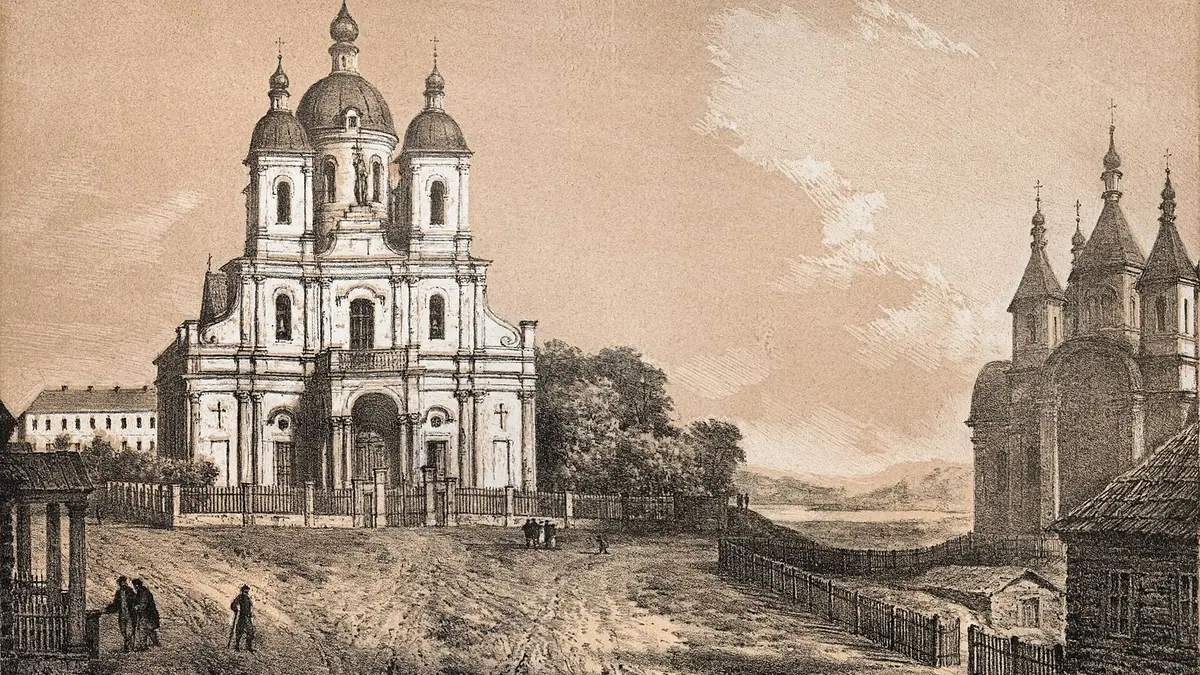
The Shrine of Our Lady of Białynicze
For centuries Białynicze on the Druts river was one of the most important Marian shrines of the old Polish–Lithuanian Commonwealth, known as the “Częstochowa of Belarus”. The Carmelite church with the miraculous image of Our Lady, crowned in 1761, was destroyed in Soviet times.
Today the parish is rebuilding the shrine, and every Mass requested here supports this work.
History of the shrine →Request a Holy Mass
Leave your contact details and intention – we will reply by e-mail with a proposed date.
Thank you! We have received your request and will reply shortly to the e-mail address you gave.