
 gregorianka.belynichi@gmail.com
Mass Intentions – Kinds and Principles
Holy Mass can be offered for the dead and for the living, once or in a series of several or even dozens of days. We set out the kinds of Mass intentions and the Church's norms, and suggest which form to choose.
What a Mass intention is
A Mass intention is a request to a priest to offer Holy Mass for a particular purpose – for a specific living or deceased person, in thanksgiving, for some grace. Every Mass is the sacrifice of Christ for the whole Church and the world, and at the same time it may be offered for a particular intention of one of the faithful. The Catechism reminds us that the Eucharist is offered “in reparation for the sins of the living and the dead” and to obtain spiritual and temporal benefits from God (CCC 1414). How to request a single Mass and how to word it is explained on the Mass intention page.
The Church's norms in a nutshell
Requesting Masses is governed by the Code of Canon Law (cann. 945–958). The main principles are:
- a priest may offer Mass for anyone, living or dead (can. 901),
- the faithful may make an offering when asking for a Mass for their intention; priests are encouraged to celebrate Masses also for the intentions of the poor, without an offering (can. 945),
- the offering supports the Church and the maintenance of its clergy (can. 946); even the appearance of trading must be avoided (can. 947),
- a separate Mass is celebrated for each offering accepted, for the intention given (can. 948),
- the amount of the customary offering is set by the provincial council or meeting of bishops (can. 952),
- no one may accept more intentions than they can satisfy within a year; the surplus may be passed on to other priests (cann. 953–955),
- the parish keeps a book in which the intentions accepted, the offerings and the celebration of the Masses are recorded (can. 958).
These principles shape the practice of our parish: Masses requested through gregorianka.com are celebrated first of all in Białynicze, and also by priests of other parishes in eastern Belarus who have free dates. We introduce them on the priests page.
Kinds of intention – a comparison
| Form | How many Masses | For whom | When it is chosen | Basis |
|---|---|---|---|---|
| Single Mass (individual intention) | 1 | the living or the dead, one or several people | anniversary, birthday, thanksgiving, a particular need | cann. 901, 945–958 |
| Novena for the dead | 9, day after day | one or several deceased people | mourning, anniversary of death, November | pious custom |
| Novena for the living | 9, day after day | a living person, a family | an urgent matter: illness, operation, crisis | pious custom |
| Gregorian Masses | 30, day after day | one deceased person only | most often after the death of a loved one | tradition recognised by the Church, declaration “Tricenario Gregoriano” (1967) |
| To the Heavenly Court | 30 in Białynicze | a living person | long-term illness, conversion, a new stage of life | pious custom; the wording is set by the priest |
| Annual remembrance of the dead | not a Mass – the names are read out and prayed for | the deceased, with no limit on the number of names | constant remembrance of the dead throughout the year | parish tradition |
Intentions for the dead
Prayer for the dead, and above all the offering of the Eucharist for them, belongs to the most ancient practice of the Church (CCC 958, 1032, 1371; cf. 2 Macc 12:43–46). The options are:
- Gregorian Masses – thirty Masses day after day for one deceased person. This is the best-known form, associated with St Gregory the Great; its history and principles are described on our Gregorian Masses page.
- Novena for the dead – nine Masses that can also be offered for several people, e.g. for both parents.
- Single Mass – most often on the anniversary of death, on the name day of the deceased or on the day of the funeral.
- Annual remembrance of the dead – the names of the deceased are read out before Sunday Mass throughout the liturgical year, with the prayer of the community.
A complete guide to praying for deceased loved ones can be found on the Mass for the dead page.
Intentions for the living
We pray for the living in matters of health, family, work and conversion, and also in thanksgiving for graces received. The most frequently chosen forms are:
- Single Mass – for health, in thanksgiving, on a birthday, name day, wedding anniversary, ordination or before final exams.
- Novena for the living – nine Masses in urgent need, e.g. before an operation.
- Masses to the Heavenly Court – a longer series for a living person, asking for the intercession of Mary and the saints; popularly called the “Gregorian Masses for the living”, although formally they are not Gregorian Masses.
Occasions on which to remember a Mass
Many families have their own “calendar of intentions” which reminds them year after year for whom and for what to pray. Most often these are:
- in the life of the family – birthdays and name days, wedding anniversaries, the birth of a child, baptism, First Communion, confirmation, final exams, starting university or a new job,
- in remembrance of the dead – the day of the funeral, the thirtieth day after death, successive anniversaries of death, the name day of the deceased, All Saints' Day and All Souls' Day,
- in the life of the Church – a priest's jubilee, the anniversary of ordination, intentions for vocations, for the parish, for peace.
For fixed dates it is worth giving the intention well in advance, so that the Mass can be celebrated on the chosen day.
How to choose the right form
There are no “better” or “worse” intentions – every Mass is of infinite value, because it is the sacrifice of Christ Himself. The choice depends rather on the situation and on how we wish to accompany a loved one with prayer:
- if it is about one important day – choose a single Mass on that date,
- if you wish to pray perseveringly for one matter over several days – a novena,
- if you are praying for one deceased person and wish to undertake a longer, continuous prayer – Gregorian Masses,
- if you wish to surround a living person with prayer over a longer period – the Masses to the Heavenly Court,
- if you wish to remember many deceased people throughout the year – the annual remembrance of the dead, supplemented by a Mass on the anniversary.
The forms can be combined. Many families request Gregorian Masses after the funeral, and then every year a Mass on the anniversary of death and the remembrance of the dead. If you do not know what to choose, briefly describe your situation to us – we will advise you.
How to request an intention in Białynicze
- Choose the type of intention in the form and write the intention (the person's name, the matter, and the date if relevant). You can also write an e-mail or a WhatsApp message.
- We will reply by e-mail with a proposed date and the times of the Masses.
- Once your offering has reached the parish account, within two days at the latest we will send a confirmation with the intention, the date or dates and the time of each Mass.
A detailed description can be found in our guide how to request a Mass online, and the principles of the offering on the offering for Holy Masses page. The offerings support priests serving small communities in eastern Belarus and the rebuilding of the Shrine of Our Lady of Białynicze.
Sources
Questions and answers
Can I request a Holy Mass for my own intention?
Can a non-believer or non-practising person request a Mass intention?
Can I commend several people in one intention?
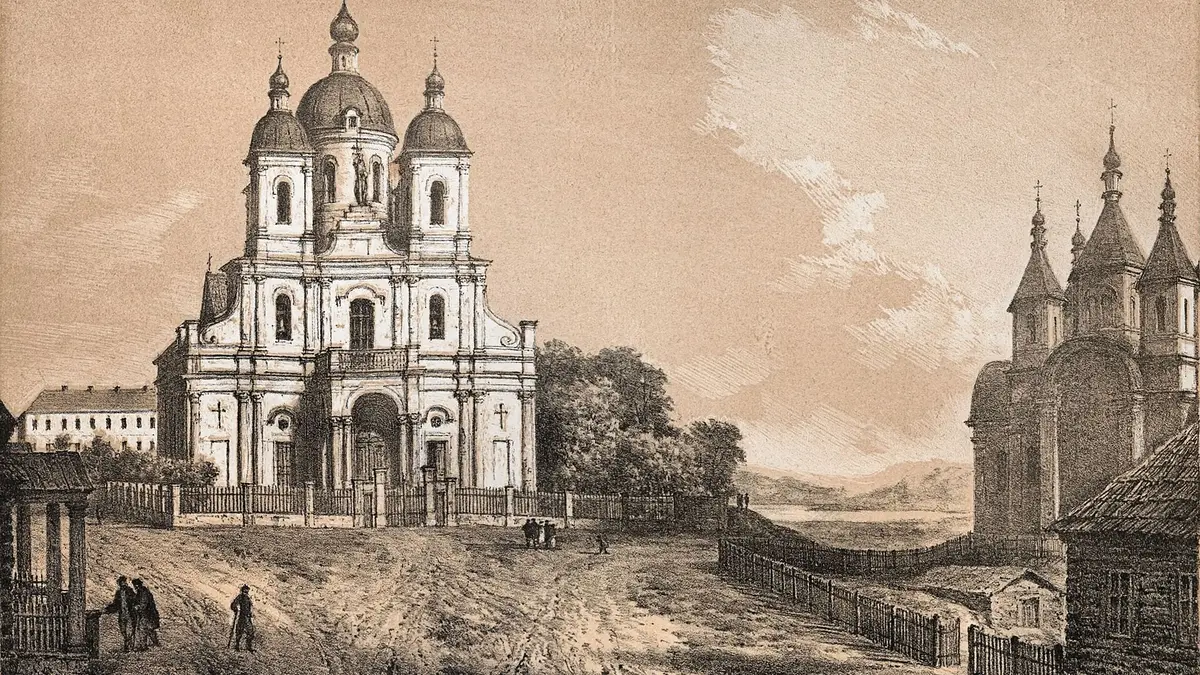
The Shrine of Our Lady of Białynicze
For centuries Białynicze on the Druts river was one of the most important Marian shrines of the old Polish–Lithuanian Commonwealth, known as the “Częstochowa of Belarus”. The Carmelite church with the miraculous image of Our Lady, crowned in 1761, was destroyed in Soviet times.
Today the parish is rebuilding the shrine, and every Mass requested here supports this work.
History of the shrine →Request a Holy Mass
Leave your contact details and intention – we will reply by e-mail with a proposed date.
Thank you! We have received your request and will reply shortly to the e-mail address you gave.