
 gregorianka.belynichi@gmail.com
Are Gregorian Masses a dogma, an indulgence or an obligation?
Many misunderstandings have grown up around Gregorian Masses: some regard them as a truth of faith, others as an indulgence or a “sure way” of getting a soul out of purgatory. We set out what the Church actually says about this practice and how its value should be understood.
In brief
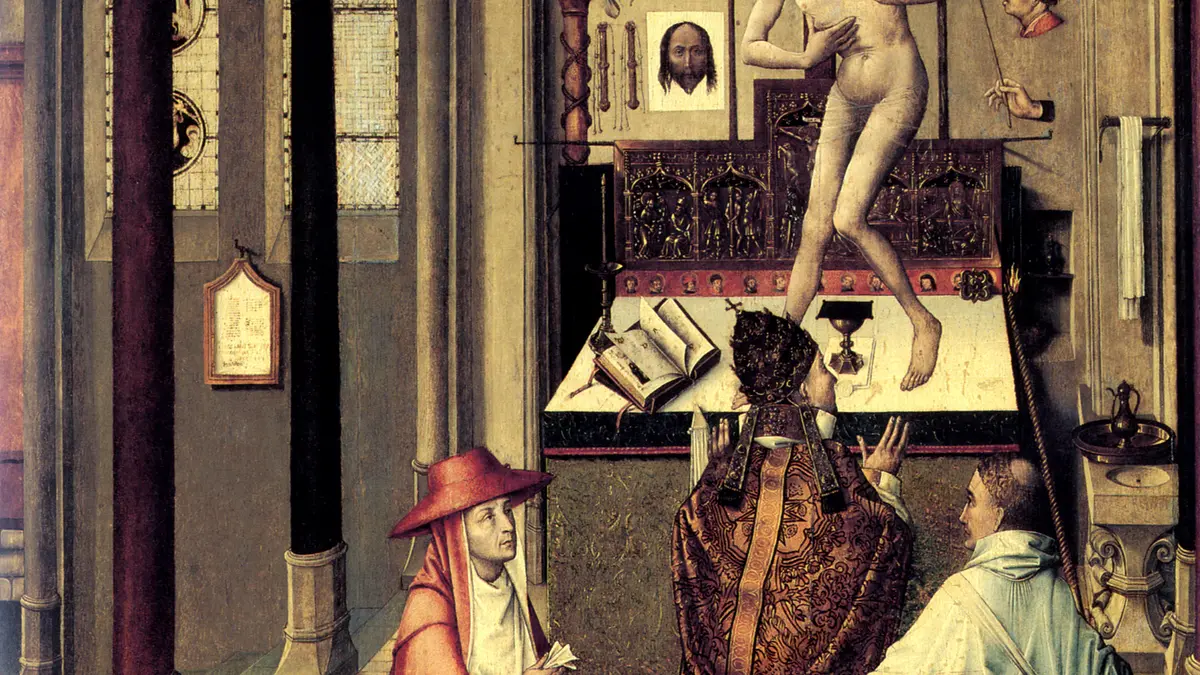
Gregorian Masses are not a dogma, they are not an indulgence, and no one is obliged to request them. They are a pious practice – thirty Masses, day after day, for one deceased person – which the Church has recognised and regulated: in 1884 the Congregation of Indulgences described the confidence of the faithful in their value as pious and reasonable, and in 1967 the declaration “Tricenario Gregoriano” speaks of the fruits of this prayer “recognised by the practice of the Church and the piety of the faithful”. What is a truth of faith, on the other hand, is what underlies the practice: the existence of purgatory, and the fact that the dead are helped by the prayers of the living, above all by the Eucharist.
What a dogma is, and what a pious practice is
A dogma is a truth contained in Revelation which the Magisterium of the Church proposes to the faithful in a definitive way, as binding them to an assent of faith (CCC 88). One such truth is, for example, the teaching on purgatory, formulated above all at the Councils of Florence and Trent (CCC 1031); we discuss it in the article purgatory in the teaching of the Church.
A pious practice is a way of praying that has grown out of the experience of the faithful and that the Church has recognised as in keeping with the faith. Gregorian Masses belong to this category. They began with St Gregory the Great's account, in Book IV of the “Dialogues”, of the monk Justus, for whom Mass was offered for thirty days (more: the history of Gregorian Masses). The Church respects this account but does not present it as part of Revelation – just as so-called private revelations do not belong to the deposit of faith (CCC 67). So a Catholic does not have to believe that the number thirty has any special significance in order to remain faithful to the Church's teaching.
What “recognised by the Church” means
Recognition of a practice means two things. First, the Church states that the confidence with which the faithful request thirty Masses is justified and contains no superstition. Second, the Church places the practice under the protection of law: the 1967 declaration settles what is to be done when the series is interrupted, and instructs the bishops to watch “that no abuses arise in so important a matter”. You will find the full text of the document and a commentary on the page “Tricenario Gregoriano” (1967).
Gregorian Masses are not an indulgence
An indulgence is a remission before God of the temporal punishment due to sins whose guilt has already been forgiven, which the Church grants under certain conditions (CCC 1471). It is gained by the faithful person themselves – through confession, Communion, prayer and the fulfilment of the prescribed work – and it can be offered for the dead (CCC 1479).
A Gregorian Mass is something else: the Eucharist, that is, the making present of the Sacrifice of Christ, celebrated by a priest for the intention of the deceased. From the beginning the Church has offered it for the dead as well (CCC 1371), and she names it first among the ways of helping the dead (CCC 1032). An indulgence and Gregorian Masses can complement each other – the family can offer an indulgence for the same person for whom the series of Masses is under way – but one is not the other. We describe the conditions of the November indulgences in the article the indulgence for the dead.
Are Gregorian Masses compulsory?
No. No rule obliges a family to request Gregorian Masses, and not requesting them is no neglect of the deceased. A single Mass for the dead, a novena or daily prayer are just as precious; you will find a comparison of these forms in the article Gregorian Masses or a novena. The Code also earnestly recommends that priests celebrate Mass for the intentions of the faithful, especially the needy, even without an offering (can. 945 § 2) – the Church's prayer for the dead does not depend on a family's financial means.
An obligation arises only on the priest's side: whoever has accepted Gregorian Masses must celebrate the thirty Masses, and if he has interrupted the series through his own fault, he must begin it again.
Where the value of Gregorian Masses lies
The value of every Mass comes from the one Sacrifice of Christ, which is made present in the Eucharist (CCC 1367). Thirty Masses therefore do not create a “stronger” Sacrifice; rather, thirty times in a row they bring the same request for one person before God. That is the meaning of Gregorian Masses: in the perseverance with which the Church intercedes every day for a whole month for one particular deceased person, and in the confidence that the Church has called pious and reasonable.
Gregorian Masses and salvation – be wary of “guarantees”
Prayer for the dead concerns purification, not salvation itself. Those who are being purified “are indeed assured of their eternal salvation” (CCC 1030); the Mass does not “buy” heaven, but is a plea that God in his mercy may complete in them the work of purification. How much, and in what way, he receives this prayer – only he knows.
So keep your distance from assurances that “after the thirtieth Mass the soul is certainly in heaven”, from chain letters and from “price lists”. The Council of Trent, in its decree on purgatory, already instructed bishops to forbid anything that leads to curiosity, superstition or base gain, and the Code requires that any appearance of trade be excluded from Mass offerings (can. 947). We do not promise an effect that belongs to God. We promise reliability: thirty Masses celebrated for the person you name and a confirmation with the date and time of each of them. If you would like to begin a series, go to the page Gregorian Masses in Białynicze.
Sources
- Catechism of the Catholic Church – nos. 67, 88, 1030–1032, 1367, 1371, 1471, 1479
- Code of Canon Law (1983) – cann. 945, 947
- Declaration “Tricenario Gregoriano”, 24.02.1967, AAS 59 (1967), pp. 229–230: vatican.va; Polish translation: liturgista.pl
- Council of Trent, Session XXV (1563) – decree on purgatory
- Jesuits, St Stephen's Parish – Mass intentions (in Polish)
Questions and answers
Does the Catechism mention Gregorian Masses?
Not by name. The Catechism speaks in general of prayer for the dead and of the Eucharist offered for them (CCC 958, 1032, 1371). The norms concerning Gregorian Masses themselves are contained in the 1967 declaration “Tricenario Gregoriano”.
Can I request Gregorian Masses if I have doubts about their “special” value?
Yes. The desire to pray for the deceased is enough. There is no need to attribute any power to the number thirty – they are still thirty Holy Masses offered for someone close to you.
Are Gregorian Masses a new custom?
No. They go back to the turn of the sixth and seventh centuries and the time of St Gregory the Great, and have been practised without interruption in the Western Church for centuries. Only the rules that regulate them, such as the 1967 declaration, are newer.
The Shrine of Our Lady of Białynicze
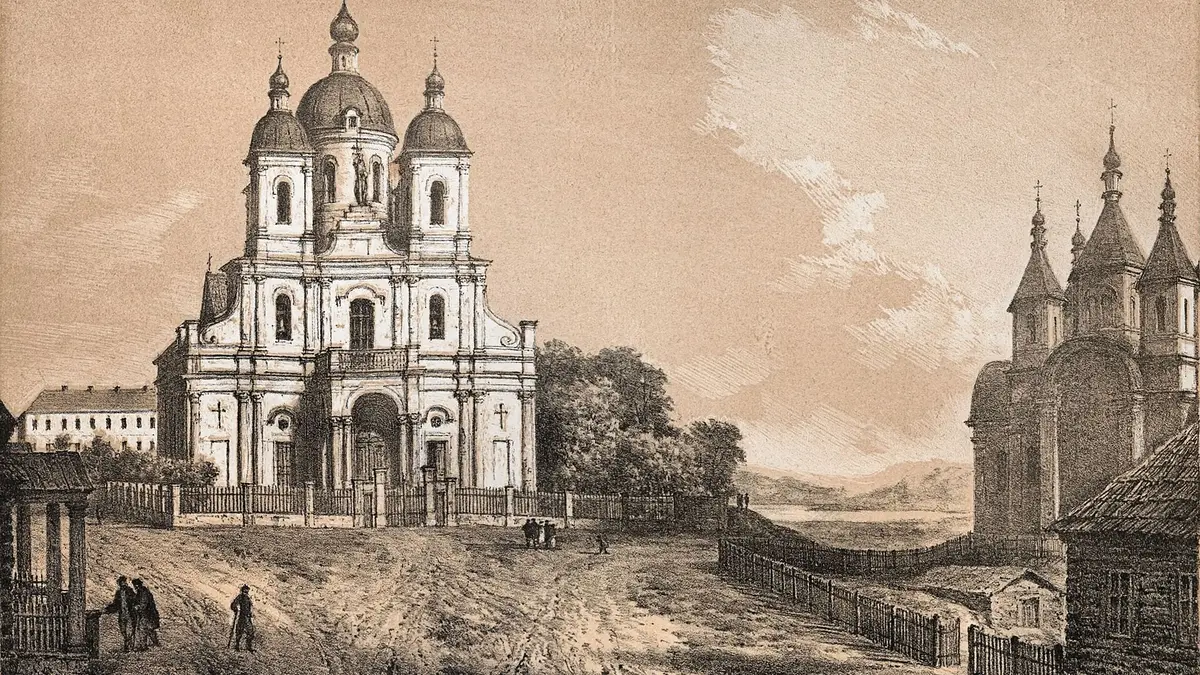
For centuries Białynicze on the River Drut was one of the most important Marian shrines of the Polish–Lithuanian Commonwealth, known as the “Częstochowa of Belarus”. The Carmelite church with the miraculous image of Our Lady, crowned in 1761, was destroyed in Soviet times.
Today the parish is rebuilding the shrine, and every Mass requested here supports this work.
History of the shrine →Request a Holy Mass
Leave your contact details and intention – we will reply by e-mail with a proposed date.
Thank you! We have received your request and will reply shortly to the e-mail address you gave.