
 gregorianka.belynichi@gmail.com
Mass for the sick and for healing – how to request it and word the intention
When someone close is ill, waiting for an operation or slowly regaining their strength, many believers request Holy Mass for them. We suggest how to write such an intention, which form to choose, and how a Mass for healing relates to the sacrament of the anointing of the sick.
The short answer
A Mass for healing is a Holy Mass offered for a person who is ill – asking for recovery, for strength during treatment or for peace of soul in suffering. It is requested like any intention for the living: in the form choose “Individual Mass intention”, enter the name of the sick person and a short request, and if a date matters to you (e.g. the day of an operation) – give it. You can request one Mass, a novena of nine Masses or a longer series. The Mass does not replace medical treatment or the sacrament of the anointing of the sick – it is the prayer of the Church that accompanies them.
Why we ask for health in the Mass
The Gospels are full of healings, and Jesus told his disciples to care for the sick. The Letter of St James says: “Is any among you sick? Let him call for the elders of the church, and let them pray over him” (Jas 5:14). The Eucharist is the Church's greatest prayer, in which Christ offers himself for all – which is why for centuries the faithful have entrusted their sick to God in it.
We ask with confidence, but in the way Jesus taught: “thy will be done”. So it is good to ask not only for the healing of the body, but also for strength, patience, good doctors and peace for the whole family. At the same time the Church reminds us that we must also take reasonable care of our health (CCC 2288) – prayer and medical treatment are not in competition.
Examples of intentions for health
We discuss the general rules for writing an intention – one sentence, full name, no diagnoses – in the guide how to word a Mass intention. Below are formulas for different situations of illness:
Before an operation or procedure
- For God's blessing on Christopher on the day of his operation, and for wisdom and steady hands for the doctors.
- For a successful procedure and a speedy recovery for Teresa.
During treatment
- For the grace of health and perseverance in treatment for Agnes.
- For effective treatment, strength and hope for Robert, and peace of heart for his family.
Chronic illness or an elderly person
- For health, patience in suffering and the protection of Our Lady for Grandma Margaret.
- For relief in suffering and God's presence for Henry in his illness.
When the illness affects the spirit or the matter is delicate
- For healing of soul and body for Luke.
- For peace of heart, light and good people along the way for Natalie.
A child in hospital
- For health for little Anthony and strength for his parents.
Do not write the name of the illness or details of the treatment – God knows them, and the intention may be read out aloud. When the sick person recovers, a beautiful custom is a Mass of thanksgiving.
One Mass, a novena or thirty Masses?
| Form | When it is chosen |
|---|---|
| Single Mass | a particular day: an operation, the start of treatment, discharge from hospital |
| Novena for the living (9 Masses) | an urgent matter lasting several days or weeks, e.g. the time before and after a procedure |
| To the Heavenly Court (30 Masses) | a serious or long-term illness, when we want to surround someone with prayer for a whole month |
We compare all kinds of intention in our guide to Mass intentions. Please note: Gregorian Masses are offered only for the dead, not for the sick.
A Mass for healing and the sacrament of the anointing of the sick
These are two different things. Anyone can request a Mass for a sick person, and it may be celebrated far away from them. The anointing of the sick is a sacrament that the sick person receives in person from a priest. It is not intended only for the dying: it may be given to a member of the faithful who, because of illness or old age, begins to be in danger (can. 1004 § 1; CCC 1514), and also before a serious operation (CCC 1515). It may be received again if the sick person has recovered and then falls seriously ill again, or if their condition worsens (can. 1004 § 2).
If someone close to you is seriously ill, contact their parish or the hospital chaplain. A Mass requested in Białynicze can accompany this sacrament, but it cannot replace it.
How to request a Mass for healing
In the form choose “Individual Mass intention”, enter the wording of the intention and – if it matters – the date, e.g. the day of the operation. You can also send an e-mail or a WhatsApp message. We reply by e-mail suggesting a date. Once the offering has been made to the parish account, within two days at the latest we send a confirmation with the wording of the intention and the date and time of the Mass, so that the sick person and their family can unite in prayer at that time. The Masses are celebrated first and foremost at the Shrine of Our Lady of Białynicze, and we commend the intentions of the sick to God through her intercession. We write about the meaning of the offering on the page the Mass offering.
Sources
- Catechism of the Catholic Church – nos. 1514, 1515, 2288
- Code of Canon Law (1983) – cann. 901, 1004
- Biblia Tysiąclecia (Polish Bible) – Jas 5:14–15
Questions and answers
What should I do if the operation is postponed?
Write to us as soon as possible – we will reply by e-mail with what is possible. And if the Mass is celebrated before the new date of the operation, the prayer does not lose its meaning: the sick person was commended to God in it during the time of waiting.
Can I commend several sick people in one intention?
Yes, one intention can include several people, e.g. “For health for our parents, John and Mary”. If each of them is in a different, serious situation, it is worth considering separate intentions.
Does someone who is ill have to go to Sunday Mass?
No. The Catechism lists illness among the serious reasons that excuse from this obligation (CCC 2181). A sick person can ask their parish for a priest or minister to bring them Holy Communion at home.
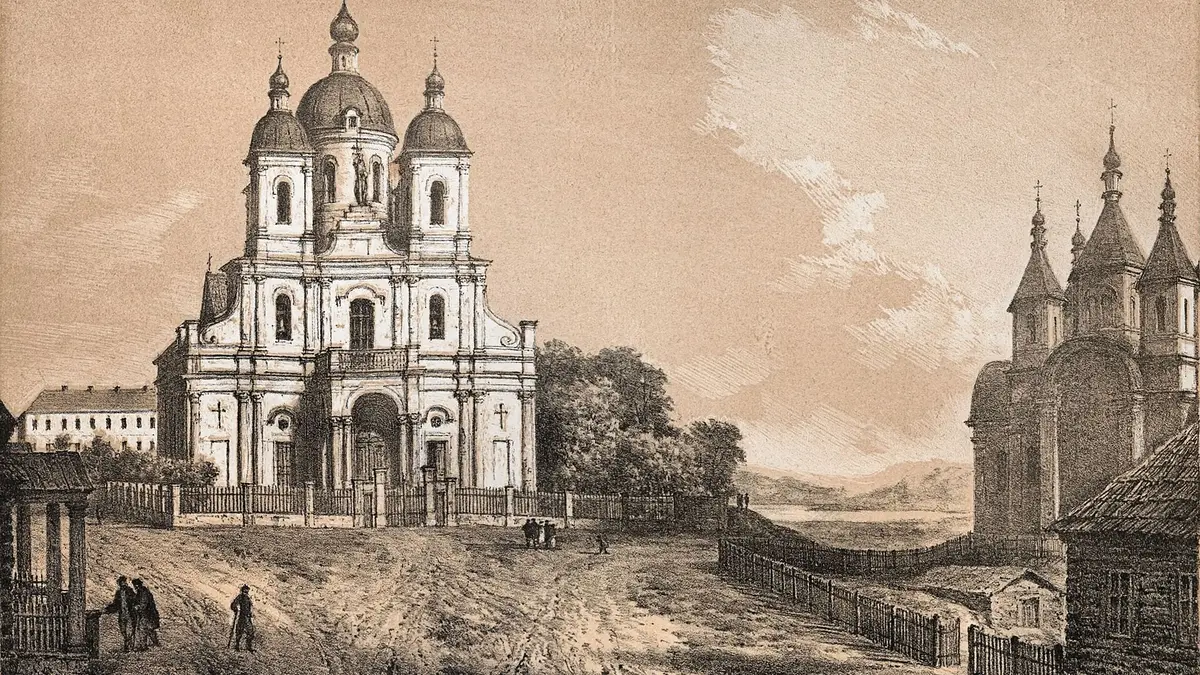
The Shrine of Our Lady of Białynicze
For centuries Białynicze on the River Drut was one of the most important Marian shrines of the Polish–Lithuanian Commonwealth, known as the “Częstochowa of Belarus”. The Carmelite church with the miraculous image of Our Lady, crowned in 1761, was destroyed in Soviet times.
Today the parish is rebuilding the shrine, and every Mass requested here supports this work.
History of the shrine →Request a Holy Mass
Leave your contact details and intention – we will reply by e-mail with a proposed date.
Thank you! We have received your request and will reply shortly to the e-mail address you gave.