
 gregorianka.belynichi@gmail.com
Gregorian Masses or a novena – what is the difference?
Gregorian Masses are thirty Masses for one deceased person; a novena is nine Masses for the dead or the living. We compare them with a single Mass, Masses to the Heavenly Court and annual remembrance of the dead, as we accept them in the parish in Białynicze.
The short answer
Gregorian Masses and a novena are two forms of the same prayer: Holy Mass offered for one intention over several consecutive days. They differ in the number of Masses and in whom they can be offered for. Gregorian Masses are thirty Masses, day after day, for one deceased person only. A novena is nine Masses, day after day – for the dead (one person or several) or for the living. Alongside these, the parish in Białynicze also accepts single Mass intentions, thirty Masses “to the Heavenly Court” for the living, and annual remembrance of the dead, which is not a Mass but a shared prayer of the parish.
None of these forms is “stronger” than another. The value of every Mass comes from the Sacrifice of Christ, not from a number or from the name of a custom. The choice depends on whom we want to pray for and in what situation.
A comparison of the forms of prayer in Białynicze
| Number of Masses | For whom | Over how many days | When it is chosen | |
|---|---|---|---|---|
| Gregorian Masses | 30 | one deceased person only | 30 consecutive days | usually after the death of a loved one, also on an anniversary |
| Novena for the dead | 9 | one or more deceased persons, e.g. parents | 9 consecutive days | mourning, before the anniversary of a death, November; when praying for several people |
| Novena for the living | 9 | a living person or a family | 9 consecutive days | a specific, urgent matter: an operation, a crisis, an important decision, thanksgiving |
| To the Heavenly Court | 30 (as we accept them in Białynicze) | a living person or a family | we give the dates in our e-mail reply | long-term illness, conversion, a new stage of life, a jubilee |
| Single Mass | 1 | the living or the dead; one intention may include several people | one chosen day | the anniversary of a death, a name day, a birthday, the day of an operation |
| Annual remembrance of the dead | not a Mass for an intention – the names are read out before Sunday Mass | the dead only, any number of names | throughout the liturgical year | lasting remembrance of many loved ones, including those who died long ago |
How Gregorian Masses differ from a novena
The most important difference concerns the person. According to the practice of the Church, Gregorian Masses are offered for one deceased person – not for a married couple or for “the deceased of the family”. A novena for the dead can be offered for several people at once, for example “for our late parents, John and Mary”. So when we want to include several loved ones in our prayer, the natural choice is a novena or several separate intentions.
The second difference is their basis. A novena is a pious custom – nine ordinary Masses for the same intention. Gregorian Masses have a tradition going back to St Gregory the Great and their own norms of the Church, including the 1967 declaration on what to do when the series is interrupted. These rules do not apply to a novena. We write more about Gregorian Masses themselves on the page what are Gregorian Masses.
Remembrance of the dead or Gregorian Masses?
This question is often asked by families who are used to remembrance lists in their own parish. Both forms are good, but they are not the same. In remembrance of the dead, the name of the deceased is one of many read out before Mass, and the community prays for all of them together. In a Mass requested for the deceased – single, in a novena or in Gregorian Masses – the whole Eucharist is offered for that person.
Remembrance of the dead works well when we want to remember many people throughout the year. Gregorian Masses – when we want to surround one particular person with daily Mass for a month. These forms do not exclude one another: many families submit names for remembrance and request Gregorian Masses for one person who has recently died.
What about “Gregorian Masses for the living”?
This is the popular name for Masses to the Heavenly Court. In Białynicze these are also thirty Masses, but for a living person, commended to God through the intercession of Mary and the saints. The name can be misleading: Gregorian Masses in the strict sense are offered only for someone who has died.
Which should I choose?
There is no single right answer – each of these forms is the prayer of the Church. A few questions may help you decide:
- Whom do I want to pray for? For one deceased person – Gregorian Masses, a novena or a single Mass are all possible. For several deceased persons – a novena, a single Mass or remembrance of the dead. For someone living – a novena for the living, Masses to the Heavenly Court or a single Mass.
- Is it about one particular day? The anniversary or the name day of the deceased is a good moment for an anniversary Mass, requested for a specific date.
- How long do I want to persevere in prayer? Nine days, a month or a whole year – this is a matter of personal choice and circumstances, not of “effectiveness”.
The forms can be combined. After a funeral, for example, a family may request Gregorian Masses for their late father, a novena for both deceased grandparents and annual remembrance of the dead, and a year later an anniversary Mass. We write about prayer in the first weeks of mourning in Masses after a funeral, and you will find a full overview of the kinds of intention in our guide to Mass intentions and on the page Mass for the dead.
How to request the form you have chosen
Choose the appropriate item in the form and enter the intention; you can also send an e-mail or a WhatsApp message. If you are not sure what to choose, describe the situation in your own words – we will reply by e-mail with a suggestion. Once the offering has been made to the parish account, within two days at the latest we send a confirmation with the wording of the intention and the date and time of each Mass. We explain the meaning of the offering on the page the Mass offering, and you can request Gregorian Masses online straight away.
Sources
Questions and answers
Can I change a novena I have requested into Gregorian Masses?
If the Masses have not yet begun, write to us as soon as possible – we will let you know whether the change is possible. Remember that Gregorian Masses are for one deceased person only, so a novena intention for several people would have to be narrowed down.
Can a novena run at the same time as Gregorian Masses for the same person?
Yes. They are two separate intentions – each offering accepted means a separate Mass (can. 948). In the confirmation we give the dates and times of all the Masses in both series.
Can I add the person for whom I am requesting Gregorian Masses to the remembrance list?
Of course. Remembrance of the dead is the prayer of the whole community throughout the year, while Gregorian Masses are the Eucharist offered for a month for that one person. One does not replace the other.
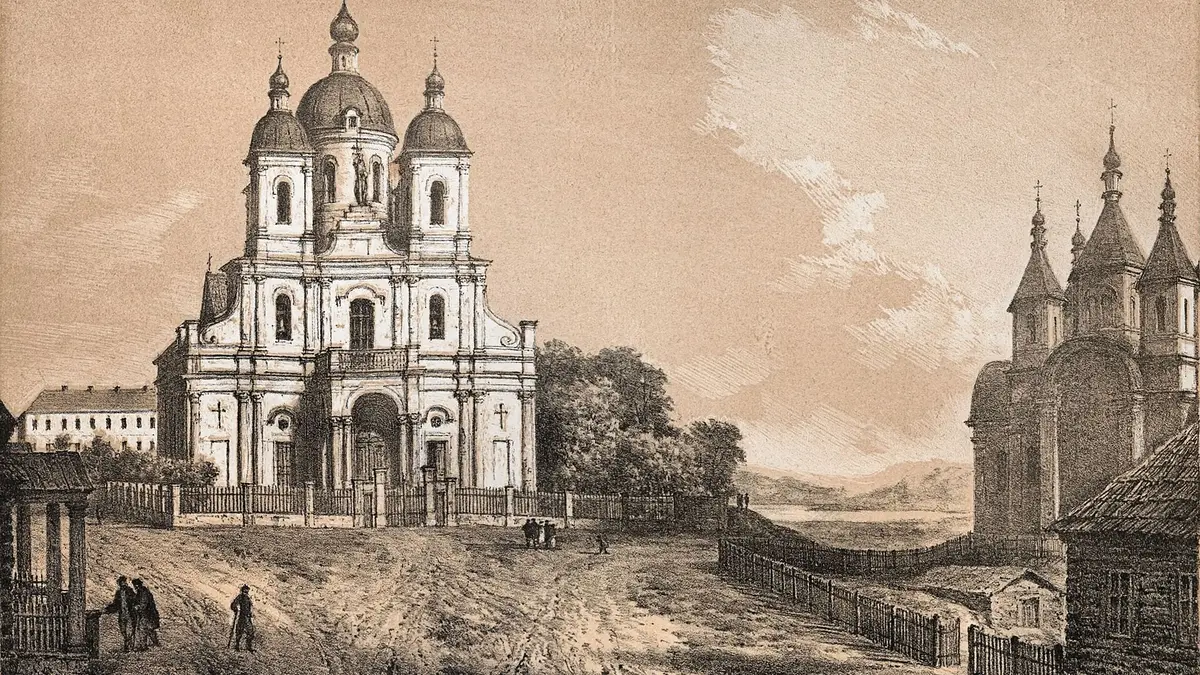
The Shrine of Our Lady of Białynicze
For centuries Białynicze on the River Drut was one of the most important Marian shrines of the Polish–Lithuanian Commonwealth, known as the “Częstochowa of Belarus”. The Carmelite church with the miraculous image of Our Lady, crowned in 1761, was destroyed in Soviet times.
Today the parish is rebuilding the shrine, and every Mass requested here supports this work.
History of the shrine →Request a Holy Mass
Leave your contact details and intention – we will reply by e-mail with a proposed date.
Thank you! We have received your request and will reply shortly to the e-mail address you gave.