
 gregorianka.belynichi@gmail.com
Do you need to attend Gregorian Masses?
Families who request Gregorian Masses often ask whether they have to come to church for thirty days. We explain what the Church says about this and suggest how to accompany the deceased with prayer – even from far away.
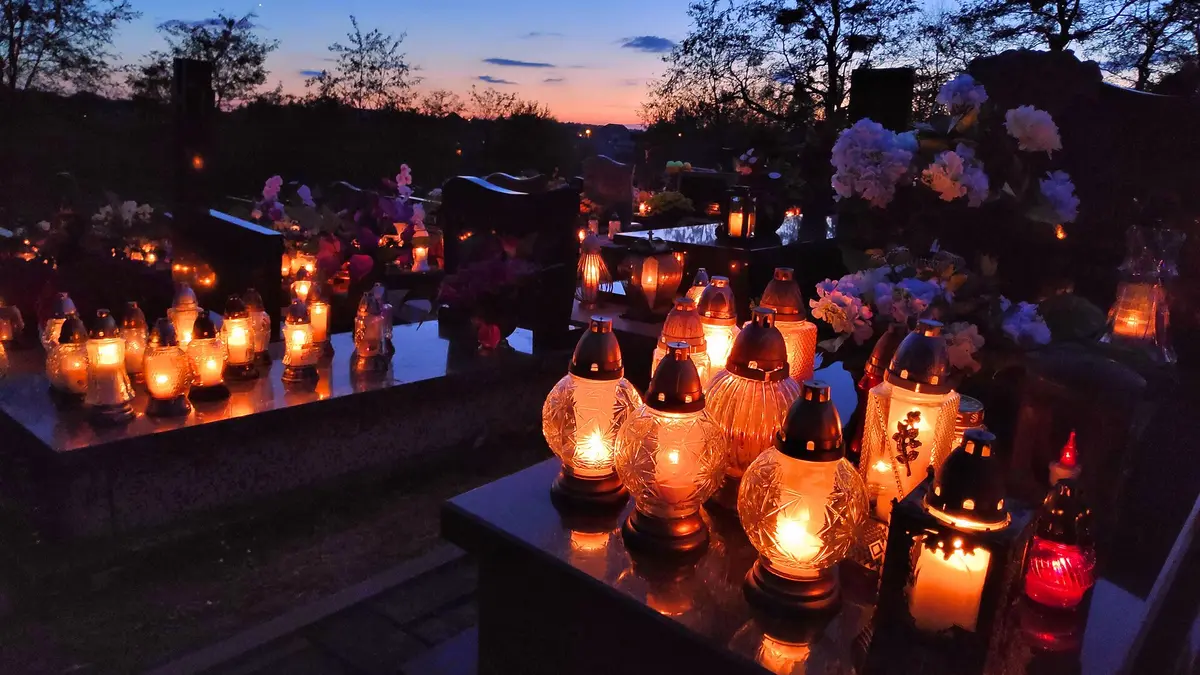
In brief
No, you do not. Neither the person who requests the Masses nor the family of the deceased is obliged to attend Gregorian Masses. Each of the thirty Masses is celebrated by the priest who accepted the intention, and it is he who is obliged to offer it for the deceased. The value of the Mass does not depend on who is present in the church. The presence and prayer of loved ones are not a condition but a gift: you can accompany the deceased with prayer at home, with Holy Communion received in your own parish, with an indulgence offered for them and with good works.
Why the family's presence is not a condition
Holy Mass is the Sacrifice of Christ, which the Church offers to God – also for the dead, so that they may attain the vision of God (CCC 1371). The priest takes on a Mass intention personally: whoever has accepted an offering and undertaken to celebrate the Mass remains bound by that obligation (can. 949). The faithful person who makes an offering thereby shares in the Church's concern to support its ministers and works (can. 946) – they are not “buying” a place at the altar, nor are they required to be there.
The norms concerning Gregorian Masses themselves likewise speak only of the priest's obligations. The declaration “Tricenario Gregoriano” of 1967 recalls that the celebrant is to complete the series as soon as possible if it is interrupted; it does not mention the family's participation at all. We write about the fact that the Masses may be celebrated in different places and by different priests in the article must Gregorian Masses be celebrated in one church?
Gregorian Masses and the Sunday obligation
These two things are easily confused. The obligation to attend Mass on Sundays and holy days of obligation applies to every Catholic (can. 1247) – whether or not they have requested any intention. Gregorian Masses neither add to this obligation nor replace it. It is enough to go to Mass in your own parish on Sunday; during the Prayer of the Faithful or after Communion you can silently commend to God the deceased person for whom the series is under way. There is no need to look for a church where a Gregorian Mass is being celebrated at that moment.
How to accompany the deceased for thirty days
The Church encourages various ways of helping the dead: prayer, almsgiving, indulgences and works of penance, and above all the Eucharistic sacrifice (CCC 1032). Gregorian Masses provide the last of these; the other forms can be the family's part.
Prayer at the time of the Mass
In the confirmation we give the date and time of each of the thirty Masses. Many families use this to pause for a moment at the same time: to pray the “Eternal rest” or a decade of the Rosary, or read the Gospel of the day. You will find some short texts on the page prayer for the dead.
Mass and Communion in your own parish
Those who can attend Mass in their own parish on some of the days and, after Communion, commend the deceased to God. The Second Vatican Council speaks of “full, conscious and active participation” in the liturgy (Sacrosanctum Concilium 14) – this concerns the Mass we are actually attending, not one being celebrated in another country. It is worth remembering that Communion may be received a second time on the same day only during a Mass in which one is taking part (can. 917).
An indulgence offered for the deceased
An indulgence can be gained for oneself or offered for the dead (CCC 1479). A plenary indulgence requires confession, Holy Communion, prayer for the intentions of the Holy Father and freedom from all attachment to sin. We describe the details, especially for the first days of November, in the article the indulgence for the dead.
Almsgiving and good works
Helping someone in need, visiting a lonely person or reconciliation within the family, offered for the deceased, also belong to the traditional forms of remembrance mentioned by the Catechism.
A simple plan for the month
This is only a suggestion, not a requirement:
- every day – a short prayer at the time of the Mass given in the confirmation;
- on Sundays – Mass in your own parish, with the intention in your heart;
- once during this time – confession and an indulgence offered for the deceased;
- on the last, thirtieth day – a prayer of thanksgiving for their life.
If one day you forget to pray, nothing is “spoilt”: the continuity concerns the Masses celebrated by the priest, not the family's prayer.
Can I attend one of the Masses in person?
The Masses requested through our website are celebrated first and foremost at the shrine in Białynicze, and also by priests of other parishes in eastern Belarus. If you would like to attend one of them, mention this in your request – in our e-mail reply we will tell you where and when it will be celebrated.
How to request Gregorian Masses
All you need is the first name and surname of one deceased person. You can send the intention through the form, by e-mail or via WhatsApp; we reply by e-mail suggesting a date, and once the offering has been made to the parish account, within two days at the latest we send the confirmation. We describe this step by step in the guide how to request Gregorian Masses, and what the series itself is on the page what are Gregorian Masses. When everything is clear, you can request Gregorian Masses online straight away.
Sources
- Catechism of the Catholic Church – nos. 1032, 1371, 1479
- Code of Canon Law (1983) – cann. 917, 946, 949, 1247
- Declaration “Tricenario Gregoriano”, 24.02.1967, AAS 59 (1967), pp. 229–230: vatican.va; Polish translation: liturgista.pl
- Second Vatican Council, Constitution “Sacrosanctum Concilium” (in Polish) – no. 14
Questions and answers
Do Gregorian Masses make sense if no one in the family goes to church?
Yes. The Mass is offered by the priest, and its value comes from the Sacrifice of Christ, not from the devotion of those who requested it. Often, requesting Gregorian Masses becomes the family's first step towards prayer in years.
Can I ask someone else to pray during these days instead of me?
Of course. Many people share the dates from the confirmation with their brothers and sisters, the friends of the deceased or their parish community. Prayer does not have to be “in place of” anyone – the more people join in, the better.
Can someone who is ill or elderly and housebound accompany the deceased in this way?
Yes. Prayer at home at the time of the Mass is enough. If they wish to receive Holy Communion, they can ask their parish for a visit from a priest or an extraordinary minister of Holy Communion.
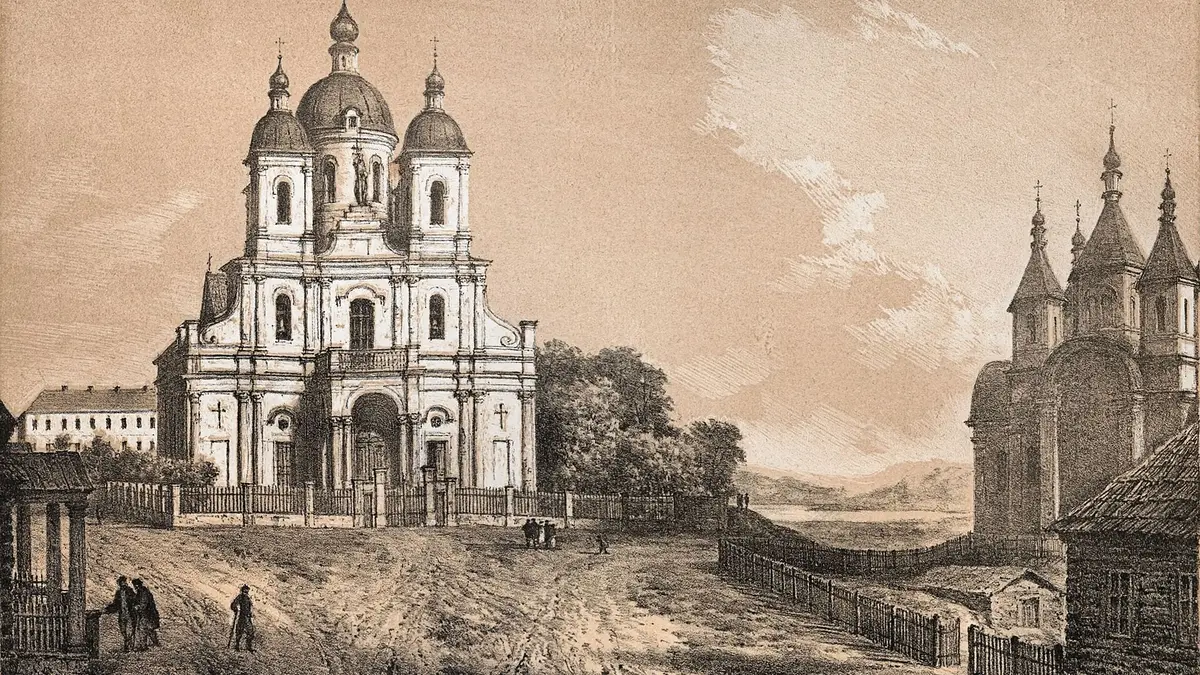
The Shrine of Our Lady of Białynicze
For centuries Białynicze on the River Drut was one of the most important Marian shrines of the Polish–Lithuanian Commonwealth, known as the “Częstochowa of Belarus”. The Carmelite church with the miraculous image of Our Lady, crowned in 1761, was destroyed in Soviet times.
Today the parish is rebuilding the shrine, and every Mass requested here supports this work.
History of the shrine →Request a Holy Mass
Leave your contact details and intention – we will reply by e-mail with a proposed date.
Thank you! We have received your request and will reply shortly to the e-mail address you gave.