
 gregorianka.belynichi@gmail.com
Prayer for the Dead in the Catholic Church
Catholics pray for the dead because they believe in the resurrection and in the communion of saints. We explain where this practice comes from, what forms it takes – from Holy Mass and the “Eternal rest” to indulgences and remembrance of the dead – and how to pray for a particular loved one.
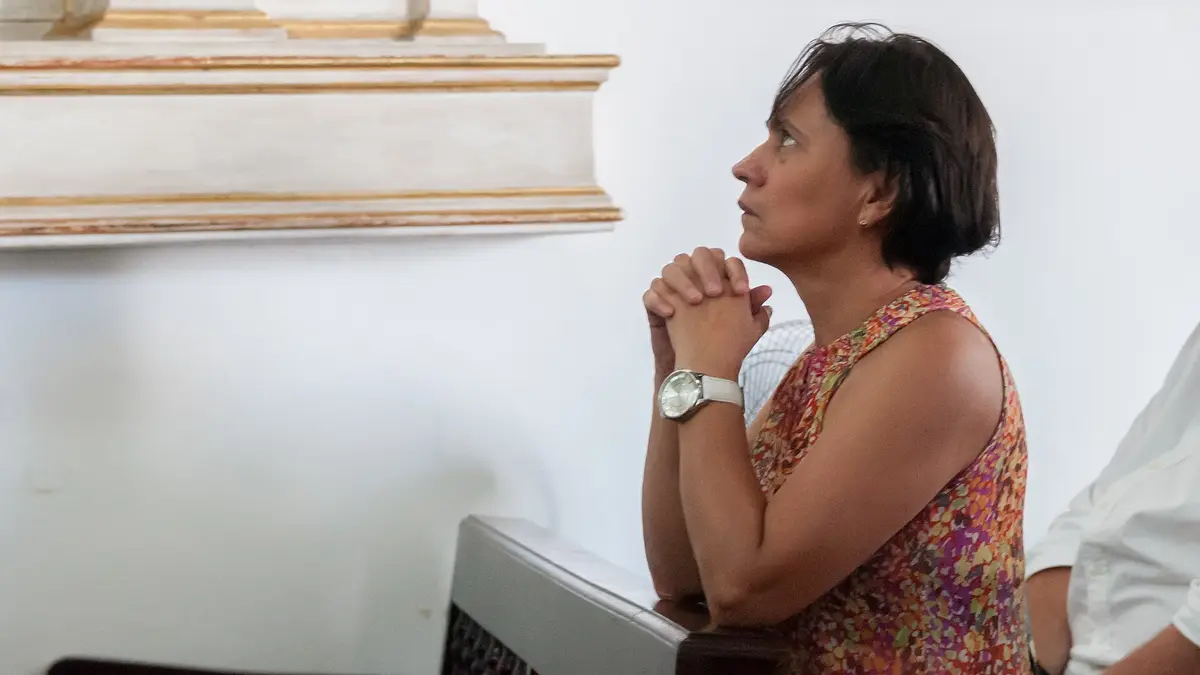
Why Catholics pray for the dead
The oldest biblical witness to prayer for the dead is the account in the Second Book of Maccabees (2 Macc 12:38–46, especially vv. 43–46). After a battle Judas Maccabeus discovered that the fallen soldiers had been carrying objects dedicated to idols. He then took up a collection and sent it to Jerusalem so that a sin offering could be made for the fallen. The inspired author praises this deed, because Judas was thinking of the resurrection – had he not believed that the dead would rise, praying for them would have been pointless. The Latin tradition sums up this passage in the words: it is a holy and wholesome thought to pray for the dead.
The Church took up this practice from the beginning. The Catechism says that the pilgrim Church, “from the very first ages of the Christian religion”, has honoured the memory of the dead and offered prayers for them, and that our prayer for them “is capable not only of helping them, but also of making their intercession for us effective” (CCC 958). The source of this confidence is the communion of saints: believers on earth, the dead who are being purified and the saints in heaven form one Church, one Body of Christ. The love that bound us to those close to us in life does not end at the moment of their death.
Prayer for the dead is linked to the teaching on purification after death. CCC 1032 connects it directly with 2 Macc 12:46 and adds that the Church commends above all the Eucharistic sacrifice for the dead, as well as almsgiving, indulgences and works of penance. What this purification is, we explain in the article purgatory in the teaching of the Church.
Does the Bible allow us to pray for the dead?
This question is often asked by people who have come across the Protestant view of the matter. Protestant communities do not accept the Second Book of Maccabees as inspired, and so they also reject the argument based on it. The Catholic Church – like the Orthodox Churches – includes this book in the canon of Scripture (CCC 120). Beyond it, Tradition reads in the light of purification after death St Paul's words that the one whose work is burned up “will be saved, but only as through fire” (1 Cor 3:15), and Jesus' words about the sin that will not be forgiven “either in this age or in the age to come” (Mt 12:32) – the Catechism refers to this last text when it quotes St Gregory the Great (CCC 1031). The strongest argument, however, remains the unbroken practice of the Church: prayer for the dead has been present in the liturgy since the first centuries.
How we can help the dead – forms of prayer
1. Holy Mass
The Eucharist is the first and most precious gift for the dead, because it is not merely our request but the Sacrifice of Christ himself (CCC 1371). You can request a single Mass, a novena of Masses for the dead or – for one person – thirty Gregorian Masses. Everything you need to know before making a request is gathered in our guide Mass for the dead.
2. The “Eternal rest”
This is the best-known prayer for the dead in the Catholic tradition, said at the graveside, after the Rosary, after grace at meals and whenever the deceased is remembered:
Eternal rest grant unto them, O Lord,
and let perpetual light shine upon them.
May they rest in peace.
Amen.
When praying for one person, we say: “Eternal rest grant unto him (her), O Lord, and let perpetual light shine upon him (her). May he (she) rest in peace. Amen.” The words come from the Latin liturgy for the dead (Requiem aeternam dona eis, Domine).
The Church's tradition also includes Psalm 130 (129), “Out of the depths I cry to you, O Lord” – the prayer of someone who trusts that “with the Lord there is steadfast love, and with him is plenteous redemption”. It is prayed in the liturgy for the dead.
3. The Rosary and the Chaplet of Divine Mercy
The Rosary can be offered for the deceased as a whole or one decade at a time, adding the “Eternal rest” after each decade. Especially close to this prayer are the Sorrowful Mysteries, which lead through the Passion and death of Jesus, and the Glorious Mysteries, which speak of the resurrection.
Many of the faithful also pray for the dead with the Chaplet of Divine Mercy, linked to the devotion to the Divine Mercy spread by St Faustina Kowalska. In its words (“for the sake of His sorrowful Passion, have mercy on us and on the whole world”) we commend everyone to God – the living and the dead.
4. Indulgences
An indulgence is a remission before God of the temporal punishment due to sins whose guilt has already been forgiven (CCC 1471). Since the dead who are being purified are members of the same communion of saints, we can help them by obtaining indulgences for them (CCC 1479). An indulgence may be applied to oneself or to the dead, but not to another living person. The best known is the plenary indulgence for the dead in the first days of November – we describe the conditions on the page indulgence for the dead, 1–8 November.
5. Remembrance of the dead
Remembrance of the dead (in Polish, wypominki) is a Polish tradition of reading out the names of the dead in church and praying for them together. It may be one-off (most often in November) or annual, when the names are read out throughout the year.
6. Almsgiving, fasting and offered suffering
The Catechism lists almsgiving and works of penance among the ways of helping the dead (CCC 1032). So you can offer for the deceased practical help to those in need, a day of fasting, the hard work of caring for someone who is ill, or suffering that cannot be avoided. Such “quiet” offerings are often the most personal expression of remembrance.
Prayer for the souls in purgatory
Besides prayer for our own loved ones, the Church encourages us to remember all the dead who are being purified – traditionally called the souls in purgatory or the holy souls. All Souls' Day (2 November) is the liturgical commemoration of all the faithful departed. Any of the forms described above can be offered for the souls in purgatory: Holy Mass, the Rosary, an indulgence or almsgiving. No special formulas are needed – an “Eternal rest” said with all the dead in mind is enough, especially for those for whom no one prays.
How to pray for a particular person
- Name them. God knows everyone, but naming the deceased helps us pray from the heart rather than by rote.
- Join prayer with remembrance. Give thanks for the good you received through this person; ask forgiveness for what was difficult – including in your relationship. Prayer for the dead can be a path to reconciliation.
- Choose a regular rhythm. A short prayer every evening, the Rosary on each anniversary, a Mass on their name day – regularity keeps the memory from fading.
- Do not limit yourself to November. All Souls' Day matters, but the dead need to be remembered all year round.
- Remember those for whom no one prays. It is good to add all the forgotten and lonely dead to your personal intention.
- Do not look for signs. The Church encourages trust, not speculation about whether the deceased is “already in heaven”. We pray for as long as we love – Benedict XVI reminded us that such prayer is never in vain (Spe salvi 48).
Prayer and Mass – together
Personal prayer and a requested Mass are not in competition. The Mass is the heart of the Church's prayer for the dead, and our daily remembrance carries it on at home and at the graveside. If you would like to request a Mass for a loved one who has died, see the overview of the Mass intentions we accept, or go straight to request Gregorian Masses. The Masses are celebrated at the Parish of Our Lady of Białynicze, and we send a confirmation with dates and times by e-mail.
Sources
- Second Book of Maccabees 12:38–46.
- Catechism of the Catholic Church, no. 958 (communion with the dead): vatican.va
- Catechism of the Catholic Church, nos. 1030–1032: vatican.va
- Catechism of the Catholic Church, nos. 1471–1479 (indulgences): vatican.va
- Paul VI, Apostolic Constitution Indulgentiarum doctrina (1967): vatican.va
Questions and answers
Can the dead pray for us?
The Catechism says that our prayer for the dead is capable of “making their intercession for us effective” (CCC 958). Communion in the communion of saints therefore works both ways. This does not mean, however, that the dead “visit” the living or pass messages to them – the Church does not teach that.
For how long should I pray for someone who has died?
The Church sets no limit. We do not know how God “measures” purification, so it is right and worthwhile to pray for the dead throughout our lives – including for grandparents and great-grandparents we never knew.
Can I pray for someone who was not a believer?
Yes. Prayer entrusts a person to God's mercy, and God knows each person's conscience better than we do. In the Eucharistic Prayer the Church also commends to God all the dead whose faith is known to him alone (Eucharistic Prayer IV).
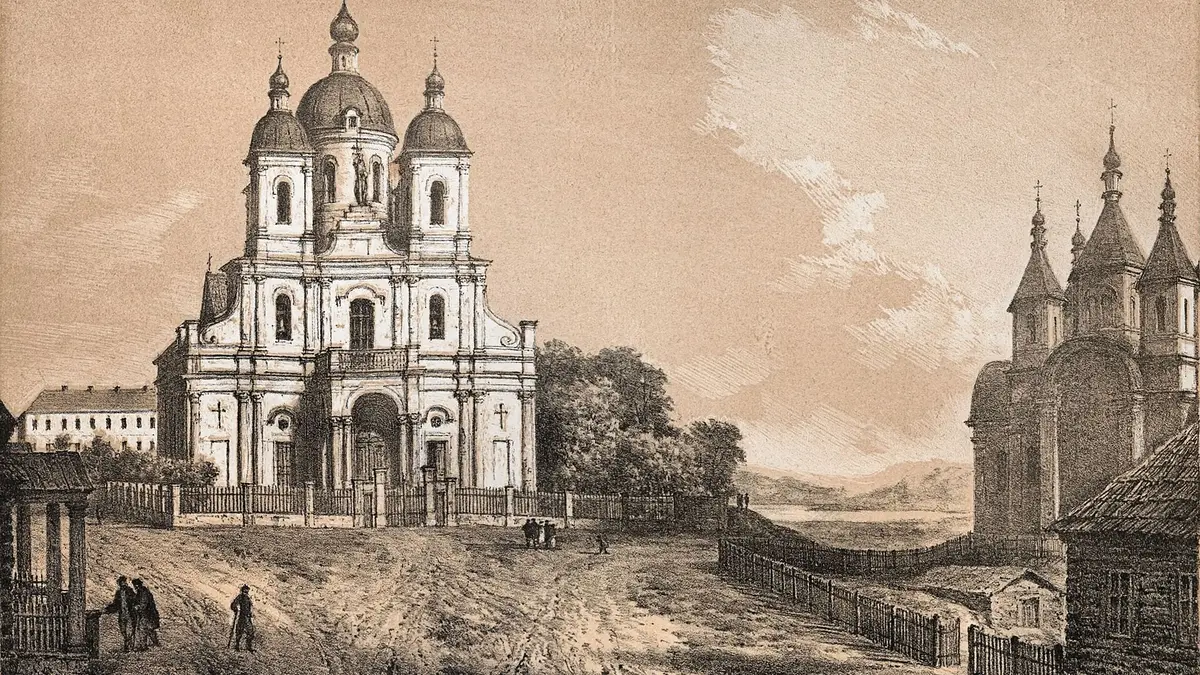
The Shrine of Our Lady of Białynicze
For centuries Białynicze on the River Drut was one of the most important Marian shrines of the Polish–Lithuanian Commonwealth, known as the “Częstochowa of Belarus”. The Carmelite church with the miraculous image of Our Lady, crowned in 1761, was destroyed in Soviet times.
Today the parish is rebuilding the shrine, and every Mass requested here supports this work.
History of the shrine →Request a Holy Mass
Leave your contact details and intention – we will reply by e-mail with a proposed date.
Thank you! We have received your request and will reply shortly to the e-mail address you gave.