
 gregorianka.belynichi@gmail.com
Must Gregorian Masses be celebrated in one church?
The thirty Masses for one deceased person need not be celebrated in the same church, at the same altar or by the same priest. We explain what really matters – the daily rhythm, the time, the presence of the family – and how it works in our parish.
The short answer
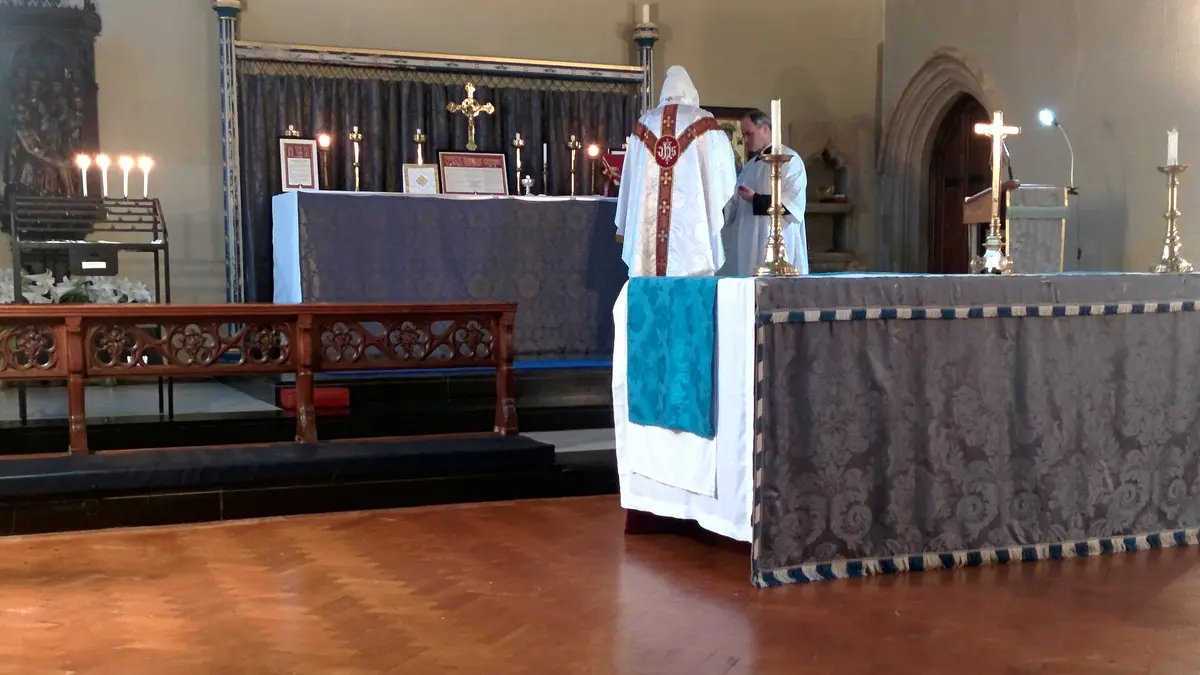
No. Gregorian Masses do not have to be celebrated in one church or at one altar, nor do they have to be offered by the same priest. The Church's norms and practice require something else: thirty Masses, celebrated day after day for thirty consecutive days, for one deceased person. We discuss these conditions more fully in the article what are Gregorian Masses. Below we answer the questions families ask most often: about the place, the priests, the time and attendance at Mass.
The place and the altar
No Church document ties Gregorian Masses to a particular church. Pastoral writers say plainly that it is not necessary for all the Masses to be celebrated at the same altar (so, among others, Fr P. Staniszewski in the Polish Catholic weekly “Niedziela”). The value of Holy Mass does not depend on the building, but on the sacrifice of Christ, which the priest offers for a specific intention.
The general law on Mass intentions confirms this too. The Code of Canon Law provides that if more intentions have been accepted in a church than can be celebrated there, the Masses may be celebrated elsewhere (can. 954), and that intentions may be passed on to other priests (can. 955). We write more about these provisions on the page canons 945–958 on Mass intentions. In practice, then, a series may begin in one church and some of the Masses may be celebrated in another – for example when the priest travels or a fellow priest stands in for him.
One priest or several?
Gregorian Masses may be celebrated by one priest, but this is not a condition. The Jesuits of St Stephen's Parish write in their rules for accepting intentions that the thirty Masses are celebrated “by one or by many priests – potentially even by thirty different ones”. What matters is that each day one Mass is offered for that one intention. The priest who has accepted the Gregorian Masses is responsible for seeing the series through to the end – including when he entrusts some of the Masses to others.
Must the Masses be daily?
Yes – continuity is an essential feature of Gregorian Masses: thirty Masses on thirty consecutive days. The Church does, however, allow exceptions. The declaration of the Congregation of the Council Tricenario Gregoriano of 1967 states that a series interrupted by an unforeseen impediment (e.g. a sudden illness) or by another reasonable cause (e.g. a funeral or wedding Mass) retains its fruits, and the priest is to complete the missing Masses as soon as possible. A break during the days of the Easter Triduum is also permitted. If, on the other hand, the priest has neglected a Mass through his own fault, the series begins again. We explain the details in the article can Gregorian Masses be interrupted?
At what time?
No time is prescribed for a Gregorian Mass. The Masses may be celebrated in the morning one day and in the evening the next – what matters is that each day one is offered for the deceased. In our parish we give the date and time of each of the thirty Masses in the confirmation that we send once the offering has been made. This allows the family to unite themselves spiritually with the Mass at exactly the time it is being celebrated. We show what this document looks like on the page confirmation of Gregorian Masses.
Do you have to attend the Masses?
No. The presence of the person who requested the Masses is not a condition for the validity or fruitfulness of a Mass offered for their intention. The Code of Canon Law states that a priest may offer Mass for anyone, living or dead (can. 901), and the provisions on passing intentions on to other priests (can. 955) assume that Mass is often celebrated far from the donor. That is why Gregorian Masses can also be requested by people living in another country.
Taking part in the Mass – in person when possible, or in prayer at home at the known time – is nevertheless a beautiful way of accompanying the deceased. In these days many families pray the Rosary or other prayers for the dead and themselves take part in the Eucharist in their own parish.
How it works in our parish
Gregorian Masses requested through our website are celebrated first and foremost at the shrine in Białynicze, and also by priests of other parishes in eastern Belarus. You will find profiles of our pastors on the page our priests. All the Masses of one series are offered for the same deceased person, and in the confirmation we state when each of them will be celebrated. The offerings support the priests and the restoration of the shrine.
You can submit the intention through the form, by e-mail or via WhatsApp. In reply we suggest a date, and once the offering has been made we send the confirmation. If you would like to begin a series, go to the page request Gregorian Masses.
Sources
- Declaration Tricenario Gregoriano, 24.02.1967, AAS 59 (1967), pp. 229–230: vatican.va; Polish translation: liturgista.pl
- Jesuits – St Stephen's Parish, Intencje mszalne (Mass intentions, in Polish)
- “Niedziela”, Czym są Msze święte gregoriańskie? (What are Gregorian Masses?, in Polish)
- M. Saj CSsR, Intencje i ofiary mszalne w prawie i praktyce Kościoła łacińskiego (Mass intentions and offerings in the law and practice of the Latin Church, in Polish)
- Code of Canon Law (1983), cann. 901, 954, 955: vatican.va
Questions and answers
Can I ask for all the Masses to be celebrated by one priest?
Yes, you can mention this request when you submit the intention. We will try to accommodate it, and if it is not possible we will tell you so in our e-mail reply, before you make the offering.
Can I request Gregorian Masses in a country other than the one I live in?
Yes. Where the person requesting the Masses or the deceased lived makes no difference. The Masses are celebrated in Belarus, and you receive the confirmation by e-mail.
Can Gregorian Masses be combined with other Masses for the same deceased person?
Yes. Gregorian Masses do not exclude other intentions – for example Masses in the parish of the deceased after the funeral or on the anniversary of the death. See Masses after a funeral and anniversary Mass for the dead.
The Shrine of Our Lady of Białynicze
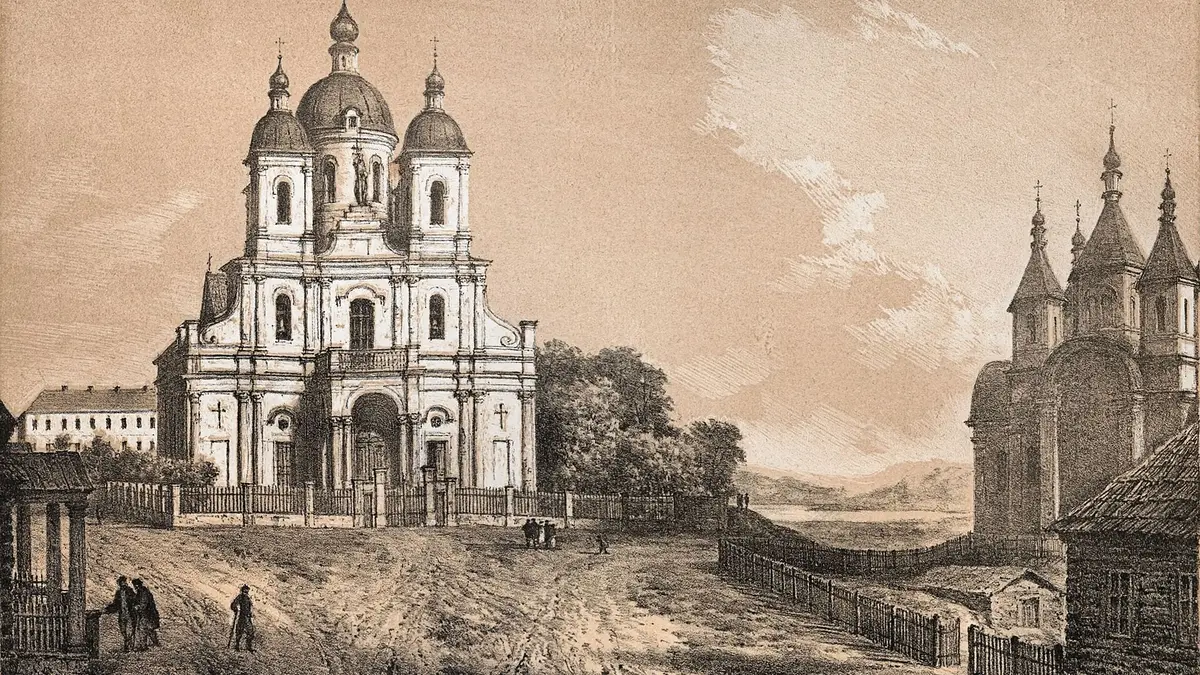
For centuries Białynicze on the River Drut was one of the most important Marian shrines of the Polish–Lithuanian Commonwealth, known as the “Częstochowa of Belarus”. The Carmelite church with the miraculous image of Our Lady, crowned in 1761, was destroyed in Soviet times.
Today the parish is rebuilding the shrine, and every Mass requested here supports this work.
History of the shrine →Request a Holy Mass
Leave your contact details and intention – we will reply by e-mail with a proposed date.
Thank you! We have received your request and will reply shortly to the e-mail address you gave.